One such is Mumbai Cutting—an omnibus film like Paris je t'aime and I Love New York, where 11 filmmakers have come together to make individual shorts on Mumbai. Then there's Prayas Gupta's The Prisoner where the city becomes a modern-day setting for a Rig Veda-inspired philosophical tale of materialism, desire, renunciation and eventual liberation. Nishikant Kamat's Mumbai Meri Jaan, on the aftermath of the serial train blasts of July '06, is also up for release this month.
Mumbai has been a favourite haunt for many Hindi films in the past too, be it Salaam Bombay, Parinda, Satya or Ardh Satya. So what's new now? Well, for one, Varma's effort is to focus on everyday things and ordinary, middle-class people. "My film is not about extraordinary events in the life of a city, like Black Friday," he says. It's the well-observed, quirky characters (like Inspector Pophle, obsessed with the correct pronunciation of his name, or Gonsalves, who plays loud music next door), their mundane concerns and the strange situations they are caught in, that provide Hulla's fabric. However, unlike the naive middle-class heroes of, say, Sai Paranjpe's Katha, the characters here are in tune with the globalised times, their fortunes changing with the swings of the sensex. "There is such richness and diversity in India's cities. But not enough of such contemporary stories are being told," says Varma.

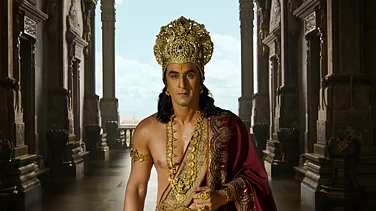
Rajat Kapoor in The Prisoner
On the contemporary urban trail is also Gupta's The Prisoner, this tale being about the centrality of money, how it motivates people and complicates lives. What happens when a writer's briefcase containing his new manuscript gets exchanged with one containing crores of rupees? "I have used the imagery of Bombay but it could happen in any city. Only an urban environment could have provided the play of tensions, offered a setting for the events in my film," says Gupta.
Sunil T. Doshi of Handmade Films, the producers of Hulla, calls these Mumbai films "new urbanscapes in cinema". "They are about weaving fiction around and making meaningful, out-of-the-box observations about ordinary people, and catching the nuances of their day-to-day lives," he says. This would hold true for Mumbai Meri Jaan also, which might be about the bomb blasts that hit Mumbai's lifeline—the local trains—but looks more at how life after changes irrevocably for these commoners. The impact cuts across society—from a corporate honcho to a broadcast journalist, two cops, one retiring and the other a rookie, a Hindu fanatic and a coffee vendor. It's about how an act of terror unleashes violence in the lives of ordinary people.
Ordinariness provides the inspiration for the best films in the Mumbai Cutting package as well. The best 5-6 of these short films are about people on the fringes, rather than the mainstream. For the most heart-warming, you would have to go with Anurag Kashyap's Pramodbhai 23, about little Chand interred in a Muslim-dominated remand home. The film is about the tall tales he narrates, his fantasies, his fascination with Gulzar songs, especially those about the moon. Inspired by the experiences of his friend Pramod Pathak (playing himself) who used to organise theatre workshops for delinquent kids, the film was shot in the real-life remand homes of Dongri and Matunga, with 12-year-old Sunny, a boy from the Salaam Balak Trust, playing the lead. Ask Kashyap about his favourite Mumbai stories and pat comes the answer: "It's about the life we don't see, people behind closed doors or those we see on the streets and prefer not to look at."




Ranvir Shorey in Mumbai Cutting
Which could be that Bangladeshi Muslim immigrant, the lead character of Revathy's moving film in the Cutting package, Parcel. Jahnu Barua's Anjane Dost has an R.K. Laxman-like common man central figure, who gets elbowed out in the new corporatised ethos until he decides to fight back. Kundan Shah's mimetic Hero is a Chaplinesque tramp, played by Deepak Dobriyal, trying unsuccessfully to board a train and getting crushed by the waves of humanity. Shashanka Ghosh's 10 minutes is about four disparate, nameless individuals in the city whose fate could change for the worse in the next 10 minutes.
Mumbai Cutting producer Niyati Shah says such stories could only happen in Mumbai. "It's an aspirational city, people come here with dreams. It's cosmopolitan. It offers a beautiful blend of people from all sections, communities and religions," she says. In a nutshell, it's a place where you'll never run out of stories. And won't run out of films either.