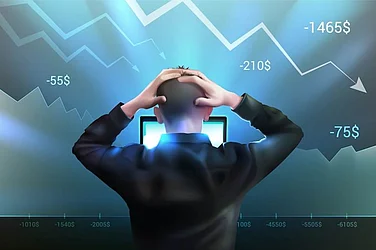
Markets are rarely in straight-line moves, and sometimes, the most misunderstood periods are those where activity is most subdued. Following a series of volatile moves and significant declines, there is a tendency for the crypto market to enter a phase where activity is slower and less understood. Prices become more stable, and there is a general sense of apathy, with many people no longer interested in the market.
However, underlying this subdued activity, there is a significant change occurring in the market, which, despite many people pulling away due to uncertainty, causes others to enter with a more measured approach. These periods, which are largely driven by fear, are those on which future market activity will be based, and understanding this in terms of sentiment is a key educational tool in understanding long-term positioning in the crypto space.
What is a Crypto Accumulation Phase?
An accumulation phase happens after a major market correction. During this time, there is a reduction in selling pressure, and buyers start to come in. Instead of wild price movements, there is a specific range of price movements. This is because there is equilibrium in the market between supply and demand.
This phase is not really about making money, but rather about accumulating. Investors who participate in this phase are those who are interested in accumulating assets for the future.
Some of the key characteristics of this phase include:
Sideways or range-bound price movements
Lower volatility compared to the previous phases
Lower trading volumes
Lack of media coverage and hype
Gradual increase in holdings by long-term investors
Unlike bull markets, which are characterized by high participation due to the high levels of enthusiasm, accumulation phases are usually dull. They are usually not noticeable.
Understanding the Role of Fear in Market Dynamics
Fear is at the center of every investor’s decisions, particularly in a volatile environment such as the crypto market. After experiencing a decline in the market, fear of loss is usually on the increase due to the uncertainty of the future.
This environment is usually characterized by:
Continuous negative news coverage
Regulatory issues or macroeconomic instability
Decline in asset values over a significant period of time
Loss of confidence for new or retail investors
At such a time, decisions are usually made reactively rather than strategically. Investors are usually focused on cutting losses, even at unfavorable market conditions.
However, there is a point of limitation for fear. Once the majority of the selling has been done in the heat of fear, the market stabilizes not because of confidence in the market, but because of the lack of selling pressure.
How Sentiment Indicators Represent Market Psychology
To understand investor sentiment better, various sentiment indicators are used by investors to analyze how the market is feeling.
Sentiment indicators may include:
Fear and Greed Index
Social media engagement levels
Trading volume trends
Funding rates in derivatives markets
If these sentiment indicators show extreme bearishness, then it may be a sign that the market is close to a state of stability.
These sentiment indicators are not necessarily used as a way to predict what is going to happen in the future; rather, they offer insight into how people are currently feeling and how this might cause certain movements in the market.
Behavioral Differences Across Investor Groups
Not all investors respond to market conditions in the same way. Their strategies and reactions often depend on experience, risk tolerance, and time horizon.
Investor Type | Reaction During Fearful Markets | Core Approach |
Retail Participants | Panic selling or inactivity | Short-term focus |
Long-Term Investors | Gradual accumulation | Value-driven strategy |
Institutional Players | Strategic allocation | Data-backed decision-making |
Retail investors are more likely to react emotionally, while experienced participants tend to rely on historical patterns and structured strategies. This difference in behavior is one of the main reasons accumulation phases exist.
The Psychology Behind Accumulation
Market movements are not driven solely by data—they are deeply influenced by human psychology. During downturns, several cognitive biases become more pronounced:
Loss aversion: Investors feel losses more intensely than gains, leading to premature selling
Herd behavior: Individuals follow the majority, even without independent analysis
Anchoring bias: Past price levels influence current expectations
Recency bias: Recent events shape perceptions of future outcomes
These biases create inefficiencies in the market, where prices may not accurately reflect underlying value. Accumulation phases often emerge from these inefficiencies.
Where Accumulation Fits in Crypto Market Cycles
Every market follows a cyclical pattern, and crypto is no exception. These cycles are driven by a combination of economic factors, technological developments, and investor sentiment.
A simplified cycle includes:
Accumulation Phase – Quiet buying after a decline
Expansion Phase (Bull Market) – Rising prices and growing optimism
Distribution Phase – Early investors begin to take profits
Contraction Phase (Bear Market) – Prices decline and sentiment weakens
Within broader crypto market cycles, accumulation acts as the transition point between decline and recovery. It is during this stage that the groundwork for the next upward trend is established.
Key Signals That Suggest Accumulation Is Underway
Identifying accumulation requires a combination of technical, on-chain, and sentiment-based observations.
Market Signals
Strong support levels forming after repeated tests
Reduced price volatility
Narrow trading ranges over extended periods
On-Chain Signals
Increased holdings by long-term wallets
Reduced inflows to exchanges (indicating lower selling pressure)
Growth in inactive or dormant supply
Sentiment Signals
Continued pessimism despite price stability
Declining retail participation
Minimal media coverage
No single indicator confirms accumulation, but a combination of these factors can provide a clearer picture.
Strategies Commonly Used During Accumulation
Investors who remain active during these phases often rely on disciplined and structured approaches rather than speculation.
Widely used strategies include:
Dollar-Cost Averaging (DCA): Investing fixed amounts at regular intervals
Position scaling: Gradually increasing exposure over time
Diversification: Spreading investments across multiple assets
Long-term holding: Avoiding frequent trading decisions
Risk management: Setting clear limits on exposure
Step-by-step approach followed by many investors:
Assess overall market conditions
Identify fundamentally strong assets
Allocate capital in smaller portions
Monitor market indicators regularly
Adjust strategy based on evolving conditions
These methods help reduce emotional decision-making and provide a more consistent approach to investing.
Opportunities and Risks During These Phases
Potential Opportunities
Entry at relatively lower price levels
Reduced competition from speculative traders
Ability to build positions over time
Improved risk-reward balance
Potential Risks
Extended periods of low returns
Possibility of further market declines
Difficulty in timing market bottoms
External factors impacting recovery
Understanding both sides is essential for maintaining realistic expectations.
Why Many Investors Overlook This Phase
Accumulation phases often lack the excitement that attracts attention. There are no rapid gains, trending discussions, or widespread optimism.
As a result:
Media coverage decreases
Retail participation drops
Market activity appears stagnant
This perception can lead investors to disengage at a time when long-term opportunities may be developing. Historically, however, many significant market recoveries have been preceded by extended periods of low visibility and subdued sentiment.
Conclusion
Periods of fear and uncertainty often reveal the underlying structure of financial markets. While they may appear uneventful on the surface, they play a crucial role in shaping future trends. Investor sentiment during these times shifts from optimism to caution, creating an environment where decisions are influenced more by emotion than analysis.
For those who take a longer view, these phases offer an opportunity to step back, evaluate conditions, and build positions gradually. Rather than chasing momentum, the focus shifts toward preparation and patience.
Ultimately, understanding how sentiment evolves during these quieter periods allows investors to navigate the market with greater clarity. Instead of reacting to fear, they can recognize it as a natural part of the cycle—one that often precedes the next phase of growth.
FAQs (Common Questions Answered)
1. What does accumulation mean in crypto?
It refers to a phase where investors gradually buy assets after a price decline, typically during a period of low volatility.
2. Why does extreme fear occur in crypto markets?
It is usually triggered by sharp price drops, negative news, and uncertainty about future market conditions.
3. Is accumulation a good time to invest?
It can offer opportunities, but it also carries risks. Decisions should be based on research, not just market sentiment.
4. How can beginners approach this phase?
By using structured strategies like dollar-cost averaging and focusing on long-term goals rather than short-term price movements.
5. Can accumulation phases fail?
Yes, markets can continue to decline or remain stagnant for longer than expected, which is why risk management is important.