Lacemaking in Eastern Europe is a centuries-old craft recognised by UNESCO as part of the Intangible Cultural Heritage of Humanity. In Croatia, it is not a single tradition but a set of regional practices still maintained in places such as Pag, Lepoglava, and Hvar. Each has its own techniques and motifs, worked in either needle or bobbin lace. Much of it is made in a restrained “white-on-white” style, valued less for variation in colour than for the precision of the stitching and the continuity of knowledge behind it. Hvar’s agave lace is the most unusual example: produced only by Benedictine nuns, it is made from fibres extracted from agave leaves, a method that is both laborious and uncommon elsewhere in Europe.
International
Croatian Lace: How Regional Craft Traditions Continue Through Handmade Work
Made in small pockets across Croatia, lace remains a hand-crafted tradition rather than a preserved display craft. From Pag’s fine geometric needlework to Hvar’s agave fibre lace, each region maintains its own methods, now recognised by UNESCO

OT Staff
27 April 2026
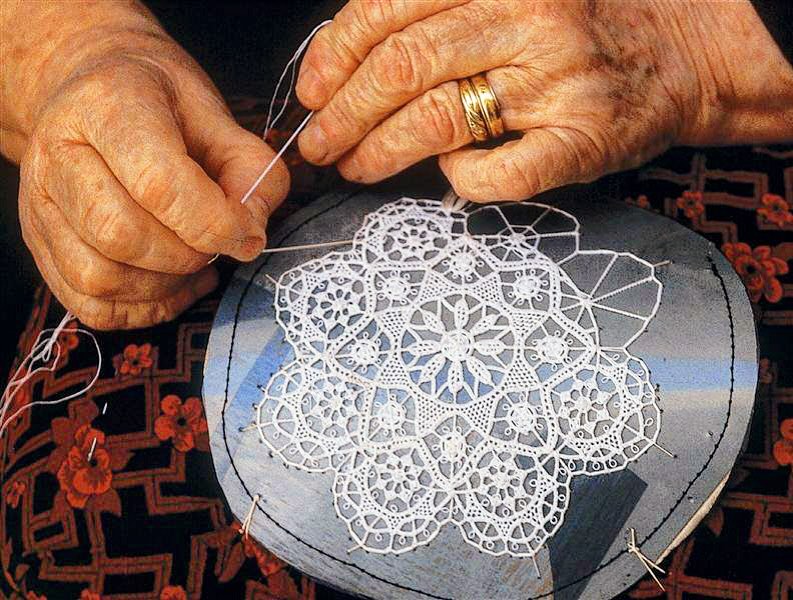
Croatian lacemaking is a set of regional practices still maintained in places such as Pag, Lepoglava, and Hvar Photo: balkanism__/Instagram
Croatian lacemaking is a set of regional practices still maintained in places such as Pag, Lepoglava, and Hvar Photo: balkanism__/Instagram

CLOSE