United Nations Secretary General Antonio Guterres visited Syria, the first serving UN chief to visit Syria in 17 years.
The visit follows the fall of Bashar al-Assad and the formation of Syria's transitional government.
The talks between Guterres and Syrian officials focused on humanitarian aid, reconstruction and Syria's political transition.
UN Secretary-General Antonio Guterres arrived in Damascus on Saturday, becoming the first serving UN chief to visit Syria in 17 years. The visit is also his first to the country since the civil war broke out in 2011, after years in which Syria remained largely isolated from much of the international community.
His trip comes as the country undergoes a political transition following the fall of former president Bashar al-Assad's government, raising questions about the United Nations' role in Syria's recovery and engagement with its new leadership.
As per the local news agency SANA’s reports, Syrian Foreign Minister Asaad al-Shaibani received Guterres at the airport, a major win for the country looking to open up to international engagement after the fall of Bashar al-Assad's government and the formation of a transitional administration.
Why Is Guterres Visiting Syria Now?
Syria’s transitional government under al-Sharaa was formed a month after former President Bashar al-Assad fled to Russia in December 2024, ending decades of Assad family rule. The current administration tried to present itself as a unifying, reform-minded government in a bid to bring together Syria’s fractured security structure under control.
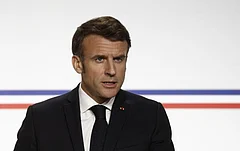
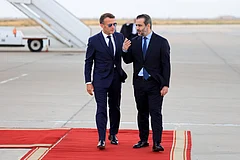
Guterres said in a post on X, “I have just arrived in Damascus for a visit of solidarity. My message is clear: The UN stands with Syria at this pivotal moment & I appeal to the international community to spare no effort to support the people of Syria as well.”
He also held talks with Ahmed al-Sharaa in Damascus and held a press conference with Al-Shaibani. Notably, al-Sharaa was a former al-Qaeda commander who was under UN Security Council sanctions until last year.
This visit, therefore, is another feather in the hat for al-Sharaa as Guterres is expected to hold talks with other government officials and representatives of the civil society.
The visit will include a field tour to inspect the UN Disengagement Observer Force (UNDOF), stationed in the occupied Syrian Golan Heights, as per report by Al Jazeera, to monitor commitments under the ceasefire agreement with Israel.
The new government of Syria is now focused on strengthening national security, promoting stability and removing obstructions to reconstruction.
What Challenges Does Syria Still Face?
UN spokesperson Stephane Dujarric said Guterres plans to highlight that Syria has an opportunity to “not only to recover from conflict, but also to lay the foundations for a future for Syria that will be more stable, more inclusive, and more prosperous for all Syrians”.
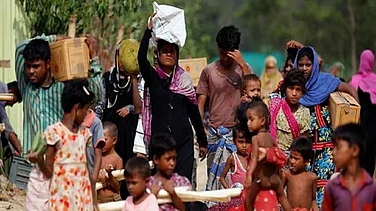
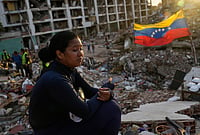
Millions of Syrians face shattered infrastructure, ongoing displacement and limited services. While the change in authorities in December 2024 brought cautious optimism, intermittent violence, localized escalations and regional tensions persisted, deepening humanitarian needs, according to UNICEF.
Arbitrary detention continued to be used by the government and by the Syrian Democratic Forces (SDF) in north-eastern Syria. More than 30,000 people in SDF custody continued to be subjected to human rights violations. Government forces, government-backed forces and militia members unlawfully killed people from the Alawite minority and extrajudicially executed members of the Druze community, as per Amnesty International.
Under a temporary constitutional declaration introduced in 2025, parliament's powers remain limited. The government is not required to win a parliamentary vote of confidence, though the assembly can propose and approve legislation. The chamber has a thirty-month term, which is renewable, and will hold legislative authority until a permanent constitution is adopted and elections are organised. Sharaa has said he supports holding general elections once infrastructure and documentation make it feasible.
What Could The Visit Mean For Syria?
According to SANA, Guterres and al-Sharaa met at the People’s Palace in Damascus where they discussed ways to enhance cooperation between Syria and the UN in the field of humanitarian and developmental fields.
He also affirmed support for early recovery efforts and reconstruction, and emphasis on respect for Syria's sovereignty, unity, and territorial integrity.
Following the termination of the five-decade Assad family rule in December 2024, when forces loyal to al-Sharaa entered Damascus, Syria has reeld under Western sanctions.
While several restrictions imposed by Europe and the US have been eased post-Assad, tangible economic recovery on the ground remains slow.
Concurrently, severe reductions in global humanitarian assistance have compounded daily hardships across the country. According to UN estimates, approximately 90 per cent of Syrians currently live in poverty.
A World Bank assessment issued last year estimated that long-term post-war reconstruction costs for the nation will stand at roughly USD 216 billion.