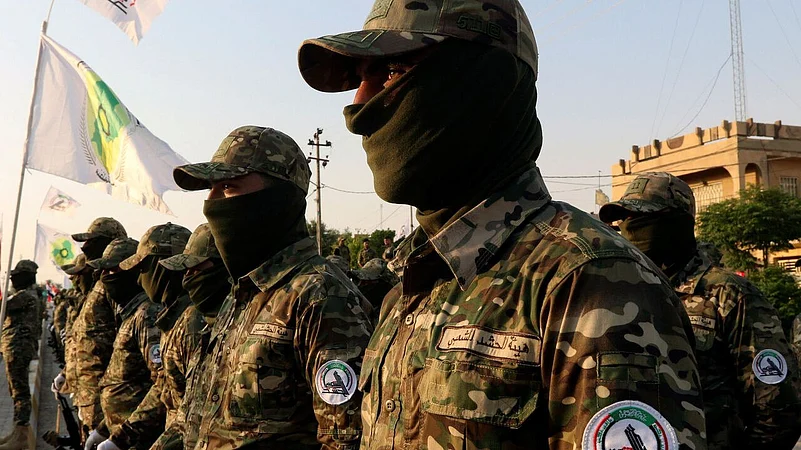
Iraq's PMF says joint US-Saudi air strikes killed its fighters and violated the country's sovereignty.
Saudi Arabia says the strikes targeted Iran-backed militias responsible for recent drone attacks on Saudi oil facilities and US forces.
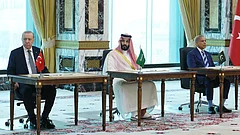
The strikes have intensified regional tensions ahead of Iraqi Prime Minister Ali al-Zaidi's visit to Saudi Arabia.
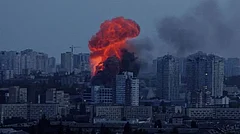
Joint Saudi-US air strikes on positions of Iraq's Popular Mobilisation Forces (PMF) killed eight fighters and wounded four others on Wednesday, according to the group, as Riyadh and Washington said they were targeting Iran-backed militias behind recent drone attacks on US troops and Saudi energy infrastructure. The PMF condemned the attacks as a "highly dangerous escalation" and a violation of Iraq's sovereignty, Al Jazeera reported.
The strikes mark an expansion of Saudi Arabia's direct military involvement in operations against Iran-aligned groups in Iraq following recent drone attacks targeting the kingdom's oil facilities. While Baghdad's powerful paramilitary force accused the two countries of attacking an official Iraqi security institution, Saudi Arabia said the operation was a defensive response to cross-border drone attacks launched from Iraqi territory.
The PMF said several of its sites across Iraq were targeted in the overnight operation. The group, an umbrella organisation of Iraqi militias backed and trained by Iran, said the strikes violated Iraq's sovereignty and targeted official security institutions.
The BBC reported that the PMF later revised its casualty figures, saying at least 20 fighters had been killed and 32 others wounded after strikes hit several of its bases.


Saudi says strikes were response to drone attacks
The strikes came a day after Saudi Arabia said it had intercepted and destroyed drones targeting oil facilities in the Eastern Province and Riyadh regions. The Ministry of Defence said the operation was carried out in coordination with the US Central Command (CENTCOM) in response to those attacks.
In a statement, the ministry said the drones had been launched from Iraqi territory by Iran-aligned militias. It alleged the drones had been launched from Iraqi territory by Iran-aligned militias.
"The Kingdom emphasises that it does not seek escalation but will respond to any aggression it faces," the ministry said.
CENTCOM said the strikes targeted logistics and weapons sites linked to Iran-aligned militant groups that it accused of carrying out more than 30 drone attacks against US forces and Saudi energy infrastructure over the previous 72 hours. It warned that further military action could follow if such attacks continued.
The Islamic Resistance in Iraq, a self-described armed group backed by Iran, denied any role in the attacks on Saudi Arabia. It described the Saudi allegations as "fabrications" and warned that "any foolish Saudi action will be met with a harsh response".
The BBC also reported that an Iranian defence official rejected accusations linking Tehran to the drone attacks, calling claims that Iran was behind attacks on US interests in the region a "major miscalculation".
PMF remains a longstanding point of contention
The status of the PMF has long been a point of contention between successive Iraqi governments, the United States and several neighbouring countries. Although many of its factions are backed by Iran, Iraqi law recognises the PMF as part of Iraq's official security forces, reporting directly to the commander-in-chief, who also serves as the prime minister.
Successive Iraqi governments have struggled to rein in several armed groups within the PMF. Some factions have carried out attacks on the US embassy in Baghdad and military bases hosting American forces while refusing to comply with government or military orders, Al Jazeera reported.
The strikes also followed fresh exchanges between Washington and Tehran. CENTCOM said Iran had launched missiles towards US positions in the Middle East, though it said all were intercepted, while Iran's Islamic Revolutionary Guard Corps said it had targeted a US air base and a command centre in Jordan. The developments added to concerns over wider regional tensions.
Iraqi Prime Minister Ali al-Zaidi is expected to travel to Saudi Arabia on Thursday, days after ordering Iraqi security agencies to investigate the drone attacks on the kingdom. The visit is expected to take place against the backdrop of the latest cross-border escalation.