



For years, the aspiration pointed inward — higher floors, tighter locations, premium towers in the densest parts of the city. That calculus is now reversing. A growing segment of high-net-worth individuals is moving away from vertical luxury and toward something altogether different: land, space and a deliberate proximity to nature.
Bespoke farmhouse plots and nature-centric plotted developments are emerging as the new definition of premium real estate. What these developments offer cannot be replicated in an apartment: the freedom to design on one’s own terms, the permanence of land ownership and the experience of living amid open skies, tree cover and natural landscapes rather than concrete and congestion.
From Alternative to Asset Class
This shift is not anecdotal — it is structural. According to Shalin Raina, MD - residential services at Cushman & Wakefield, “Plotted developments are increasingly moving from an alternative consideration to a more structured segment within real estate portfolios. Demand is being driven by farmhouses and nature-centric plots that combine lifestyle value with long-term capital appreciation. Improving infrastructure and connectivity are further enhancing their appeal by opening up well-accessible peripheral locations where land availability is viable.”
Land, long considered a traditional store of value in India, is now being reinterpreted through a modern lens. As Akash Pharande, MD at Pharande Spaces, observes that land competes with gold as one of the most preferred asset classes, carrying connotations of power, legacy and long-term security. Today’s plotted developments build on this legacy while adding infrastructure, amenities and planning that make them viable lifestyle investments.


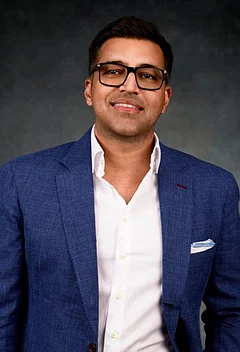
“Plotted developments are increasingly moving from an alternative consideration to a more structured segment within real estate portfolios.”Shalin Raina, MD - Residential Services, Cushman & Wakefield
NCR: The Rise of Curated Farmhouse Ecosystems
Nowhere is this shift more visible than in the National Capital Region, where developers are transforming peripheral land into curated, nature-led communities.A defining example is Ram Rattan Group, a pioneer in luxury farmhouse communities with a legacy spanning over four decades. What began in Chattarpur has evolved into a larger ecosystem across Sohna, Gurugram, Sitapur, and now Naugaon — strategically located in Rajasthan (NCR) along the Delhi-Mumbai Expressway.
Naugaon, barely 60 minutes from Gurugram, has emerged as a significant hub for nature-centric plotted developments. With seamless connectivity to Delhi-NCR, Noida and Jaipur, it offers the rare combination of accessibility and escape. Ram Rattan Group today commands over 90% of the development share in Naugaon’s luxury gated farmhouse segment.
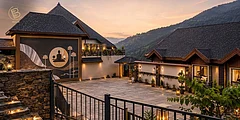
Their projects, such as Ananda Farms, Green Step Farms and newer developments like Sage Crest, are conceptualised as ‘sanctuaries without ceilings’. Spread across a larger 1,000-acre ecosystem, these communities emphasise low-density planning, open vistas and deep integration with the Aravalli landscape.
Amenities here extend well beyond conventional offerings. “Miyawaki forests, meditation decks, mini golf greens, organic farming zones and curated green walkways reflect a deliberate attempt to create environments rooted in wellness and stillness,” says Vijay Ram Rattan, chairman at Ram Rattan Group. He adds, “Each plot allows complete customisation, enabling buyers to design bespoke farmhouses while retaining full ownership and privacy.”
Importantly, these developments also function as compelling investment assets. With clear land titles, freehold ownership and opportunities for passive income through rentals and curated experiences, they combine lifestyle aspiration with financial rationale. “The strong pre-launch response to Sage Crest, priced at nearly ₹1.27 crore onwards, underscores the rising demand for secure, nature-led second homes in the NCR,” he adds.
“Each plot at our Naugaon projects allows complete customisation, enabling buyers to design bespoke farmhouses while retaining full ownership and privacy.”Vijay Ram Rattan, Chairman, Ram Rattan Group
Mumbai & Pune: Infrastructure Unlocks New Land Narratives
In western India, the plotted development story is closely tied to infrastructure expansion. Harsh Parikh, partner at Khaitan & Co, highlights how projects like the Vadhavan Port and the broader Mumbai 3.0 vision are driving demand for land investments in emerging micro-markets.
Regions such as Karjat and Roha near Mumbai, along with the Vadgaon-Lonavala corridor, are witnessing a surge in plotted developments. Aakash Agarwal, MD at Krisala Developers, points to these areas as high-potential destinations where connectivity improvements are unlocking large land parcels for organised, gated communities.
Projects like Krisala’s Land of Dreams, a 63-acre Bali-inspired plotted development, in Talegaon, Pune, illustrate how developers are combining thematic design with nature integration. “These communities often dedicate upto 70–80% of land to green spaces, incorporating orchards, water bodies and open landscapes,” says Agarwal.
Navin Makhija, MD at The Wadhwa Group, shares that micro-markets like Panvel are benefiting from transformative infrastructure such as the Navi Mumbai International Airport and the Mumbai Trans Harbour Link. “There is a clear shift in buyer priorities towards flexibility, lower-density living and a stronger connection to nature,” says Makhija, adding that plotted developments offer a unique balance between independence and integrated township living.
At the same time, the very definition of luxury within this segment is being reimagined. Sumit Sapru, CEO at Shapoorji Pallonji Real Estate (SPRE), emphasises that developers are no longer simply selling land parcels — they are creating curated environments anchored in wellness and nature. These include master-planned natural buffers, organic farming zones and community infrastructure designed for unhurried living.
SPRE’s project Treetopia, located along the Pune Growth Corridor, exemplifies this evolution. With thoughtfully planned plots set amid lush green landscapes, the development offers what Sapru describes as a ‘personal sanctuary’ — a space that blends tranquillity with proximity to urban conveniences.
Echoing this shift, Reeza Sebastian Karimpanal, chief revenue officer – residential at Embassy Developments, underscores that buyers today are seeking far more than transactional real estate. They are investing in lifestyles defined by space, tranquillity, and long-term value. In this context, plotted developments are steadily evolving into holistic communities — integrating connectivity, social infrastructure, and sustainable living into a single, cohesive offering.
“Developers are no longer simply selling land parcels, they are creating curated environments anchored in wellness and nature.”Sumit Sapru, CEO, Shapoorji Pallonji Real Estate
Bengaluru & South India: Design-led, Themed Communities
Southern markets, particularly Bengaluru, are emerging as key hubs for plotted developments, driven by both end-user demand and investor interest.Srinivas Moramchetty, director at Sumadhura Group, highlights that Bengaluru accounts for a significant share of plotted development supply among tier I cities. The demand is largely driven by luxury villa plots, where buyers seek privacy, customisation and nature-centric living.
Corridors such as North Bengaluru and Devanahalli are particularly active, supported by proximity to the international airport and expanding metro connectivity. Developers are responding by creating design-led communities like Sumadhura Panorama, which integrates regional architectural themes with curated landscapes and cultural elements.
Karishmah Siingh, president at Sattva Group, points to projects like Sattva Bhumi and Sattva Green Groves as examples of how plotted developments are aligning with infrastructure-led growth. Similarly, in Mandya along the Bengaluru-Mysuru corridor, improving connectivity and affordability are driving interest in tier II markets.
“The demand of plotted developments in Bengaluru is largely driven by luxury villa plots, where buyers seek privacy, customisation and nature-centric living.”Srinivas Moramchetty, Director, Sumadhura Group
Beyond Metros: Expanding Demand Across Regions
The plotted development trend is not confined to and around major cities. It is expanding across emerging corridors and regional markets.
In North India, areas along the Yamuna Expressway and near the upcoming Noida International Airport are witnessing increased activity. Somesh Mittal, co-founder of One Prastha Realty, updates that these micro-markets are attracting second-home buyers and NRIs seeking low-density, wellness-oriented communities.
In Punjab, Mukul Bansal, co-founder of Motiaz, highlights the cultural resonance of land ownership. “Empty plots act as blank canvases, allowing buyers to create personalised living spaces while staying connected to nature,” says Bansal.
Meanwhile, temple-town developments are adding a spiritual dimension to the segment. Puneet Anand, founder of PureSoul Infra, emphasises the integration of cultural heritage with nature-led planning, creating spaces that offer both emotional and financial value.
A Structural Shift, Not a Passing Trend
Industry leaders are clear that this is not a short-term phenomenon. Shravan Nawany, director at Nawany Group, describes it as a structural shift in demand driven by urban fatigue, hybrid work patterns and expanding infrastructure.
However, he also cautions that the segment will differentiate sharply. Projects that merely divide land without creating ecosystems are unlikely to sustain demand. The future lies in developments that combine infrastructure readiness, design and long-term livability.
Darshan Govindaraju, executive director, Vaishnavi Group reinforces this view, noting that plotted developments are becoming one of the fastest-growing segments in Indian real estate. With rising disposable incomes and evolving buyer preferences, they are opening new avenues for both investment and lifestyle-driven ownership.
“With rising disposable incomes and evolving buyer preferences, people are opening new avenues for both investment and lifestyle-driven ownership.”Darshan Govindaraju, Executive Director, Vaishnavi Group
The End of Vertical Dominance?
The rise of nature-centric plotted developments does not signal the end of high-rise living, but it does mark the emergence of a powerful alternative.For a buyer who has already experienced everything the city offers, the rarest commodity is no longer height or location. It is space, silence and the ability to shape one’s environment.
In that sense, the most luxurious abode today may not be in the heart of the skyline — but just beyond it, where land, nature and time itself feel abundant. And for India’s evolving real estate landscape, that may be the most significant shift of all.














