



Videos showed minister Keshab Mahanta’s daughter joining a protest against NEET irregularities.
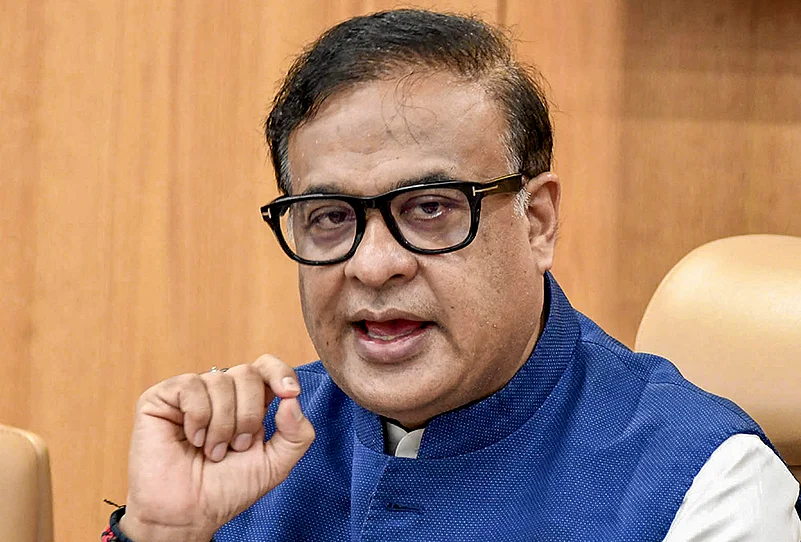
CM Himanta Biswa Sarma said the minister should not be trolled, noting that children can hold different views from their parents.
Sarma disagreed with her slogans and said he would speak to her about it when they next meet.
Assam Chief Minister Himanta Biswa Sarma on Saturday stepped in to defend his Cabinet colleague Keshab Mahanta after videos circulated of the minister’s daughter taking part in a protest against irregularities in the NEET examination. The visuals had triggered sharp online criticism directed at the minister, with many questioning how a senior government functionary’s family member could join a demonstration targeting the system his government oversees.
Sarma made it clear that such personal attacks were misplaced. He said Keshab Mahanta should not be trolled or held responsible for his daughter’s decision to join the protest. “I don’t think we should attack or troll Keshab Mahanta for the protest by his daughter. She may not follow her father’s political ideology,” the Chief Minister stated.
He went further, arguing that once children reach adulthood, their actions and opinions must be treated as their own. Linking an adult child’s choices automatically to a parent, he suggested, is both unfair and unrealistic. To illustrate the point, Sarma offered a personal example. “Tomorrow when my son will practice law, he may defend someone whom I may not like,” he said, underlining that professional or political differences within families are neither unusual nor a ground for public condemnation of the parent.



At the same time, Sarma did not endorse the content of the protest itself. He openly disagreed with the slogans raised by Mahanta’s daughter. “I do not agree with the slogans she raised. When I meet her next time, I will definitely talk to her about it and try to make her understand that what she said was not right,” he added. The remark struck a careful balance: protecting the minister from guilt by association while still registering the government’s discomfort with the nature of the demonstration.
The episode highlights a recurring tension in public life. When relatives of politicians take part in protests or express views that diverge from the official line, social media often collapses the distinction between individual and family. Sarma’s intervention sought to restore that distinction. By insisting that adult children are entitled to their own beliefs, he pushed back against the tendency to treat every family member as an extension of a minister’s political identity.
The NEET-related protests have already created significant political heat across several states, with students and activists demanding accountability for alleged paper leaks and administrative lapses. In that charged atmosphere, the appearance of a minister’s daughter at one such gathering was bound to attract attention. Sarma’s response attempted to cool the temperature by separating the personal from the political and by framing the issue as one of individual freedom rather than political disloyalty.
In essence, the Chief Minister’s message was straightforward. A parent’s public office does not erase a child’s right to independent thought, and public discourse should not punish one for the actions of the other. While he reserved the right to counsel the young protester privately, he refused to let online outrage turn a family difference into a political liability for his Cabinet colleague.















