
In a leisure economy increasingly shaped by immediacy and convenience, the idea of travel has undergone a quiet yet significant recalibration. For urban India—particularly Hyderabad’s fast-expanding professional class—respite no longer demands distance; it demands depth, intention and meaningful engagement with surroundings. The shift is subtle but definitive: from itineraries filled with activity to experiences rooted in pause and presence. Set against the undisturbed contours of the Damagundam Forest in Pargi, Vikarabad, GlampInn Valley has positioned itself within this evolving narrative. Just 55 kilometres from the city’s APPA Junction, the retreat proposes not spectacle, but stillness—carefully curated and deliberately preserved to offer an alternative to hurried travel.
A Vision Anchored In Ecology
Established in 2023 by entrepreneur Rushvik Reddy Yasa, GlampInn Valley reflects a considered response to a visible gap in the regional hospitality landscape. Having returned from Australia with exposure to global eco-retreat models and sustainable tourism practices, Yasa identified Pargi’s low-pollution environment and dense forest cover as rare and underutilised assets within accessible proximity to a metropolitan centre. The introduction of dome-shaped accommodations—among the first of their kind in the Telugu-speaking states—was conceived not merely as a design statement, but as an invitation to reimagine how built spaces interact with natural ecosystems.
The eight domes that form the first phase are intentionally designed to frame, rather than dominate, their surroundings. Their structure allows natural light to filter in while offering uninterrupted views of dense canopy and rolling terrain. Guests remain visually and emotionally tethered to the landscape at all times. Comfort is present and thoughtfully delivered, but it does not overwhelm context or distract from the primary experience of immersion. The architecture, in this sense, becomes a medium rather than a focal point.



Experience As Immersion
At GlampInn Valley, programming is measured, restrained and aligned with the rhythms of the environment. Morning treks through forest trails foreground the landscape as the central protagonist, encouraging guests to engage with terrain, air and silence. Evening safaris offer sightings of deer, foxes and migratory birds, underscoring the ecological integrity and biodiversity of the region. These encounters are not staged but observed, reinforcing a sense of authenticity.
Leisure amenities—including an infinity pool overlooking the valley, horseback riding experiences, and curated barbecue evenings—are integrated into the property without overt theatricality. They complement rather than compete with the natural setting. A nearby thousand-year-old Shiva temple introduces a contemplative and cultural dimension, reminding visitors that the terrain carries civilisational memory alongside its ecological significance. Culinary offerings traverse regional and pan-Indian cuisines, presented with balance and restraint, reinforcing hospitality that is structured yet unembellished.
Recognition And The Road Ahead
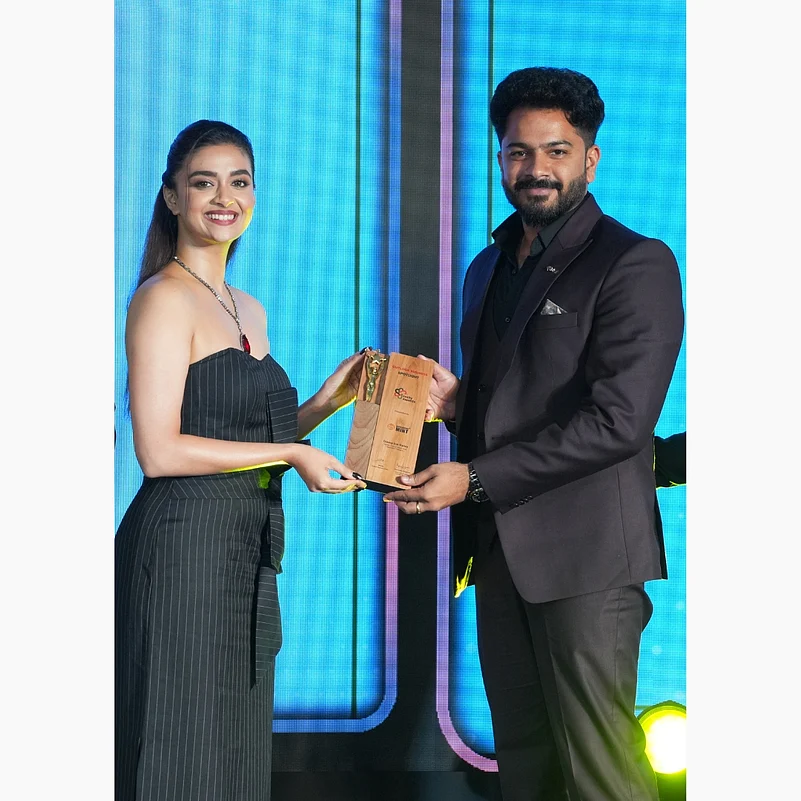
The retreat’s appeal has extended to public figures such as Naga Chaitanya and Naveen Chandra, alongside a growing number of international travellers seeking quieter, experience-led destinations. A 4.7-star public rating and acknowledgement from Telangana State Tourism indicate operational credibility and consistent guest satisfaction. Its recognition as a “Hidden Gem of South India” at the Outlook Business Spotlight Entity Awards further situates it within an increasingly competitive staycation ecosystem, where differentiation is often difficult to sustain.
With co-founder Shreemayi Reddy and the leadership team planning a second phase—including the introduction of an adventure component—GlampInn Valley faces a familiar inflection point: expansion without erosion of ethos. The challenge lies not in growth, but in maintaining the balance between accessibility and preservation that defines its current identity.
If sustained with discipline and clarity of vision, the property may do more than offer a weekend refuge. It may contribute to defining a distinctly Southern articulation of eco-luxury—one where proximity meets preservation, design aligns with ecology, and retreat evolves into renewal.