
FULL TEXT
Budget Speech - Part A
Budget 2006-07 speech by theMinister of Finance - in which he quoted Saint Tiruvalluvar - 'the world is his who does his jobwith compassion'
P. CHIDAMBARAM
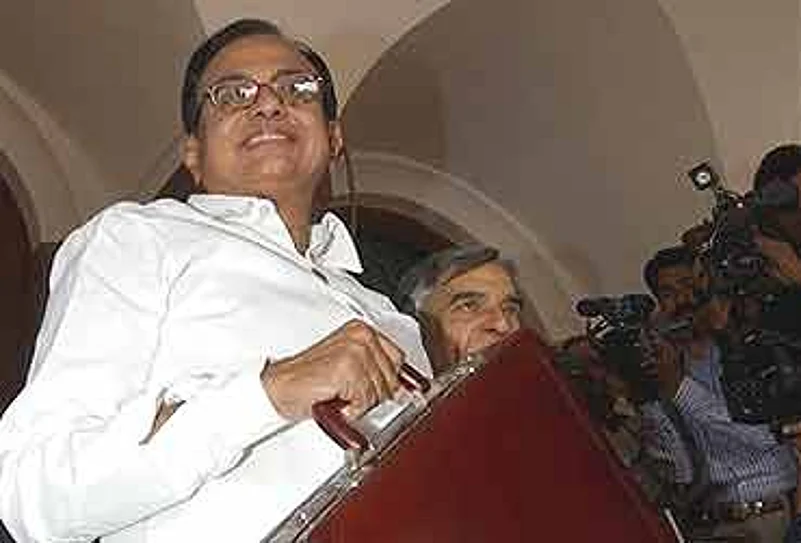
Mr. Speaker, Sir
It is my privilege to present the Budget for the year 2006-07.
I AN OVERVIEW OF THE ECONOMY
2. Twenty months ago, when I presented the first Budget of the UPA Government, I asked Honourable Members – and the people of this country – to walk with us on the path of honour and courage. The final report card on the first year of the UPA Government is out, and there are reasons to celebrate. According to the Central Statistical Organization (CSO), the growth rate in 2004-05 was 7.5 per cent, with the manufacturing sector growing at 8.1 per cent. More importantly, at current market prices, gross domestic saving increased to 29.1 per cent of GDP and the rate of gross capital formation increased to 30.1 per cent of GDP. I have no doubt in my mind that these results were due to the political message conveyed by the National Common Minimum Programme (NCMP); the perceptive leadership of the Prime Minister, Dr. Manmohan Singh; the policy changes made by the Government; and the palpable confidence of the Indian people that their future is in safe hands.
3. I am happy to report that the prospects for 2005-06 are just as good, if not better. This year can be characterized as the best of times and the worst of times. Nature has not been kind to us. Natural calamities took a heavy toll on human lives besides causing extensive damage to crops, roads, houses, and the infrastructure. Government provided immediate interim relief; this was followed by releases from the CRF and NCCF totalling Rs. 5145.37 crore to date. Obviously, this assistance will not be enough. The Planning Commission will draw up a programme for rebuilding the damaged infrastructure, and I wish to assure the House that the Government will provide the money for rehabilitation and reconstruction.
4. It was also the best of times. Government has been able to fulfil the first NCMP obligation of ensuring a high growth rate. According to the CSO’s advance estimates, GDP growth is likely to be 8.1 per cent this year, with the manufacturing sector expected to grow at 9.4 per cent. Agricultural growth has bounced back to 2.3 per cent and, barring mining, all other sectors are performing satisfactorily. Inflation, as on February 11, 2006 was 4.02 per cent. Non-food credit is growing by over 25 per cent. A large part of the credit goes to our farmers, workers, service providers, traders and business persons, and I would urge the House to join me in saluting them.
5. The assault on poverty and unemployment continues. I believe that growth is the best antidote to poverty. The GDP growth target for the Tenth Plan was set at 8 per cent. Thanks to three years of 7.5 per cent plus growth, it is possible that the overall growth rate will be 7 per cent. In recent speeches, the Prime Minister has raised the bar to 10 per cent, and the Government is determined to take the country to that high growth path. Growth will be our mount; equity will be our companion; and social justice will be our destination.
II IMPLEMENTING THE NCMP MANDATE
6. Our success this year is due to our unrelenting emphasis on fiscal prudence through enhanced revenues and expenditure control, monetary stability and management of the external debt. However, our success should not tempt us to stray from this path, and we shall not do so.
7. One of the important NCMP obligations was to focus on agriculture: we have done so, and the output of food grains is expected to be 209.3 million tonnes, which is about 5 million tonnes more than in the previous year.
8. The NCMP mandates the Government to promote employment: while creating permanent and quality jobs in the productive sectors, for providing immediate relief to the poor, the National Rural Employment Guarantee Scheme was launched on February 2, 2006. In the current year, under a clutch of schemes including the Food for Work programme, a sum of Rs.11,700 crore is expected to be spent on rural employment.
9. The NCMP mandates the Government to enhance investment: the investment rate has increased steadily from 25.3 per cent in 2002-03 to 30.1 per cent in 2004-05. Several indicators point to continued buoyancy of capital formation in the economy.
10. The NCMP also mandates the Government to augment infrastructure. 5,083 MW of capacity will be added to power generation in 2005-06, and during the Tenth Plan period the total addition is estimated at 34,000 MW, which is a record. Until December, 2005, under the Rajiv Gandhi Grameen Vidyutikaran Yojana, contracts have been placed for projects spanning 95 districts and covering 41,461 un-electrified and 9,379 electrified villages. Work is on at full steam on the Golden Quadrilateral (GQ) and the North-South, East-West Corridors. As against 1.86 kms per day completed prior to May, 2004, the schemes are progressing at the rate of 4.48 kms per day. 96 per cent of the GQ will be completed by June, 2006 and the Corridors will be completed by end 2008. There is also substantial and visible progress in improving our ports, airports and rural roads.
11. As the year draws to a close, I look back with satisfaction that the promises we made to the common citizen – the aam admi – have been substantially redeemed.
III BHARAT NIRMAN
12. I would like to make special mention of Bharat Nirman. It epitomizes the UPA’s approach to governance. It is a paradigm shift that will enable us to use the resources thrown up by the engine of growth for building infrastructure and bringing basic amenities to rural India. Honourable Members are aware of the six components of Bharat Nirman and the ambitious targets to be achieved by the year 2009. In the first year of its implementation, 2005-06:
- Rs.944.18 crore has been released so far as grant under the Accelerated Irrigation Benefit Programme (AIBP) and the target of 600,000 hectares of irrigation potential is expected to be created this year.
- Against the physical target of 56,270 habitations, 47,546 habitations have been covered until January, 2006 under the Accelerated Rural Water Supply Project (ARWSP)
- 5,337 habitations were connected under the rural roads programme by September, 2005, and Rs.3,749 crore has been released so far.
- 870,000 rural houses have been constructed and a sum of Rs.2,260 crore has been released till January, 2006.
- The entire allocation for rural electrification of Rs.1,100 crore has been released and the target of covering 10,366 villages is expected to be achieved in the current fiscal.
- 17,182 villages have been provided with a telephone till December, 2005 in the first year of the three year programme.

These numbers are a complete answer to those who scoffed at Bharat Nirman. We are determined to soldier on, and execute the programme in the mission mode. Since the implementation of Bharat Nirman has gathered pace, I propose to extend larger budgetary support to the programme. Including the North East component, as against Rs.12,160 crore provided in the current year, the corresponding budgetary provision will be Rs.18,696 crore in 2006-07, an increase of 54 per cent.
IV THE FLAGSHIP PROGRAMMES
13. Let me now present an overview of the Budget. Obviously, the bulk of the resources must go to the UPA Government’s eight flagship programmes: Sarva Siksha Abhiyan, Mid-day Meal Scheme, Rajiv Gandhi Drinking Water Mission, Total Sanitation Campaign, National Rural Health Mission, Integrated Child Development Services, National Rural Employment Guarantee Scheme and Jawaharlal Nehru National Urban Renewal Mission.
14. In 2005-06, Gross Budgetary Support (GBS) for the Plan was Rs.143,497 crore. Of this, support to the Central Plan was Rs.110,385 crore. I propose to increase both allocations substantially. GBS for 2006-07 has been fixed at Rs.172,728 crore, representing an increase of 20.4 per cent. Out of this, the Central Plan will receive a support of Rs.131,285 crore.
15. Education and health will continue to enjoy primacy. For 2006-07, the allocation for education has been enhanced by 31.5 per cent to Rs.24,115 crore and for health and family welfare by 22.0 per cent to Rs.12,546 crore.
16. On the eight flagship programmes, the total allocation in 2005-06 was Rs.34,927 crore. In the ensuing fiscal year, the total allocation will be Rs.50,015 crore, representing an additionality of Rs.15,088 crore or 43.2 per cent.
North Eastern Region (NER)
17. To this, however, we must add the allocation of 10 per cent of the Plan Budget of each Ministry/Department for schemes and programmes in the North Eastern Region (NER). For the flagship programmes alone, this would amount to an additional allocation of Rs.4,870 crore in 2006-07. The total budget allocation for the NER is Rs.12,041 crore which includes Rs.1,350 crore provided to the Ministry of Development of North Eastern Region (DONER). From BE 2005-06 to BE 2006-07, the step up is 18 per cent.
Sarva Siksha Abhiyan
18. Sarva Siksha Abhiyan (SSA) has recorded remarkable progress in
2005-06 in terms of new schools, additional class rooms and additional teachers. Two independent surveys show that 93 per cent of the children in the age group 6-14 years are in school, and the number of children not in school has come down to about one crore. Recognizing good performance, I propose to increase the outlay for SSA from Rs.7,156 crore to Rs.10,041 crore in 2006-07. 500,000 additional class rooms will be constructed and 150,000 more teachers will be appointed.
19. In 2006-07, we shall transfer Rs.8,746 crore to the Prarambhik Siksha Kosh from the revenues raised through the education cess.
Mid-day Meal Scheme
20. 12 crore children are now covered under the Mid-day Meal Scheme, which is the largest school lunch programme in the world. I propose to enhance the allocation from Rs.3,010 crore to Rs.4,813 crore in 2006-07.
Drinking Water and Sanitation
21. The target for the current year for drinking water supply will be completed, and 56,270 habitations and 140,000 schools will be covered. Apart from non-coverage, there is the persistent problem of slippage. The strategy to tackle both includes conservation, better operational management, and water quality monitoring and capacity building at the village level. The Government will provide non-recurring assistance of Rs.213 crore in 2006-07 for setting up district-level water testing laboratories and field-level water testing kits. I propose to increase the provision for the Rajiv Gandhi National Drinking Water Mission from Rs.3,645 crore to Rs.4,680 crore next year.
22. I also propose to increase the provision for the Rural Sanitation Campaign from Rs.630 crore to Rs.720 crore in 2006-07.
National Rural Health Mission
23. The National Rural Health Mission was launched on April 12, 2005. I am confident that in 2006-07 more than 200,000 Associated Social Health Activists (ASHA) will be fully functional and over 1,000 block level community health centres will provide round the clock services. I have increased the allocation for NRHM from Rs.6,553 crore to Rs.8,207 crore for the next year.
24. The WHO standard defining ‘elimination of leprosy’ is one case per 10,000 population. I am happy to announce that the goal of eliminating leprosy was reached in December, 2005. Continuing the vigorous immunization programme, we hope to eliminate polio too from the country by December, 2007.
Integrated Child Development Services
25. We have expanded the Integrated Child Development Services (ICDS) scheme and created an additional 188,168 centres. Supplementary nutrition is the most important component of the scheme. Beginning this year, the Centre is assisting the States to the extent of 50 per cent of the actual expenditure incurred for supplementary nutrition or 50 per cent of the cost norms, whichever is less. The cost to the Centre this year is estimated at Rs.1,500 crore, and I propose to increase this assistance to Rs.1,700 crore for 2006-07. The total allocation for ICDS is being increased from Rs.3,315 crore to Rs.4,087 crore.
National Rural Employment Guarantee Scheme
26. I have already referred to the Rural Employment scheme which is
the primary instrument to combat rural unemployment and hunger poverty. For 2006-07, the total allocation for rural employment will be Rs.14,300 crore. Of this, Rs.11,300 crore (including NER component) will be under the NREG Act and Rs.3,000 crore (including NER component) will be under SGRY. Since there is a legal guarantee of employment under the NREG Act, more funds will be provided according to need.
Jawaharlal Nehru National Urban Renewal Mission
27. The Jawaharlal Nehru National Urban Renewal Mission was launched on December 3, 2005. For the next year, against the estimated outlay of Rs.6,250 crore, I propose to provide a grant of Rs.4,595 crore. Apart from the four projects, including Mumbai metro rail and Bangalore metro rail, mentioned in my Budget speech last year, the projects under active consideration include projects in Maharashtra, Madhya Pradesh and Gujarat.
28. Planned urbanization can act as a spur to growth, employment and a better quality of life. Government will actively promote the establishment of new towns, preferably focussed on a specific industry, for example Information Technology, or a specific theme, for example education or health. Some projects are on the anvil in West Bengal and Karnataka.
National Social Assistance Programme
29. Old age pensions are granted under the National Social Assistance Programme (NSAP) to destitute persons above the age of 65 years at Rs.75 per month. This is woefully inadequate. I propose to increase the pension to Rs.200 per month. I have provided Rs.1,430 crore for 2006-07 and additional funds, if required, will be provided during the course of the year. I would urge State Governments to make an equal contribution from their resources so that a destitute pensioner would get at least Rs.400 per month. I also propose to work with the Department of Posts and the banks to establish, within two years, a system under which the pension will be credited directly to the account of the beneficiary in a post office or a bank.
Women and Children
30. Last year, I introduced a statement highlighting the gender sensitivities of the budgetary allocations. I was able to cover 10 demands for grants. This time, I have been able to enlarge the statement on gender budgeting to include schemes where 100 per cent of the allocation is for the benefit of women as well as schemes where at least 30 per cent of the allocation is targeted towards women. The statement now covers 24 demands for grants in 18 Ministries/Departments and five Union Territories and schemes with an outlay of Rs.28,737 crore.
31. Furthermore, several Ministries and Departments have initiated an exercise to prepare a public expenditure profile of their budgets from a gender perspective. 32 Ministries and Departments have set up Gender Budgeting Cells.
Scheduled Castes and Scheduled Tribes
32. Government is committed to the welfare of Scheduled Castes (SCs) and Scheduled Tribes (STs). Honourable Members will be happy to know that this Budget, like last year’s, contains a separate statement on the schemes for the welfare and development of SCs and STs. On a like to like basis, the allocations for schemes benefiting only SCs and STs have been enhanced by 14.5 per cent to Rs.2,902 crore and the allocations for schemes with at least 20 per cent allocation for SCs and STs have been enhanced by 13.9 per cent to Rs.9,690 crore.
33. The equity contribution to the National SC Finance and Development Corporation is being increased to Rs.37 crore and to the National Safai Karamchari Finance and Development Corporation to Rs.80 crore in 2006-07.
Minorities
34. I propose to extend greater financial support to the organizations actively involved in the welfare of the minorities. Accordingly, I intend to double the corpus fund of the Maulana Azad Educational Foundation to Rs.200 crore.
35. I propose to contribute Rs.16.47 crore to strengthen the equity base of the National Minorities Development and Finance Corporation. In line with the Prime Minister’s announcement on August 15, 2005, the Corporation will intensify its efforts to reach out to artisans and weavers living in urban and peri-urban centres, especially in districts with concentration of minorities. The programme will focus on skill enhancement, credit and techno-managerial support.
36. I propose to increase the allocation to the National Council for Promotion of Urdu Language from Rs.10 crore to Rs.13 crore.
37. Merit-cum-means based scholarships encourage students to pursue higher studies. Government will finance 20,000 such scholarships to students belonging to the minority communities. Once the scheme is finalized in 2006-07, I intend to allocate the necessary funds.
Kasturba Gandhi Balika Vidyalaya Scheme
38. The initial results of the Kasturba Gandhi Balika Vidyalaya Scheme launched in 2004 are encouraging. 1,000 new residential schools for girls from SC, ST, OBC and minority communities will be opened in 2006-07. I have provided Rs.128 crore, and I have agreed to provide an additional sum of Rs.172 crore during the year. I propose to provide a further incentive to the girl child who passes the VIII Standard Examination and enrols in a secondary school. A sum of Rs.3,000 will be deposited in her name, and she would be entitled to withdraw it on reaching 18 years of age.
39. Government has shifted the emphasis from sheer ‘quantity’ to the ‘quality’ of the outcome of the various social sector programmes. To ensure value for public expenditure, an Outcome Budget was presented on August 25, 2005. Government intends to present a Performance Budget on the first Outcome Budget before the end of the Budget Session. The Outcome Budget for 2006-07 will be placed before this House by March 17, 2006. This new approach underscores our resolve to ensure that the intended services in the right quantity and quality are delivered to the aam admi.
V INVESTMENT
40. There is an investment boom in the country and it is necessary to maintain the confidence of investors. It appears that India is catching up with the high investment rates of East Asia and China. Honourable Members will notice presently that, in every sector, the attempt is to promote more investment.
41. Government is committed to a strong and effective public sector. Public Sector Enterprises (PSEs) have, through internal and extra-budgetary resources, investment plans amounting to Rs.122,757 crore in 2006-07. I am happy to announce that Government will provide equity support of Rs.16,901 crore and loans of Rs.2,789 crore to Central PSEs (including Railways). Besides, I wish to point out that in the two years of this Government, we have infused Rs.1,180 crore in cash and made non-cash sacrifices of Rs.2,566 crore to restructure ten PSEs, including Indian Telephone Industries Limited and Heavy Engineering Corporation Limited.
42. We believe that there is considerable scope for developing India as a hub for the gems and jewellery industry. I, therefore, propose to constitute an expert body that will look into the potential of this sector and the prevalent taxation practices in India and abroad, and make its recommendations in this behalf. I am sure this announcement will be welcomed by Non Resident Indians who are looking to India as the place for future expansion and growth.
43. Foreign Direct Investment (FDI) continues to play an important role. We have the opportunity to make India a manufacturing hub for textiles, automobiles, steel, metals, petroleum products etc. for the world market. In calendar 2005, up to November, 2005, FDI is estimated at $ 4 billion, without counting reinvested earnings and other capital. I am confident that recent policy changes will attract more foreign investment into the country, especially in infrastructure.
VI AGRICULTURE
44. Let me now turn to the productive sectors of the economy. As always, our Government’s focus is on agriculture. Assured irrigation, credit, diversification and creating a market for agricultural products are the thrust areas.
Irrigation
45. Out of an outlay of Rs.4,500 crore under AIBP in 2005-06, the grant component is Rs.1,680 crore. The States are expected to spend about Rs.2,520 crore from their resources, and 25 projects are expected to be completed before the end of the year. The outlay for 2006-07 has been increased to Rs.7,121 crore, and the Central Government will support the programme through a grant of Rs.2,350 crore. The Ministry of Water Resources will revamp the Command Area Development Programme to allow participatory irrigation management through water users’ associations.
46. The programme for repair, renovation and restoration of water bodies is being implemented through pilot projects in 23 districts in 13 States. The design of the programme has been finalized in consultation with the States. 20,000 water bodies with a command area of 1.47 million hectares have been identified in the first phase. The estimated cost is Rs.4,481 crore. The funding pattern (Centre, States and external assistance) has been finalized, and I intend to seek, and receive, funds from multi-lateral agencies. The participating State Government will be requested to sign a memorandum of understanding and the water bodies in that State will be taken up for repair, renovation and restoration in 2006-07.
Credit
47. Farm credit increased to Rs.125,309 crore in 2004-05 (well above the target) and is again expected to cross the target of Rs.141,500 crore set for the current year. I propose to ask the banks to increase the level of credit to Rs.175,000 crore in 2006-07 and also add another 50 lakh farmers to their portfolio. We shall not only achieve but exceed the target of doubling farm credit in three years. Since tenant farmers are not adequately served, I have asked the banks to open a separate window for self-help groups or joint liability groups of tenant farmers and ensure that a certain proportion of the total credit is extended to them. I intend to monitor closely progress in this behalf.
48. I am aware of the severe difficulties faced by farmers in the last two years. Ours is a compassionate Government. I also have severe fiscal constraints. When faced with a dilemma, I usually turn to my favourite poet-philosopher, Saint Tiruvalluvar. Writing over 2,000 years ago, he said:
"Karumam Sidhaiyamal Kannoda Vallarku
Urimai Udaithu Iv Ulagu"
(The world is his who does his job
With compassion)
I am prepared to go the extra mile to come to the aid of our farmers. To begin with, I propose to grant some relief to the farmers who have availed of crop loans from scheduled commercial banks, RRBs and PACS for Kharif and Rabi 2005-06. Accordingly, an amount equal to two percentage points of the borrower’s interest liability on the principal amount up to Rs.100,000, will be credited to his/her bank account before March 31, 2006. I have provided a sum of Rs.1,700 crore for this purpose. I hope the House will welcome this exceptional gesture of the Government.
49. For our farmers, I have more. Farmers obtain short-term credit from the cooperative credit structure and Regional Rural Banks (RRBs), with refinance from NABARD. Increasingly, scheduled commercial banks are also lending more to farmers. It is my intention to ensure that NABARD continues to provide refinance at an economical rate, so that the farmer ultimately gets the loan at a reasonable rate. Accordingly, after giving anxious consideration to market conditions, Government has decided to ensure that the farmer receives short-term credit at 7 per cent, with an upper limit of Rs.300,000 on the principal amount. This would require a certain level of subvention to NABARD. I propose to give the subvention. This policy will come into force with effect from Kharif 2006-07, and I shall make a detailed statement in due course.
50. The Rural Infrastructure Development Fund (RIDF) has so far disbursed funds in 11 tranches. RIDF XI sanctions have touched a level of Rs.7,301 crore as on January 31, 2006. A special feature this year has been that Rs.346 crore has been sanctioned to the North Eastern States. This sum is likely to touch Rs.600 crore by the year end. Keeping in view the expanding requirements for creating rural infrastructure, I propose to increase the corpus of RIDF XII to Rs.10,000 crore, and I urge State Governments to make the best use of these funds.
51. I also propose to allow specified projects under the Public Private Partnership (PPP) model to access RIDF funds.
52. The rural roads component of Bharat Nirman requires large funds. Hence, I propose to open a separate window under RIDF XII for rural roads with a corpus of Rs.4,000 crore during 2006-07.
Agricultural Insurance
53. The National Agricultural Insurance Scheme (NAIS) will be continued in its present form for Kharif and Rabi 2006-07.
Plantation Sector
54. In continuation of the announcement in the last Budget to introduce a 15 year programme for massive re-plantation and rejuvenation of tea, Ministry of Commerce has proposed to set up a Special Purpose Tea Fund. While the details are being worked out, to signal my support to the idea, I propose to make a levelized contribution every year to the Fund. For 2006-07, the contribution is expected to be Rs.100 crore. When established, the Fund will benefit growers in the tea growing States including Assam, West Bengal, Tamil Nadu, Kerala and Uttaranchal.
Micro Finance
55. I had proposed major initiatives in respect of micro finance in the last Budget. RBI has since issued guidelines to enable banks to appoint banking correspondents and banking agents. A window to access ECB funds has also been opened. A Bill to provide a formal statutory framework for the promotion, development and regulation of the micro finance sector will be introduced in this session.
56. The Self Help Group (SHG) movement is making rapid strides. In the two years of the UPA Government, we have credit-linked 801,000 SHGs. The credit disbursed to these SHGs is approximately Rs.4,863 crore. I propose to ask the banking sector to credit-link another 385,000 SHGs in 2006-07. I shall also ask NABARD to open a separate line of credit for financing farm production and investment activities through SHGs.
57. The findings of the NSS 59th Round (2003) reveal that out of the total number of cultivator households only 27 per cent receive credit from formal sources and 22 per cent from informal sources. The remaining households, mainly small and marginal farmers, have virtually no access to credit. With a view to bringing more cultivator households within the banking fold, I propose to appoint a Committee on Financial Inclusion. The Committee will be asked to identify the reasons for exclusion, and suggest a plan for designing and delivering credit to every household that seeks credit from lending institutions.
Horticulture and Fisheries
58. The PPP model will be employed to set up model terminal markets in different parts of the country. A sum of Rs.150 crore has been earmarked for this purpose in 2006-07 under the National Horticulture Mission. A Central Institute of Horticulture will be established in Nagaland. The National Fisheries Development Board will be constituted shortly.
VII MANUFACTURING
Employment
59. The two sectors which have the potential to create a large number of jobs are manufacturing and services. In manufacturing, we have identified some industries which, with appropriate incentives, can throw up huge job opportunities. These include textiles, food processing, petroleum, chemicals and petro-chemicals, leather, and automobiles. In services, tourism and software can offer a large number of jobs.
Textiles
60. The last two Budgets have created an enabling environment for the growth of the textile industry, especially cotton textiles. There has been an encouraging response to the Technology Upgradation Fund (TUF) scheme. I propose to enhance the allocation from Rs.435 crore to Rs.535 crore next year. The Scheme for Integrated Textiles Parks (SITP) was launched in October 2005 with the intention of creating 25 textile parks. As on date, 7 parks have been sanctioned and 10 parks have been identified for development. I propose to provide Rs.189 crore for this scheme.
61. Government proposes to launch the Jute Technology Mission in 2006-07 to harness the potential of the golden fibre. A National Jute Board will be established. I propose to make a token provision with the assurance that the funds required will be made available once the outlay is finalized.
Handlooms
62. Several schemes, including schemes for life insurance and health insurance, were announced in the last Budget for the handloom sector. They are being implemented. The Cluster Development approach will continue. It is proposed to cover an additional 100 clusters at a cost of Rs.50 crore in 2006-07. Yarn depots will be established in different parts of the country to ensure uninterrupted supply of yarn to weavers. Just as ‘woolmark’ has gained recognition, it is proposed to launch a ‘handloom’ mark. A scheme similar to TUFS will be introduced for the handloom sector to provide interest subsidy on term loans. I propose to increase the provision for the handloom sector from Rs.195 crore to Rs.241 crore next year.
Food Processing Industry
63. Recognizing the enormous benefits that the food processing industry can bring to agriculture and job creation, and to consumers, food processing will be treated as a priority sector for bank credit. NABARD will create a separate window with a corpus of Rs.1,000 crore for refinancing loans to the sector, especially for agro-processing infrastructure and market development. Government will also set up the National Institute of Food Technology Entrepreneurship and Management. The Paddy Processing Research Centre at Thanjavur will be developed into a national-level institute.
Petroleum, Chemicals and Petro-chemicals
64. Petroleum, chemicals and petro-chemicals (PC&P) is a sector with potential for large investment and employment. In order to promote investment in this sector, Government has set up a Task Force to facilitate the development of large PC&P Investment Regions. World class developers and investors are being associated with the Task Force. It is expected that in 2006-07 at least three such Investment Regions will be developed.
Information Technology
65. With the spread of Information Technology (IT) and IT Enabled Services (ITES), the time is ripe to make India a preferred destination for the manufacture of semi-conductors and other high technology IT products including Wafer; Assemble, Test and Manufacture of Semi-conductors; Flat LCD/OLED/Plasma Panel Displays; and Storage Devices. To achieve this goal the Ministry of Information Technology will announce a policy shortly. I propose to use the existing vehicles of viability gap funding and the India Infrastructure Finance Company Limited (IIFCL) to create a window to provide equity participation and/or viability gap funding to the new ventures. The window will be open for three years in order to accelerate investment.
Small and Medium Enterprises
66. The introduction of the Small and Medium Enterprises (Development) Bill and the policy on credit announced on August 10, 2005 have, I believe, triggered a change in the mindset of small and medium entrepreneurs. The new thrust is towards up-scaling the size and technological upgradation. After due consultation with the stakeholders and on the recommendation of the Advisory Committee, the Ministry of Small Scale Industries has identified 180 items for dereservation.
67. In order to give a fresh impetus to lending by the Small Industries Development Bank of India (SIDBI), I propose to:
- Recognize SMEs in the services sector, and treat the small scale enterprises in the services sector on par with the small scale enterprises in the manufacturing sector;
- Raise the corpus of the Credit Guarantee Fund from Rs.1,132 crore at end-March 2006 to Rs.2,500 crore in five years. In 2006-07, I propose to provide a sum of Rs.118 crore;
- Advise Credit Guarantee Trust for Small Industries (CGTSI) to reduce the one time guarantee fee from 2.5 per cent to 1.5 per cent for all loans; and
- Extend insurance cover to approximately 30,000 borrowers, identified as chief promoters, under the CGTSI. The sum assured would be Rs.200,000 per beneficiary and the premium will be paid by CGTSI.
68. The National Manufacturing Competitiveness Council (NMCC) has finalized a five-year National Manufacturing Competitiveness Programme. Ten schemes have been drawn up including schemes for promotion of ICT, mini tool rooms, design clinics and marketing support for SMEs. Implementation will be in the PPP model, and financing will be tied up during the course of the next year.
Cluster Development
69. The Cluster Development model can be usefully adopted not only to promote manufacturing but also to renew industrial towns and build new industrial townships. The model is now being implemented, in one form or other, in nine sectors falling under different Ministries. The sectors include khadi and village industries, handlooms, handicrafts, textiles, agricultural products and medicinal plants. It would be advantageous to empower a group to oversee cluster development and monitor progress. Hence, the Prime Minister has decided to constitute an Empowered Group of Ministers who will lay down the policy for cluster development and oversee the implementation.
VIII SERVICES SECTOR
Tourism
70. Foreign tourist arrivals increased to 3.92 million in 2005. It is still a fraction of India’s potential. During 2006-07, Ministry of Tourism will:
- Take up for development 15 tourist destinations and circuits following an integrated area development approach;
- Identify 50 villages with core competency in handicrafts, handlooms and culture, close to existing destinations and circuits, and develop them for enhancing tourists’ experience; and
- Establish 4 new institutes of hotel management in the States of Chhattisgarh, Haryana, Jharkhand and Uttaranchal.
I propose to increase the Plan allocation from Rs.786 crore to Rs.830 crore in 2006-07.
Foreign Trade
71. Merchandise exports are growing at the rate of over 18 per cent in the current year. Imports are high, but they are welcome because they are a sign of enhanced capital investment and industrial activity. Ministry of Commerce and Industry and Ministry of Finance have worked together to create an environment that is supportive of our exporters, and we are determined to double our share in world exports to 1.5 per cent by the year 2008-09.
IX INFRASTRUCTURE
Telecommunication
72. The telecommunication sector in India is recording one of the fastest growth rates in the world. Tele-density stood at 11.75 per hundred at end-January, 2006. The ambitious target is to reach 250 million connections by December, 2007, and I am confident of success. I propose to provide Rs.1,500 crore from the Universal Services Obligation Fund in 2006-07.
73. More than 50 million rural connections will be rolled out in three years and, thereafter, a connection will be available on demand. The digital divide between rural India and urban India will be bridged. In order to extend financial support to infrastructure for cellular telephony in rural areas, the Minister of Communications will bring a Bill in the Budget session to amend the Indian Telegraph Act.
Power
74. Power generation in 2005-06 has so far shown a modest growth of 4.7 per cent because of shortage of fuel, mainly LNG and coal. The demand-supply mismatch continues. More efforts are required to augment capacity in generation, transmission and distribution. 82 projects are under construction and, when completed in one to three years, will add 33,000 MW of capacity in the public sector and 6,500 MW of capacity in the private sector. Of these, about 15,000 MW will come on stream by March 31, 2007.
75. Ministry of Power has invited bids for five ultra mega power projects of 4,000 MW each, of which two will be pit-head (in Chhattisgarh and Madhya Pradesh) and three will be coastal (in Gujarat, Karnataka and Maharashtra). It is our intention to award these projects before December 31, 2006.
76. Capacity addition alone is not enough; we need deep and durable reforms in transmission and distribution. In order to create an enabling and empowered framework to carry out these reforms, the Prime Minister will establish an Empowered Committee of Chief Ministers and Power Ministers.
77. A target of 3,075 MW of installed capacity for the Tenth Plan was fixed for non-conventional energy sources, including wind power. By December 31, 2005, that target had been exceeded and 3,650 MW of capacity installed. I propose to provide a sum of Rs.597 crore next year for non-conventional energy resources.
Rajiv Gandhi Grameen Vidyutikaran Yojana
78. All States have signed memoranda of understanding to implement the Rajiv Gandhi Grameen Vidyutikaran Yojana. 10,000 villages will be electrified in the current year and, in 2006-07, 40,000 more villages will be electrified. The key to the success of this programme is the engagement of franchisees and proper commercial and contractual arrangements for distribution, billing and collection.
Coal
79. A comprehensive review of the coal policy is underway. This year, 45 coal blocks have been allotted for captive consumption to the power, cement and steel sectors and to the State Governments. After reserving blocks for Coal India Limited and its subsidiaries for the period up to 2012, it has been decided to de-block coal reserves of 20 billion tonnes for power projects. The definition of captive consumption will also be amended to allow coal mining by producers with firm supply contracts with steel, cement and power companies. The capacity of Central Mines Planning and Development Institute Limited (CMPDIL) to drill in order to prove reserves is now only 200,000 metres per annum, and this will be expanded substantially.
Petroleum
80. Energy security is high on the Government’s agenda. In five rounds of the New Exploration Licensing Policy (NELP), 110 production sharing contracts have been awarded. Ministry of Petroleum and Natural Gas has now made its biggest offer under NELP VI. 55 blocks and an area of 355,000 sq kms, which is thrice as large as the previous round, have been offered. Besides investment in the upstream and downstream segments, we are encouraging investment in refining, pipelines and green fuel projects. In the refinery sector alone, an investment of Rs.22,000 crore is expected in the next few years.
Road Transport
81. The National Highways Development Programme (NHDP) continues to make impressive progress. The highest ever number and value of contracts were awarded in calendar 2005. I propose to enhance the Budget support for NHDP from Rs.9,320 crore to Rs.9,945 crore in 2006-07.
82. A special accelerated road development programme for the North Eastern region at an estimated cost of Rs.4,618 crore has been approved. For 2006-07, I propose to provide a sum of Rs.550 crore for this programme.
83. Government has also decided to develop 1,000 kms of access-controlled Expressways. These will be on new alignment and built on the Design, Build, Finance and Operate (DBFO) model. The sections that have been identified are Vadodara-Mumbai, Delhi-Chandigarh, Delhi-Jaipur, Delhi-Meerut, Delhi-Agra, Bangalore-Chennai and Kolkata-Dhanbad. The concessionaires will be selected through an international competitive bidding process.
84. National Highway Authority of India (NHAI) will be restructured and made more effective. It will be made into a multi-disciplinary body with the capacity to handle a large number of PPP projects. New skill areas in planning and quality assurance, standardization, arbitration, road-safety and R&D will be created.
Maritime Development
85. Honourable Members are aware that the National Maritime Development Programme (NMDP) has been approved by the Government. The port sector alone will require Rs.55,804 crore. Work is in progress in 101 projects covering, inland waterways, shipping and ports which include deepening of channels in Kandla, JNPT and Paradip. I propose to increase the Plan allocation for the Department of Shipping by 37 per cent to Rs.735 crore.
86. A deep draft port is required in the eastern part of the country. I am happy to announce that it is proposed to carry out a detailed study to identify a suitable location for a new deep draft port in West Bengal. The existing National Institute of Port Management, Chennai, has been renamed as the National Maritime Academy, and it is proposed to upgrade it into a Central University under an Act of Parliament. The University will have regional campuses at Mumbai, Kolkata and Visakhapatnam.
87. The India Infrastructure Finance Company Limited (IIFCL) has been incorporated, and the first proposal for funds has been received. Several proposals have been received for viability gap funding for PPP projects. In-principle approval has been granted to three road projects in Gujarat and a final decision is likely to be taken before March 31, 2007.
X FINANCIAL SECTOR
Banking, Insurance and Pensions
88. As part of the reforms in the banking sector introduced in 1993-94, capital was infused in the banks by issue of special securities. To date, Government has injected Rs.16,809 crore into nationalised banks. Adding the perpetual securities issued earlier, the total net capital support stands at Rs.22,808 crore. Thanks to the capital support, a sound banking sector meeting international norms has emerged. We have reached a stage when we can wind up the special arrangements between Government and the banks. Accordingly, after consulting the RBI, I propose to unwind the special securities through conversion of these non-tradable special securities into tradable, SLR Government of India dated securities. This will facilitate increased access of the banks to additional resources for lending to the productive sectors in the light of the increasing credit needs of the economy.
89. Honourable Members are aware that the K.P. Narasimhan Committee was appointed to recommend a comprehensive law on insurance. The report of the committee has been received, and is being examined by the Insurance Regulatory and Development Authority and the Government. I intend to introduce a comprehensive Bill on insurance in 2006-07.
90. Important Bills to amend the banking laws and for setting up the Pension Fund Regulatory and Development Authority are before Parliament. The Standing Committee on Finance has recommended these Bills. I would urge Honourable Members to cooperate with the Government and pass these Bills.
Capital Market
91. In recent months, the capital market has attracted a great deal of attention. The measures taken in the last year-and-a-half have deepened, broadened and strengthened the market. It is necessary to take more measures. Hence, I propose to
- Increase the limit on FII investment in Government securities from $ 1.75 billion to $ 2 billion and the limit on FII investment in corporate debt from $ 0.5 billion to $ 1.5 billion;
- To raise the ceiling on aggregate investment by mutual funds in overseas instruments from $ 1 billion to $ 2 billion and to remove the requirement of 10 per cent reciprocal share holding;
- To allow a limited number of qualified Indian mutual funds to invest, cumulatively up to $ 1 billion, in overseas exchange traded funds; and
- To set up an investor protection fund under the aegis of SEBI, funded by fines and penalties recovered by SEBI. This will bolster confidence among retail investors who should be the key drivers of the capital market.
Consultations have been held in this behalf with RBI and SEBI, who will issue the guidelines in due course.
92. RBI had introduced the anonymous electronic order matching trading module called NDS-OM on its Negotiated Dealing System. In the first phase, RBI-regulated entities, banks and primary dealers were allowed to trade on the system. The system has now been extended to all insurance entities. In view of the encouraging response of market participants and to further deepen the Government securities market, it is proposed to extend access to qualified mutual funds, provident funds and pension funds.
93. In my Budget speech last year, I had appointed a high-level expert committee on corporate bonds. The committee has submitted its report and Government has accepted the recommendations. We shall now take steps to create a single, unified exchange-traded market for corporate bonds.
XI OTHER PROPOSALS
Research and Development
94. Our outstanding human resources have the capacity to make India a Knowledge Society. Government accords high importance to research and development. The National Agricultural Innovation Project for research at the frontiers of agricultural science is expected to receive multilateral assistance shortly, and will be launched in July, 2006.
95. The National S&T Entrepreneurship Board has set up a number of Technology Business Incubators with seed funding from the Technology Development Board. Government will be happy to provide enabling concessions to the incubatee-entrepreneurs.
Institutions of Excellence
96. Last year, I made a beginning with an unprecedented grant of Rs.100 crore to the Indian Institute of Science (IISc), Bangalore to help develop it into a world-class institution. I am happy to report that the IISc has obtained approval for an ambitious programme of modernization, and is implementing the same. This year, I must recognize another historical event. Three great Universities have entered their 150th year. These are the University of Calcutta, the University of Mumbai and the University of Madras. I propose to mark the beginning of the 150th year celebrations with a grant of Rs.50 crore to each University for a specified research department or a research programme in that University. On the conclusion of the year, I intend to make another grant of Rs.50 crore to each of them.
97. I propose to make the special grant of Rs.100 crore for an institution of excellence to a distinguished institution, the Punjab Agricultural University, Ludhiana, in acknowledgement of its pioneering contribution to the green revolution.
98. If agriculture is an ancient Indian skill, biotechnology is the new frontier that India will conquer. In order to foster research and development in biotechnology, the Ministry of Science and Technology has decided to accord the status of an autonomous National Institute to the Rajiv Gandhi Centre for Biotechnology, Tiruvananthapuram, Kerala.
Skills Development
99. Honourable Members will recall that Government has taken up a programme to upgrade 500 ITIs over five years. 100 ITIs are now covered with the help of the private sector. Assistance has been sought from multilateral agencies to cover the remaining 400 ITIs. I propose to allocate Rs.97 crore for this purpose in 2006-07. The Skills Development Initiative (SDI) announced last year has been taken up through a PPP scheme, and I propose to make an initial provision of Rs.10 crore.
Backward Regions Grant Fund
100. Upon the establishment of a Backward Regions Grant Fund, a sum of Rs.1,156 crore has been disbursed so far in the current year to the districts identified as backward as well as under Rashtriya Sam Vikas Yojana (RSVY). The Fund is being placed under the administrative control of the Ministry of Panchayati Raj, and I propose to allocate Rs.5,000 crore in 2006-07.
Jammu and Kashmir
101. Government will continue to provide special assistance to Jammu and Kashmir. The State Plan for 2006-07 has been fixed at Rs.2,300 crore. In addition, I propose to provide a sum of Rs.848 crore for the J&K Reconstruction Plan, including Rs.230 crore for the Baglihar Project. I also propose to provide special central Plan assistance of Rs.1,300 crore to enable the State to undertake reforms in the power sector.
Defence Expenditure
102. Government has fulfilled the long-standing need of retired Armed Forces Personnel Below Officer Rank (PBOR) for better pensionary benefits. About 12 lakh PBOR have benefited to the tune of Rs.460 crore with effect from January 1, 2006, and I am sure the House will welcome this decision.
103. In view of the enhanced expenditure on modernisation of defence forces, I propose to increase the allocation for defence from Rs. 83,000 crore to Rs. 89,000 crore in 2006-07, and this will include Rs. 37,458 crore for capital expenditure.
e-Governance
104. The National e-Governance Plan will be approved shortly, and 25 projects, in mission mode, will be launched in 2006-07. Among them is Project MCA-21 to enable companies to file returns electronically and a project for setting up common service centres and assigning unique ID to BPL families. It is Government’s intention to bring a number of services online, in a web-based mode, including applications under the Right to Information Act, applications for house sites, ration cards, transfers of teachers, inclusion in the electoral roll, filing of police complaint, and issue of birth/death certificates and copies of land records.
Celebrating History and Heritage
105. In 2007, we will celebrate the 150th anniversary of the First War of Indian Independence, an event that shaped the destiny of the nation. To ensure that the event is observed in a befitting manner, I propose to make a provision of Rs.10 crore for preparatory activities.
106. Two Gandhian institutions, the National Gandhi Museum, Rajghat and the Kasturba Gandhi National Memorial Fund, Indore deserve support. I intend to provide Rs.5 crore each to the corpus of these institutions in 2006-07.
107. I am happy to inform the House that Kuttiyattam, Vedic Chanting and Ramlila have been declared ‘Oral and Intangible Heritage of Humanity’ by the UNESCO. These old art forms and oral traditions need to be safeguarded. Pending drawing up a detailed scheme, I propose to make an initial provision of Rs.5 crore in 2006-07.
XII FISCAL CONSOLIDATION
Twelfth Finance Commission
108. The recommendations of the Twelfth Finance Commission (TFC) are being implemented. Cumulatively, State loans amounting to Rs.103,710 crore have been consolidated so far. Under the new scheme of tax devolution, Rs.94,402 crore will be released as the States’ share in the current year compared to Rs.78,595 crore in 2004-05. As regards grants-in-aid, the amounts granted in 2004-05 and 2005-06 (RE) are Rs.12,081 crore and Rs.25,134 crore respectively. In 2006-07, both the tax devolution and the grants will be substantially higher. The States have never been so well provided, as you will find from the Budget papers.
109. I may add that I have made appropriate provision in the Budget for debt consolidation and relief. I have also provided Rs.3,000 crore towards compensation for VAT losses, if any, in 2006-07.
Subsidies
110. The issue of subsidies is proving to be a divisive one, but I would urge Honourable Members that it is imperative that we make progress on this front if we are serious about targeting subsidies at the poor and the truly needy. My Ministry has held extensive discussions with stakeholders on three major subsidies, namely, food, fertilizer and petroleum. We have also sought the views of the general public. Working groups/committees have gone into the question of fertilizer and petroleum subsidies, the latest being the Dr. C. Rangarajan Committee. I would urge Members to help the Government evolve a consensus on the issue of subsidies.
Gross Budgetary Support and Gross Fiscal Deficit
111. Mr. Speaker, Sir, please allow me to draw your attention to two path breaking developments on the fiscal front. Firstly, the strategy of enhanced revenue mobilization through reasonable rates, better compliance and widening of the tax base is yielding tangible results. For the Centre, the gross tax-GDP ratio, after rising from 9.2 per cent in 2003-04 to 9.8 per cent in 2004-05, has increased further to 10.5 per cent in 2005-06 (RE). Government estimates that, through better tax administration, it will increase to 11.2 per cent in 2006-07(BE).
112. Secondly, the year 2004-05, for which the actuals are available, has proved to be a turning point. After 20 years, the Gross Fiscal Deficit is less than the Gross Budgetary Support for Plan in that year. What does this mean? This means that Government is not financing the Plan entirely through borrowing. Whether this trend continued in 2005-06 will be known only after the actuals are available. However, in the BE for 2006-07, I have been able to confine the gross fiscal deficit to a number much smaller than the gross budgetary support for the Plan.
113. Last year, reluctantly, I pressed the ‘pause’ button on fiscal correction. I had estimated the revenue deficit for 2005-06 at 2.7 per cent and the fiscal deficit at 4.3 per cent. I am happy to report that I have been proved wrong. We have improved upon both measures. According to revised estimates, the revenue deficit for the current year will be only 2.6 per cent and the fiscal deficit will be only 4.1 per cent.
XIII BUDGET ESTIMATES FOR 2006-07
114. I turn to the Budget Estimates for the next fiscal.
Plan Expenditure
115. Plan expenditure for 2006-07 is estimated at Rs.172,728 crore, up by 20.4 per cent. As a proportion of total expenditure, Plan expenditure has increased from 26.6 per cent in 2004-05 to 28.3 per cent in 2005-06 (RE) and further to 30.6 per cent in 2006-07 (BE). This points to the improvement in the quality of Government expenditure.
Non-Plan Expenditure
116. Non-Plan expenditure in 2006-07 is estimated to be Rs.391,263 crore. The increase of 5.5 per cent over non-plan expenditure in 2005-06 (BE) is due to normal growth and is one the smallest in recent years.
Revenue Deficit and Fiscal Deficit
117. Mr. Speaker, Sir, in the Budget Estimates for 2006-07, the total expenditure is estimated at Rs.563,991 crore. I estimate total revenue receipts of the Central Government at Rs.403,465 crore and the revenue expenditure at Rs.488,192 crore. Consequently, the revenue deficit is estimated at Rs.84,727 crore which is 2.1 per cent of the GDP. The fiscal deficit is estimated at Rs.148,686 crore, which is 3.8 per cent of the GDP. I believe that I have redeemed my promise that the process of fiscal correction will be resumed in 2006-07.