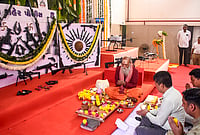
Under the leadership of Adarsh Garg, Chairman and Managing Director of Jogindra Group, Punjab has marked a major sustainability milestone with the commissioning of the state’s first 25 MW-class (37.5 MW) intrastate open access captive solar power farm dedicated exclusively to the steel industry. The project reflects a decisive shift toward cleaner, more responsible industrial energy use - at a time when sustainability is becoming central to India’s manufacturing future.
Known for championing responsible industrial growth and long-term value creation, Adarsh Garg has consistently emphasised that manufacturing leadership must evolve beyond scale and output to include accountability toward people, resources, and the environment. This landmark initiative embodies that philosophy in action.
The commissioning of the solar farm signals Punjab’s growing commitment to aligning industrial growth with climate responsibility. By enabling large-scale renewable energy adoption within the steel sector - traditionally considered energy-intensive - the project sets a new benchmark for sustainable manufacturing in India.
Jogindra Group has expressed its sincere gratitude to the Government of Punjab and all concerned departments for their progressive policies, consistent support, and facilitation of intrastate open access. This forward-looking regulatory framework played a critical role in enabling the successful execution of this pioneering initiative.
The solar farm has been developed to power a steel manufacturing facility that already follows a highly sustainable production model, with approximately 85% scrap-based raw material usage. This approach significantly strengthens the circular economy, reduces dependence on virgin resources, and lowers the overall carbon footprint of steel production - demonstrating that sustainability delivers its greatest impact when embedded into core operations.
Beyond its environmental contribution, the project also plays a meaningful role in employment generation, creating direct and indirect job opportunities across construction, operations, and maintenance phases, while supporting local economic development. It further enhances energy security by reducing reliance on imported and non-renewable power sources, strengthening long-term industrial resilience.
The solar plant is to generate clean electricity with also preventing nearly 41,635 tonnes of CO₂ emissions each year. This environmental impact is equivalent to:
Removing nearly 9,000 passenger vehicles from the road annually, or
Planting approximately 1.65 million trees
This initiative marks a significant milestone in Jogindra Group’s journey toward net-zero emissions. By integrating renewable energy with scrap-based steel manufacturing, the project demonstrates that industrial scale and climate responsibility are not competing priorities, but complementary ones.
As Punjab charts its path toward a cleaner industrial future, this project stands as a compelling example of how visionary leadership, supportive policy, and sustainable innovation can together redefine the role of industry in climate action.