
Most people notice hair loss in the mirror — thinning patches, more hair on the pillow, a wider parting. But the real story doesn't start there. It starts weeks or even months earlier, quietly, beneath the surface of your scalp where you can't see or feel anything at all.
Understanding what's actually happening under the skin helps explain why hair loss rarely has a simple fix — and why surface-level treatments often disappoint.
The Hair Growth Cycle and Where It Can Go Wrong
Hair doesn't grow continuously. It works in cycles — growing for a few years, resting for a few months, then shedding to make room for new growth. This cycle repeats throughout your life. The three main phases are anagen (active growth), catagen (transition), and telogen (resting and shedding).
In a healthy scalp, about 85–90% of hairs are in the growth phase at any given time. When something disrupts this balance — stress, nutritional gaps, hormonal shifts — more hairs get pushed into the resting phase than usual. The result is noticeable shedding that often baffles people because there's no single obvious cause.
What Lives Inside a Hair Follicle
The Hair follicle is a small but remarkably complex organ. It contains stem cells, blood vessels, oil glands, and a cluster of cells at the base called the dermal papilla. This papilla is essentially the control center — it receives signals from hormones, nutrients, and nerve endings, and it decides whether a follicle should grow, pause, or shrink.


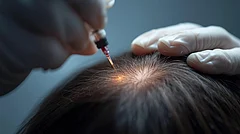
When the scalp environment is healthy, the dermal papilla gets consistent blood flow, adequate nutrition, and stable hormonal signals. Hair grows predictably. When that environment is disrupted — by inflammation, poor circulation, or hormonal imbalance — the papilla starts underperforming. Over time, follicles can miniaturize, producing thinner and shorter hairs until they stop producing hair entirely.
The Role of DHT in Follicle Miniaturization
One of the most well-documented causes of hair loss, particularly in men and increasingly in women, is a hormone called dihydrotestosterone or DHT. DHT is derived from testosterone through an enzyme called 5-alpha reductase. It's normal to have some DHT — the problem arises when it binds too aggressively to receptors in scalp follicles.
In genetically susceptible individuals, this binding shortens the growth phase of the hair cycle. Each successive cycle produces a slightly thinner, weaker strand. Eventually, the follicle produces nothing visible at all. This process can begin years before any visible thinning appears, which is part of why early intervention tends to work better than waiting until loss is obvious.
Scalp Inflammation Is Often the Missing Piece
Many people dealing with persistent hair loss have some degree of scalp inflammation that goes unaddressed. Inflammation can be triggered by a buildup of sebum, fungal activity, product residue, or even chronic stress — and it directly interferes with follicle function.
An inflamed scalp environment restricts blood flow to hair follicles, disrupts the natural shedding and regeneration cycle, and over time contributes to the kind of follicle damage that's difficult to reverse. This is why scalp health, not just hair health, deserves attention. The two are not the same thing.
Nutrition, Blood Flow, and the Follicle's Basic Needs
Every hair follicle needs a constant supply of oxygen and micronutrients to function well. Key nutrients involved in hair growth include iron, zinc, biotin, vitamin D, and certain amino acids like L-cysteine. A deficiency in any of these can quietly slow the growth cycle without triggering obvious symptoms elsewhere in the body.
Poor scalp circulation compounds the problem. When blood flow to the scalp is reduced — due to stress, a sedentary lifestyle, or tight hairstyles worn repeatedly — follicles receive fewer nutrients and remove waste less efficiently. Simple habits like regular scalp massage or light exercise can meaningfully improve circulation over time.
Final Thoughts
Hair loss rarely has a single cause. It's usually a combination of hormonal activity, nutritional status, scalp health, and genetics working together — often over a longer timeline than most people realize. Brands like Traya are built around this idea, focusing on identifying root causes rather than applying the same solution to everyone.
If your hair has stopped growing or you're losing more than feels normal, the place to start is understanding what's happening beneath the surface — because that's where the real answer is.
Disclaimer: This is a sponsored article. All possible measures have been taken to ensure accuracy, reliability, timeliness and authenticity of the information; however Outlookindia.com does not take any liability for the same. Using of any information provided in the article is solely at the viewers’ discretion.