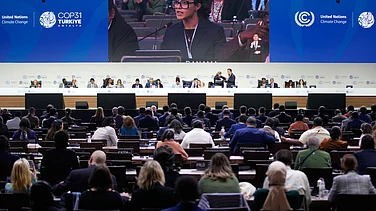
Pakistan, Saudi Arabia and Türkiye signed the Mecca Joint Defence Agreement in August, committing to treat an armed attack on one member as an attack on all.
The alliance is still developing its command structure and response procedures, while Pakistan and Türkiye have signalled limits on direct offensive operations against the Houthis in Yemen.
Pakistan’s effort to defend Saudi Arabia while preserving diplomatic engagement with Iran could prove one of the pact’s biggest tests.
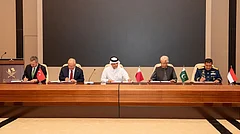
A pact is a promise written in the present tense about a future nobody has seen. The Mecca Joint Defence Agreement, signed by Saudi Arabia, Pakistan and Turkiye on August 7, treats an armed attack on one member as an attack on all three. On Friday and Saturday, the three countries' ministers will meet in Islamabad. It is their third meeting since the signing, and it comes while Houthi attacks on Saudi Arabia continue and Iranian strikes on other Gulf states recur. The question every alliance eventually faces is the awkward one: what, exactly, will we do?
Pakistan's Defence Minister Khawaja Asif told AFP the "continuous turmoil south of Saudi Arabia", meaning Yemen, would be on the agenda. He said any threat to Saudi Arabia is a threat to Pakistan and Turkiye, which is "absolutely clear". He also called the pact young, saying frequent meetings were needed so that everything is in place within a couple of months.
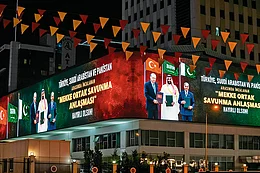
The Promise Has A Border
The first limit is geographic. Pakistan has pledged to defend Saudi territory, but it has ruled out attacking the Houthis inside Yemen. On October 9, its foreign ministry spokesman said Pakistani troops stationed in Saudi Arabia under the alliance would not cross into Yemen. A Pakistani force, including fighter aircraft, had already arrived in Saudi Arabia's Eastern Province in April under a bilateral defence agreement signed in 2025.

One analyst quoted by Al Jazeera notes that most of Pakistan's military presence there predates the new pact, and that Riyadh has not publicly pressed Islamabad to join offensive operations in Yemen.
Another analyst, Umer Karim of the King Faisal Center in Riyadh, argues that the limit still falls short of what Saudi Arabia wants. His reading is that Riyadh wants help against the Houthis but also wants Pakistan as its channel to Iran, which backs the Houthis, and that deeper Pakistani involvement would weaken that role. Turkiye is similarly careful.

Turkish Foreign Minister Hakan Fidan said on November 21 that no decision had been made on deploying troops inside Yemen, though necessary support was being provided for Saudi Arabia's defence. Another analyst, Omer Ozkizilcik, does not expect the pact to join offensive operations, since the Saudis have asked for defensive support only.
Defensive does not mean passive. A King's College London researcher says Pakistan's commitment covers combat aviation, ground formations, air and missile defence and geospatial intelligence, and that defensive operations can involve direct combat.

A Pact Younger Than Its Tests
The alliance has moved quickly on paper. Its first committee meeting took place in Istanbul on August 31. On October 5, at an emergency meeting in Riyadh, members agreed to provide forces and capabilities and ensure their rapid deployment in the kingdom, though the joint statement named neither Yemen nor the Houthis.
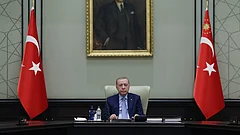
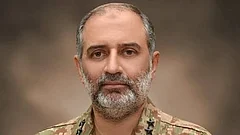
A retired Pakistani general, Nauman Mahmood, is its first secretary-general, serving three years from a secretariat in Riyadh. Pakistan and Saudi Arabia completed ratification by October 23, and Turkiye's parliament approved it on November 5 by 279 votes to 119. Turkish President Recep Tayyip Erdogan has since signed off on it.
The tests came faster than the institutions. At least 26 people have been killed in suspected Houthi drone and missile attacks in Saudi Arabia since September 23, according to Saudi authorities, 23 of them in strikes on airports. This week, a tower in Riyadh's financial centre was hit, injuring 11. The harder gaps are still open. The alliance has not publicly said how it would decide on a joint military response, which forces it would call on, or who would command them. Ozkizilcik adds that, with no superpower among its members, its reach will always be limited.
The Mediator In The Middle
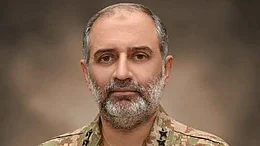
The difficulty is that Pakistan wants to be both defender and go-between. On October 26, Saudi Defence Minister Prince Khalid bin Salman, Pakistan's army chief Asim Munir and Turkiye's intelligence chief Ibrahim Kalin met Iran's Mohsen Rezaei in Tehran, a meeting widely believed to have been facilitated by Islamabad. Analyst Obaid argues Pakistan is not neutral between Riyadh and Tehran, but has its own interest in preventing a renewed US-Iran confrontation, which explains its mediation. Iran's view is mixed.

A Tehran-based analyst says Iran welcomes any counterweight to Israel and the American order, but knows that one aim of the pact may be to control Iran and its proxies. Pakistan's foreign ministry spokesman says the agreement is defensive in nature and not directed against any country, and its text, as submitted to the Turkish parliament, names no threat. Asif declined to say how the pact would respond to a direct Iranian attack on Saudi Arabia, naming Israel as a possible regional threat.
For India, the pact is a different kind of question. Its significance lies less in any improbable prospect of Saudi forces joining an India-Pakistan war than in the political protection, military technology and strategic leverage it could give Islamabad.
The partners' threat perceptions differ: Saudi Arabia is focused on Iran and the Houthis, Turkiye on Israel, Syria and Kurdish groups, and Pakistan's central conventional adversary remains India. India's foreign ministry has said it values its strategic partnership with Saudi Arabia and expects Riyadh to take India's "interests and sensitivities" into account.
Karim's verdict on the balancing act is blunt. It gets harder every day, he says, but Pakistan has not yet crossed a breakdown threshold. A collective defence promise is easy to sign. Whether it turns into real support depends on a decision Islamabad would rather not make.