India is assessing the Mecca Joint Defence Agreement's implications for national security and regional stability.
Saudi Arabia, Pakistan and Turkiye agreed to treat an armed attack on one as an attack on all three.
Pakistan says the pact is defensive and not directed against any country.
India is assessing the security implications of a new three-way defence arrangement between Saudi Arabia, Pakistan and Turkiye, the Ministry of External Affairs (MEA) said on Tuesday, as the pact commits the three countries to treating an armed attack on any one of them as an attack on all three.
India weighs regional security implications
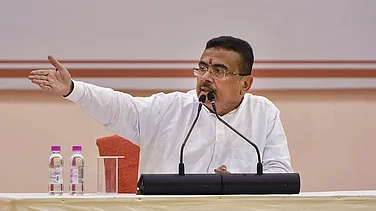
Responding to questions on the agreement at the weekly media briefing, MEA spokesperson Randhir Jaiswal said India was closely following developments in the West Asia conflict.
"We continue to closely follow developments in the West Asia conflict. As far as this particular agreement is concerned, we are examining its implications, both from the perspective of our national security, as well as considerations of regional stability, peace and stability."
He added that India remains fully committed to safeguarding its national interests and will take all necessary measures in this regard.
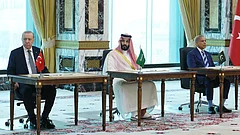
Saudi Crown Prince and Prime Minister Mohammed bin Salman, Pakistan Prime Minister Shehbaz Sharif and Turkish President Recep Tayyip Erdogan signed the agreement at Al-Safa Palace in Mecca.


In a separate statement, Saudi Arabia said the arrangement does not amount to a military axis or a religious bloc. The kingdom also said it is not linked to nuclear activity or an arms race. Instead, the agreement is aimed at building "sustainable self-reliant capabilities" without affecting Saudi Arabia's existing strategic relationships at the Gulf, Arab and international levels.
In a post on X, Erdogan said the pact would deepen defence cooperation, support joint defence industry projects and strengthen counter-terrorism efforts. He said it is based on collective deterrence, reaffirms the right of defence under Article 51 of the UN Charter, does not target any country and remains open to other countries seeking regional peace, prosperity and stability.
A Turkish government official, speaking on condition of anonymity, described the agreement as purely defensive and said it does not annul or replace existing bilateral or multilateral agreements involving the three countries, whether with one another or with other states and organisations.
Pakistan outlines its position
Pakistan Deputy Prime Minister and Foreign Minister Ishaq Dar described the pact as the culmination of years of discussions and coordination between the three countries.
In a post on X on Sunday, Dar said it reflected the "depth of the brotherly relations between the leadership and peoples of the three countries". He said the three countries shared a desire to strengthen strategic cooperation in addressing multifarious peace and security challenges and advancing regional peace, stability and prosperity.
Dar also said the pact does not abrogate or replace any existing bilateral or multilateral agreements involving the three countries, including those with other countries or organisations.
"The Makkah Accord is purely defensive in nature. It is not targeted against any country and its sole purpose is to further strengthen our ongoing efforts towards peace, stability and prosperity in the wider region," Dar said, adding any external armed attack on any one of the three countries will be considered as an attack on all, consistent with the inherent right of individual and collective self-defence under Article 51 of the UN Charter.
He further said: "Makkah Accord remains open to any country in the region willing to uphold its fundamental principles and resolve differences through mutual respect, cooperation and peaceful means."
Dar said the agreement is consistent with the fundamental pillars of Pakistan's foreign policy, adding that Islamabad "looks forward to continuing to work closely with all brotherly countries in the region towards lasting peace and stability".
"We remain committed to advancing the cause of peaceful resolution of all conflicts and building a more secure, stable and prosperous future for our peoples," Dar said.
Wider regional context
The West Asia conflict has widened across multiple fronts, including the Red Sea and the Bab al-Mandeb Strait, prompting Gulf states to strengthen regional security coordination.
Pakistan has meanwhile been seeking to mediate between the United States and Iran. Islamabad said last week that it was "doing its utmost" to bring Washington and Tehran back to negotiations under a Memorandum of Understanding signed in June.
The new trilateral arrangement also follows a Strategic Mutual Defence Agreement concluded by Pakistan and Saudi Arabia in September. That bilateral pact similarly established that an attack against either country would be treated as an attack against both.