



Egypt was part of the R4 dialogue but was excluded from the pact’s founding members
Türkiye says Egypt is a natural partner and could join the alliance later
A report says Saudi Arabia initially opposed Egypt’s inclusion, but Riyadh has not confirmed it
Egypt’s exclusion from the newly signed Mecca Joint Defence Agreement is striking because Cairo was already sitting at the same diplomatic table as Saudi Arabia, Türkiye and Pakistan.
The four countries had developed the R4 framework as a platform for consultation on regional and international developments, including peace, security and stability. Their foreign ministers met in Cairo on June 21, while Saudi Arabia separately confirmed its participation in the four-country grouping.
Yet when Saudi Arabia, Türkiye and Pakistan signed the Mecca Joint Defence Agreement, they established themselves as its three founding members, leaving Egypt outside the initial core.
The exclusion may not be permanent. Turkish Foreign Minister Hakan Fidan described Egypt as a “natural partner” and said he expected Cairo to join at a later stage. Fidan said there were “a few technical issues” to resolve, but did not specify what they were.
A local media report, meanwhile, said Saudi Arabia had opposed Egypt’s inclusion during discussions over the agreement, citing sources familiar with the talks. Riyadh has not publicly confirmed that account.

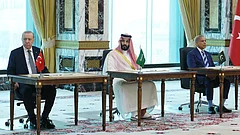
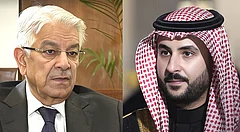
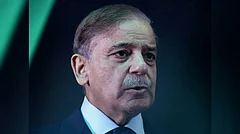
What Is The “Islamic NATO”?
The Mecca Joint Defence Agreement establishes a collective-defence framework between Saudi Arabia, Türkiye and Pakistan. Fidan said it is technically equivalent to NATO’s Article 5 which treats an armed attack against one member as an attack against all, requiring each ally to assist the attacked country.
However, he stressed that the pact contains general commitments whose practical implementation would depend on decisions by its political and military bodies.
The alliance is designed around a strategic political and military committee bringing together foreign ministers, defence ministers and chiefs of general staff, with a permanent secretariat to be established in Saudi Arabia. Its members are also expected to cooperate on interoperability, joint training, logistics, intelligence, threat assessments and defence-industry cooperation.
Fidan said the alliance is currently being referred to as the “Mecca Alliance” or “Mecca Defense Alliance”, with the definitive name still to emerge.
Why Is Egypt’s Exclusion Surprising?
Egypt was not an outsider to the three countries.
In March, foreign ministers from Egypt, Saudi Arabia, Türkiye and Pakistan met in Islamabad for a quadrilateral ministerial meeting on regional developments. Saudi Arabia’s official news agency confirmed the participation of its foreign minister.
The four countries met in Cairo, continuing their coordination on regional and international developments and questions of peace, security and stability.
The R4 therefore provides an established political framework in which Egypt already works with the three states that founded the Mecca pact.
Fidan also said the R4 would retain its importance even after the defence pact was created, indicating that the two structures are intended to coexist rather than replace one another.
One possible explanation is that the founding members chose to build the defence structure around three core states first, rather than immediately incorporating the wider R4 membership. Fidan himself said the three countries were the “core countries” and that the alliance should eventually grow beyond them.
Türkiye Wants Egypt In
Ankara’s position is the clearest public indication that Egypt has not been permanently excluded.
Fidan said Egypt was already Türkiye’s “natural partner” and indicated that he expected it to join the alliance at the next stage. He said a few technical issues needed to be resolved and that, beyond those questions, he saw no reason why Cairo should not participate.
Fidan also said the initiative should not remain limited to three countries. Under Turkish President Recep Tayyip Erdogan’s vision, he said, the group should grow and potentially bring other countries “under this umbrella”.
The implication is that the three-member format is not necessarily intended to be the alliance’s final composition.
That places Egypt’s exclusion at the founding stage of the alliance rather than establishing a permanent bar on its participation.
The Saudi Question
The unresolved issue is Saudi Arabia’s role in Egypt’s exclusion.
Local media reports said that Riyadh opposed bringing Egypt into the founding agreement, citing sources familiar with the discussions. This is a reported account, not a publicly stated Saudi position.
Publicly, Saudi Arabia has continued to participate in the R4 alongside Egypt. Its foreign minister took part in the March quadrilateral meeting in Islamabad, and Saudi Arabia participated in the June Cairo meeting.
That contrast is notable, Riyadh continues to participate in the R4 with Cairo even though the report suggests its position on the composition of the new defence pact was different. Fidan’s account also suggests that Egypt’s importance to the wider four-country framework is not disputed.
Fidan said neither Pakistan nor Saudi Arabia had a disagreement over Egypt’s importance. His account suggests that the reported objection, if accurately described, concerned Egypt’s participation in the pact’s founding structure rather than its broader strategic importance to the three countries.
The Mecca agreement therefore cannot simply be treated as an enlarged version of the R4.
The two formats have different purposes, and the founding members have chosen a narrower starting point for the defence structure.
Egypt’s Red Sea Interests
Egypt would nevertheless have a clear strategic rationale for participation.
Cairo has long tied its military and security interests to the Red Sea and the Bab el-Mandeb Strait. Egyptian government material records its participation in the Saudi-led Yemen campaign, including the contribution of air and naval forces, while emphasising the importance of maritime security.
Egypt has also argued that Red Sea security arrangements should involve the countries bordering the waterway rather than being driven primarily by states from outside the region.
That gives Cairo an obvious strategic interest in a regional defence framework whose members are placing the security of the Red Sea and Bab el-Mandeb at the centre of their wider security calculations.
The Mecca initiative is also emerging alongside a broader Saudi push on Red Sea security. Fidan said Riyadh had invited military chiefs from 40 countries to discuss security in the Red Sea and around Bab el-Mandeb.
But Egypt’s strategic priorities extend beyond the Red Sea. Its security calculations are heavily influenced by the Nile basin, Sudan, Libya and developments in the Horn of Africa.
That means its strategic agenda would not necessarily coincide perfectly with those of Saudi Arabia, Türkiye and Pakistan across every regional issue.
Other Strategic Fault Lines
There are also broader differences among regional powers, although they should not automatically be treated as the reason for Egypt’s exclusion.
Somaliland is one issue where Saudi Arabia and Egypt have publicly aligned. Both have backed Somalia’s sovereignty, unity and territorial integrity, reflecting a shared position on an issue with wider implications for the Horn of Africa.
The UAE, meanwhile, has developed its own strategic relationships in the Horn of Africa, including with Ethiopia. Egypt regards Ethiopia’s Grand Ethiopian Renaissance Dam as a major water-security issue, while the UAE describes Ethiopia as a strategic partner. That illustrates the different strategic relationships maintained by major regional powers, but does not establish that the UAE-Ethiopia relationship influenced the Mecca pact’s founding membership.
Sudan provides another example. The UAE has faced allegations of supporting the Rapid Support Forces, which Abu Dhabi denies, while Egypt regards Sudan’s stability as a major security concern. The UAE, Egypt and Saudi Arabia have nevertheless participated in joint diplomatic efforts on Sudan.
These differences demonstrate a broader feature of the regional system: states can cooperate on one security issue while pursuing different priorities elsewhere.
Is Egypt Permanently Excluded?
Not according to Türkiye.
Fidan explicitly said the alliance should grow beyond its three founding members and identified Egypt as a natural partner expected to join at a later stage.
That makes the distinction important.
Egypt is outside the founding structure, but it remains part of the wider political architecture around it. It continues to participate in the R4, maintains close security ties with Saudi Arabia and Pakistan and is regarded by Türkiye as a prospective member of the defence alliance.
The unresolved question is therefore less whether Egypt belongs in the region’s emerging security architecture than which structure it joins, and under what terms.
What Happens Next?
The agreement has already been signed, but its institutional architecture is still being built. Fidan said the permanent secretariat, standards, joint exercises and interoperability mechanisms still have to be developed, creating a window for additional countries to be incorporated into the framework.
The evidence therefore points to Egypt being left outside the founding core rather than being permanently excluded. Türkiye wants Cairo involved, the R4 continues to bring the four countries together, and Saudi Arabia has maintained strategic consultation with Egypt even though a report, citing sources familiar with the talks, says Riyadh opposed its inclusion at the outset. That reported position has not been publicly confirmed by Saudi Arabia.
The unresolved question is why Riyadh preferred a three-country core. Publicly, Türkiye points to the founding structure and unresolved technical issues. Beyond that, the precise Saudi calculations remain unclear.
What is clear is that Egypt’s absence from the founding pact does not, on the available public evidence, amount to a break with the wider Saudi-Türkiye-Pakistan-Egypt strategic framework.















