



US President Donald Trump lauded the Mecca Joint Defence Agreement signed by Saudi Arabia, Turkey, and Pakistan as a big, bold, and important first step.
Signed on August 7, 2026, the pact establishes a mutual defence alliance where an armed attack against one member is treated as an attack against all.
The alliance combines Pakistan's military personnel, Turkey's NATO-strength forces, and Saudi Arabia's financial and strategic influence in the Gulf.
US President Donald Trump welcomed the recently signed Mecca Joint Defence Agreement between Saudi Arabia, Turkey and Pakistan, calling it a "big, bold and important first step" towards defending themselves in a "more meaningful way".
The three partner nations signed the pact on August 7, 2026, establishing that an armed attack against any of the three countries will be regarded as an attack against all of them. Saudi Crown Prince Mohammed bin Salman, Turkish President Recep Tayyip Erdogan and Pakistan Prime Minister Shehbaz Sharif signed the agreement to strengthen collective security.
"Very happy to see that Saudi Arabia, Turkey, and Pakistan have recently, and finally, signed the Mecca Joint Defence Agreement. It shows how the Middle East is coming together, and how countries will finally be able to defend themselves in a more meaningful way," Trump posted on Truth Social. He added, "THIS IS A BIG, BOLD, AND IMPORTANT FIRST STEP — WOW!"


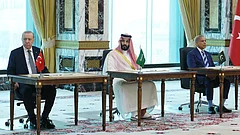

Strategic Alliance Capabilities
The three nations negotiated the agreement for around a year against the backdrop of the ongoing US-Iran war, according to Reuters.The conflict has intensified violence across the region, including attacks by Iran-backed Houthi rebels.
Each partner brings distinct capabilities to the alliance. Pakistan contributes military personnel and defence manufacturing capabilities, while Turkey contributes NATO’s second-largest military and Saudi Arabia offers financial strength and strategic influence in the Gulf, Reuters reported.
Turkish Foreign Minister Hakan Fidan compared the pact to NATO's Article 5 mutual defence agreement, stressing that the accord does not target Iran. Fidan said Erdogan wanted to see the alliance expand, noting Egypt as a potential candidate to join.
Regional Geopolitical Reactions
India is assessing the implications of the Mecca agreement on its national security and regional stability. External Affairs Ministry Spokesperson Randhir Jaiswal stated on August 11 that New Delhi is examining the pact.
"India remains fully committed to safeguarding its national interests and will take all necessary measures in this regard," Jaiswal said.
Meanwhile, Iran's Foreign Ministry Spokesperson Esmaeil Baghaei stated Tehran has no reason to be concerned about the security pact. Baghaei said the agreement highlights a shift in regional countries' approach to security, with greater reliance on their own capabilities rather than outside powers.















