



Pakistan Defence Minister Khawaja Muhammad Asif says Saudi Arabia can access whatever military capabilities Islamabad has available if the kingdom faces further threats from the Houthis
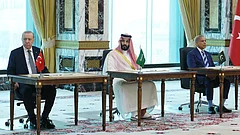
The Mecca Joint Defence Agreement signed by Pakistan, Saudi Arabia and Türkiye states that an armed attack on one member is to be regarded as an attack on all three, while Islamabad describes the pact as defensive and not directed against any country
Pakistan has not announced a decision to conduct operations against the Houthis, but the three countries have begun discussing mechanisms for assisting Saudi Arabia after recent attacks and are continuing to build the pact’s institutional and defence arrangements
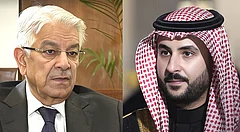
Pakistan will provide Saudi Arabia with whatever military means are available to it if Riyadh faces threats from the Houthis in Yemen, Defence Minister Khawaja Muhammad Asif said on Tuesday.
Speaking during a visit to Rome, Asif said Pakistan was bound by the new mutual defence arrangement with Saudi Arabia and Türkiye, adding that Pakistani military capabilities would be available to Riyadh if required.
“I’m not going into detail, but obviously when I say that we are bound by this arrangement to defend Saudi Arabia, that means whatever means are available at our disposal, they’ll be available to Saudi Arabia also,” Asif said.

He did not say whether Pakistan would take part in airstrikes against Yemen or whether Saudi Arabia had formally requested military assistance.

What The Pact Says
Pakistan, Saudi Arabia and Türkiye signed the Mecca Joint Defence Agreement in August.
Pakistan’s Foreign Ministry describes the agreement as defensive in nature and says it is not directed against any country. Under the pact, an armed attack against any one of the three countries is to be regarded as an attack against all three, consistent with the right of individual and collective self-defence under Article 51 of the UN Charter.
Islamabad has said the agreement is intended to strengthen collective deterrence and cooperation against external aggression while reinforcing the three countries’ capacity to protect their sovereignty and territorial integrity.
Houthi Threat
Asif’s remarks come as Saudi Arabia faces repeated Houthi attacks, including attempts targeting its territory, amid the wider conflict involving the group in Yemen.
The defence ministers’ comments followed a meeting between the army chiefs of Pakistan, Türkiye and Saudi Arabia in Riyadh to discuss a response to Houthi attacks. Pakistani Army spokesperson Lieutenant General Ahmed Sharif Chaudhry had earlier said Islamabad would do “everything in its power” to defend Saudi Arabia and that its commitment to the kingdom was unconditional.
The pact was signed as regional tensions have expanded around Yemen, the Red Sea and the Gulf, bringing the security interests of Saudi Arabia and its partners into closer alignment.

What Pakistan Has Committed
Pakistan’s Foreign Ministry has stressed that the Mecca agreement is intended as a defensive arrangement rather than the creation of a new military bloc.
The agreement is also designed to deepen defence cooperation through areas such as training, capacity-building, defence technology and the exchange of military experience. Pakistan said the arrangement formalises and strengthens longstanding security ties with Saudi Arabia and Türkiye.
Asif’s latest remarks indicate that the commitment could extend to military assistance if Saudi Arabia comes under armed attack, although the precise form of any Pakistani response remains unspecified.
Pakistan has not said that it has decided to conduct operations against the Houthis. Asif’s statement instead establishes that Islamabad considers Saudi Arabia’s defence covered by the obligations of the new trilateral pact.















