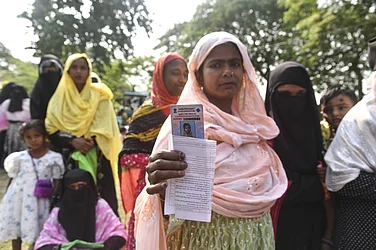
- Nutrition programme for children managed by the ministry of women and child development (WCD) has failed to deliver
- Special allocation of Rs 5,000 crore made for Supplementary Nutrition Scheme. But 40 million children under the age of three still malnourished.
- WCD ministry embroiled in a mindless controversy over whether to serve hot cooked meals or packaged food in creches
- The PM now wants to head a commission to oversee the SNS
***

A senior official in the PMO was quite caustic, telling Outlook that the ICDs cannot be just a mere food distribution scheme; that it needs to integrate with local bodies who have the mandate to tackle malnutrition. In this matter, the mindless debate over hot cooked meals and packaged food has not helped at all. "Concerted missions at the top have to be structured in a manner where it helps the scheme to take off at the ground," the official said. Critical of the WCD ministry's intervention in the states, the official says the mission under the PM would now provide the template for the states to follow or adapt to their needs. According to him, instead of the current top-down approach which has failed to tackle the issue, what is required is a policy of planned, phased action starting at the panchayat level and moving upwards to the district and then the state level.
Many experts, including officials at the National Rural Health Mission (NRHM), also argue that convergence between the key ministries of health and WCD is vital for the success of any malnutrition programme. Currently, this is sorely lacking. Points out an NRHM official: "Ever since the latest National Family Health Survey, which talked of high malnutrition among children, there's been a growing sense of urgency to tackle the problem. But there are doubts whether a stand-alone ICDs programme will be able to tackle the problem." Adds NGO man Gupta: "Given the inextricable link between ill-health and malnutrition, the lack of a department of public nutrition in the ministry of health is itself inexplicable."
Most experts are of the opinion that the SNS scheme will only benefit from being under the prime minister's direct care. If nothing else, it will become more accountable which means the programme becomes more effective while also reflecting the degree of the government's concern.
Rooting out malnutrition was one of the promises made by Manmohan Singh during his Independence Day speech from the ramparts of the Red Fort last August. Hopefully, the commission he plans to head will give more focus and purpose to the SNS scheme.