




Parliament’s Monsoon Session ended after repeated disruptions and government-Opposition confrontations across both Houses.
Eleven Bills passed both Houses, while one remained pending during session.
Lok Sabha productivity stood at 19%, Rajya Sabha at 39%, Rijiju said.
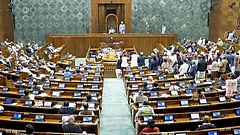
The Monsoon Session of Parliament concluded on Thursday after Lok Sabha Speaker Om Birla and Rajya Sabha Chairman CP Radhakrishnan adjourned their respective Houses sine die, ending a session marked by repeated disruptions, Opposition protests and a series of legislative measures.
The Lok Sabha’s final sitting began with the playing of Vande Mataram. Prime Minister Narendra Modi, Congress leader Rahul Gandhi and other MPs were present as all six stanzas of the National Song were played before the House was adjourned.
In the Rajya Sabha, the final day saw the passage of the Mines and Minerals (Development and Regulation) Amendment Bill by voice vote. The Upper House skipped Zero Hour and Question Hour and continued beyond its usual pre-lunch schedule before Radhakrishnan reviewed the session’s functioning and adjourned proceedings sine die.

NEET-UG Row Dominates Session
The session, which began on July 20, was dominated by protests over alleged irregularities in the NEET-UG examination and demonstrations by students.
Opposition MPs repeatedly sought a discussion on the examination controversy and demanded accountability from the Education Ministry. They also raised alleged police action against protesters during the July 20 Jantar Mantar demonstration and sought a statement from Home Minister Amit Shah.


The Cockroach Janta Party also made then Education Minister Dharmendra Pradhan’s resignation one of its principal demands, with its agitation extending outside Parliament through the ‘Sansad Chalo’ march.
Political pressure over the controversy eventually culminated in Pradhan’s resignation on July 25. In his resignation letter, he said the government had acted after irregularities were reported in the May 3 examination, including transferring the investigation to the CBI, cancelling the test and announcing a re-examination.

Rijiju Flags Low Productivity
Union Parliamentary Affairs Minister Kiren Rijiju described the session as successful in terms of legislative business but acknowledged that debate and discussion had suffered.
“In terms of business, it was a very successful session; we passed a total of 12 bills. However, from the perspective of debate and discussion, it was not as successful,” Rijiju said.
According to him, Lok Sabha productivity stood at 19 per cent, while the Rajya Sabha recorded 39 per cent.
Rijiju blamed repeated Opposition disruptions for the low productivity and said the government had remained ready to answer questions.
“This is not healthy for the parliamentary democracy,” he said.
He added, “In the Lok Sabha, 11 bills were passed without discussion, while one underwent discussion.”

Key Bills Cleared
Among the major legislation taken up during the session was the Public Examinations (Prevention of Unfair Means) Amendment Bill, 2026, which was debated in both Houses.
Other measures cleared included amendments relating to national honour, registration of births and deaths, the strength of the Supreme Court, MSMEs, taxation, tribunals, cooperative development and mining regulations.
The Indian Statistical Institute Bill, 2026 remained pending as the Monsoon Session ended, with differences between the government and Opposition continuing into the final day.















