DMK and NCP-SP support takes the NDA’s projected Lok Sabha tally from 320 to around 350 MPs.
The government would still be 10 votes short of the 360 required if all 540 sitting MPs vote; YSRCP support would take the tally to 354.
The revised proposal provides for a uniform 50 per cent increase in seats across states, while preserving their relative share of representation.
The numbers game over the Centre’s proposed delimitation legislation has begun to turn in the BJP-led National Democratic Alliance’s favour. The DMK and the Nationalist Congress Party-Sharadchandra Pawar (NCP-SP) have indicated support for the revised proposal, taking the NDA’s projected strength in the Lok Sabha from around 320 to 350 MPs. Yet the government is not home and dry.
If all 540 sitting members vote, a constitutional amendment needs 360 votes — leaving the ruling alliance 10 short even after the two parties’ backing.

The shift comes ahead of the special sitting of Parliament beginning November 30, where the government is expected to push a revised package linking delimitation with the implementation of 33% reservation for women. The new proposal includes a uniform 50% increase in Lok Sabha seats across states and Union Territories, while retaining their existing relative share of representation. The question now is whether the government can turn conditional political support into the numbers needed in both Houses.


DMK, NCP-SP Support Changes The Numbers
The DMK, which has 22 Lok Sabha MPs, has agreed to support the proposed 50 per cent increase in parliamentary seats, provided Tamil Nadu’s existing share of representation is protected. The party has maintained that the state should retain its 7.18 per cent share of Lok Sabha seats. DMK MP A Raja said the revised arrangement appeared to safeguard that demand, while leaving room for procedural objections.
“Our consistent demand is that the share of 7.18% (seat share in Lok Sabha) should not be altered. Now it is being maintained. Of course, procedural issues are there; we will address them. If necessary, we will give an amendment,” Raja said, according to ANI.
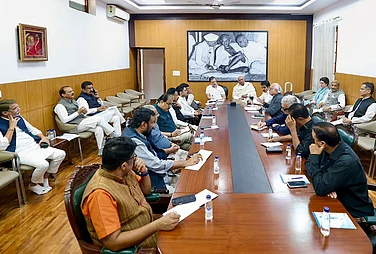
DMK president M K Stalin also told the party’s MPs that its two principal demands had been incorporated into the revised Bill. He said the party had opposed any move that could reduce Tamil Nadu’s share of parliamentary representation and had secured protection for the state’s position for the next 25 years. “We have done our duty. Explain this to everyone. During the upcoming parliamentary session, strongly articulate our position. There should be no hesitation in openly expressing the party’s stand,” he told them, ANI reported.
The NCP-SP, which has eight Lok Sabha MPs, has also announced support. Party leader Jitendra Awhad described delimitation as a constitutional requirement and said the party would back the process. “A decision has been made to support the delimitation process, and we will indeed support it. We will support the delimitation,” he said, according to ANI. The party has maintained that the increase should be uniform across states, rather than changing their relative share.

Why 350 MPs May Still Not Be Enough
The NDA’s estimated strength stands at around 320 MPs, including the BJP’s 241 members and its allies. Adding the DMK’s 22 and the NCP-SP’s eight takes the projected tally to 350. That is a significant improvement, but it remains below the 360 votes required if all 540 sitting members participate in the Lok Sabha vote.
The YSR Congress Party (YSRCP), with four MPs, could provide another route. If it backs the legislation, the projected tally would rise to 354 — still six votes short of the two-thirds threshold. The final calculation will depend on the number of members present and voting, as well as support from smaller parties and individual MPs. Abstentions can lower the two-thirds threshold, but they do not remove the separate requirement of a majority of the House’s total membership.
The earlier attempt offers a reminder of the challenge. On April 17, the Constitution (131st Amendment) Bill was defeated in the Lok Sabha, receiving 298 votes in favour and 230 against. The government had needed 352 votes among the 528 members who voted. The revised proposal is an attempt to address concerns that helped bring about that defeat.

The Rajya Sabha And The Revised Delimitation Formula
The Lok Sabha is only one part of the test. Article 368 requires a constitutional amendment to secure a majority of the total membership and at least two-thirds of members present and voting in each House. The Bill will therefore need to clear the Rajya Sabha as well. The NDA’s position in the Upper House is less comfortable, and it will need to secure support beyond its own ranks.
The Cabinet has cleared the Constitution (132nd Amendment) Bill, 2026, alongside the Delimitation (Second) Bill, 2026 and related legislation. Under the revised proposal, every state and Union Territory would receive a 50 per cent increase in its existing Lok Sabha allocation, preserving the current relative distribution of seats between states until the relevant Census figures after 2051 are published. Constituency boundaries are proposed to be redrawn using the 2011 Census. The maximum strength of the Lok Sabha would rise to 850.

For the government, the DMK and NCP-SP’s support marks a political breakthrough after April’s defeat. But the arithmetic is not settled. The special session will test whether the BJP-led alliance can turn those indications into votes — and whether it can secure the constitutional majority in both Houses.