The DMK has reiterated its support for 'Fair Delimitation', demanding that Tamil Nadu's existing 7.18% share of Lok Sabha seats be protected for another 25 years.
The party wants the current proportion of parliamentary representation among States, based on the 1971 Census, to remain unchanged.
With 22 Lok Sabha MPs, the DMK's position could help the BJP secure support for its delimitation-linked legislation, though its backing remains conditional.
The DMK, which has been among the most vocal opponents of the Centre's proposed delimitation exercise in the past, has now signalled a willingness to engage with the legislation, provided Tamil Nadu's share of parliamentary representation is protected.
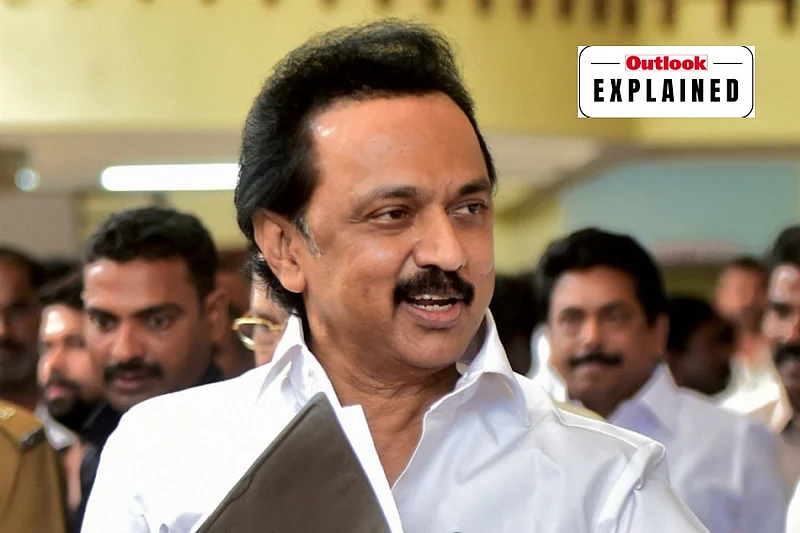
At a meeting of its Members of Parliament, chaired by party president and former CM, M.K. Stalin on Saturday, the DMK adopted a resolution reiterating its demand that Tamil Nadu's existing 7.18 per cent share of Lok Sabha seats must not be reduced. It also called for the current proportion of parliamentary representation among States, based on the 1971 Census, to remain unchanged for another 25 years.
The resolution comes ahead of the special session of Parliament, where the government has indicated its renewed push for the delimitation-linked bills.
The DMK's position could prove significant for the BJP, with 22 Lok Sabha MPs, the party's position carries considerable weight in the parliamentary arithmetic.

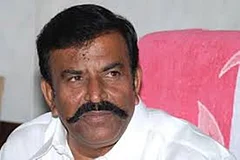

However, Stalin's latest move is not an unconditional endorsement of the Centre's proposal. The DMK has maintained that it is not opposed to delimitation itself, but wants safeguards against States that have successfully controlled population growth losing their share of representation.
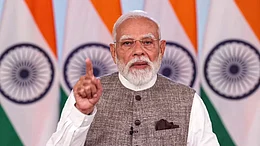
Why Has The DMK Changed Its Position On Delimitation?
The DMK's opposition to population-based delimitation has largely stemmed from concerns over the political consequences for southern States.
Under a conventional population-based exercise, States with larger population growth could gain a greater share of parliamentary seats, while States that have successfully implemented population-control measures risk losing their relative influence in the Lok Sabha.
Tamil Nadu has been particularly vocal on this issue. The State currently has 39 Lok Sabha seats, accounting for 7.18 per cent of the House. The DMK fears that a redistribution based on population could reduce this share, weakening the State's political representation at the Centre.
Stalin had taken the issue beyond Tamil Nadu in March 2025, convening a meeting of the Joint Action Committee (JAC) on Fair Delimitation in Chennai. The meeting brought together political leaders from several States, including Kerala Chief Minister Pinarayi Vijayan, Telangana Chief Minister Revanth Reddy, Punjab Chief Minister Bhagwant Mann and Karnataka Deputy Chief Minister D.K. Shivakumar.
The leaders argued that States should not be penalised for bringing down population growth through decades of social and economic development. Telangana's Revanth Reddy warned that delimitation without equitable safeguards would amount to an irreversible injustice to southern States.
The DMK's latest resolution, however, places greater emphasis on what it calls 'Fair Delimitation' rather than opposing the exercise altogether.
It also recalls the Tamil Nadu Assembly's February 2024 resolution, which demanded that the existing proportion of seats among States, determined based on the 1971 Census, be maintained even if the overall strength of Parliament is increased.
What Exactly Is The DMK Demanding?
The party's latest resolution from today's meeting reiterates two principal demands.
First, Tamil Nadu's existing 7.18 per cent share of parliamentary representation must remain intact, irrespective of any increase in the total number of Lok Sabha seats.
Second, the proportion of parliamentary representation among States, as determined by the 1971 Census, must remain frozen for another 25 years.
The demand is rooted in the constitutional freeze on the allocation of Lok Sabha seats among States. The 42nd Constitutional Amendment in 1976 froze the allocation based on the 1971 Census. This was subsequently extended through constitutional amendments in 2001 and 2002, with the arrangement continuing until the first Census after 2026.
The DMK argues that allowing population growth alone to determine the next allocation would disadvantage States such as Tamil Nadu, which have invested in population stabilisation and welfare programmes.
The party has also criticised the Congress for what it describes as a change in position. The resolution argues that the DMK has consistently advocated fair delimitation, while the Congress has moved from demanding safeguards to opposing delimitation altogether.
How Could The DMK's Position Help The BJP?
The DMK's latest resolution comes at a politically significant time for the BJP, which needs to secure parliamentary support for its proposed legislation. To successfully pass the bill, the BJP-led NDA will need to secure a two-thirds majority in the Lok Sabha. Having failed to secure these numbers in April this year, the BJP is now speculated to be poaching MPs to vote in its favour.
Constitutional amendments require a special majority in both Houses of Parliament. This makes the support of regional parties and other non-NDA MPs particularly important when the government does not have the numbers on its own.
The DMK currently has 22 MPs in the Lok Sabha, making it a significant bloc in the Opposition. Its willingness to negotiate around the delimitation exercise could therefore give the BJP additional room to secure support for its proposals.
However, the party's position remains tied to the acceptance of its demands. Its resolution directs MPs to assert Tamil Nadu's right to retain its existing share of parliamentary representation and to protect the interests of other southern States during the special session.
In other words, the DMK has opened the door to a negotiated position on delimitation, even as it continues to oppose any arrangement that reduces Tamil Nadu's relative representation.
What Does The Centre's Proposed 50 Per Cent Formula Mean?
One of the proposals being discussed to address concerns over regional representation is a uniform 50 per cent increase in the existing Lok Sabha seats of every State and Union Territory.
Unlike a fresh allocation based purely on population, this formula would increase the number of seats across States while broadly retaining their existing proportion of representation.
The current Lok Sabha has 543 elected seats. A uniform 50 per cent increase would take its projected strength to approximately 815, although the proposed constitutional amendment provides for a maximum strength of 850.
For instance, Uttar Pradesh, which currently has 80 Lok Sabha seats, would move to a projected 120. Tamil Nadu's existing 39 seats would mathematically increase to 58.5.
The five southern States of Tamil Nadu, Karnataka, Kerala, Andhra Pradesh and Telangana currently account for 129 Lok Sabha seats, or 23.76 per cent of the House. Under the uniform increase formula, their combined projected strength would rise to 193.5 seats, broadly retaining their existing share.
These are mathematical projections rather than final constituency allocations. The actual numbers would depend on how the government handles fractional figures and implements the proposed formula.
The distinction is important: increasing the number of seats in every State does not necessarily change the balance of parliamentary representation between regions. A population-based redistribution, on the other hand, could alter the existing shares.
Will The South Retain Its Political Influence?
Even if the proposed 50 per cent increase is implemented, southern States will not necessarily gain greater relative influence in Parliament. Their numerical strength would increase, but their proportion of the Lok Sabha would broadly remain the same.
The larger question is whether the government will accept safeguards that prevent States with lower population growth from losing their existing share in future exercises.
For the DMK, the issue is no longer simply whether delimitation should take place. It is about the terms on which it should be conducted, and whether the political representation of States that have successfully implemented population-control policies can be protected.
The party's latest resolution puts that demand at the centre of the debate, while also making its parliamentary support a potentially important factor in the BJP's efforts to secure the numbers for its legislation.