



Congress accused the BJP of “amnesia” on the Women’s Reservation Bill and said the special session is aimed at delimitation
P Chidambaram said the Constitution (106th Amendment) Act, 2023, was already passed and asked why it is not being implemented
Jairam Ramesh alleged that Prime Minister Narendra Modi and Amit Shah were misleading the public about the purpose of the special session
Congress on Friday attacked the BJP over what it called its “amnesia” on the Women’s Reservation Bill and alleged that the coming special session of Parliament is really meant to push delimitation, not women’s quota. The Congress linked its charge to Union home minister Amit Shah’s recent remarks on 33% reservation for women in Parliament and state legislative assemblies.
P Chidambaram took direct aim at Shah and wrote on X that the home minister was either suffering from “amnesia” or being “economical with the truth”. Chidambaram pointed out that the Constitution (106th Amendment) Act, 2023, was already enacted after both Houses passed the Bill on September 20 and 21, 2023.
“Congress fully supported the passage of the Bill, and has been demanding the immediate implementation of the Act,” he said. He then asked, “Why is the BJP government not implementing the Act?” and “What is the need for a new Bill?”


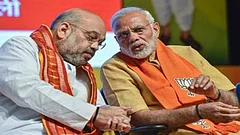

Special Session Row
Jairam Ramesh widened the attack. The Congress general secretary in-charge Communications accused Prime Minister Narendra Modi and Shah of misleading the public over the purpose of the special session.
“Yet again, the mischievous PM-HM jodi is lying,” Ramesh said in a post on X. He added, “The Special Session is thus NOT for women’s reservation. That is already a law which the PM-HM jodi have put into cold storage for over three years. The Special Session is for Delimitation.”
Congress sharpened its line on Friday. It said the session due to begin on November 30 had little to do with women’s reservation and was instead a desperate move by a “nervous and rattled” Prime Minister, focused on a delimitation bill that the party would firmly oppose.
Shah, however, had said the government remained committed to implementing 33% reservation for women in the Lok Sabha and state legislative assemblies. “The women of the country will certainly get 33% reservation of seats in the Parliament and state legislative assemblies,” Shah said.
His remarks came before the government announced a three-day extended special session of Parliament from November 30 to December 3. Shah also said, “I want to tell Rahul Gandhi that it is our commitment that women of this country will get reservation (in Parliament and Legislative Assemblies). No one will be able to stop us,”
The legal position is central to the row. Parliament passed the Women’s Reservation Bill in September 2023 to provide 33% reservation for women in the Lok Sabha and state legislative assemblies.
But the Constitution (106th Amendment) Act, 2023, tied implementation to two later steps. The first was publication of the first Census conducted after its commencement. The second was a delimitation exercise to redraw constituencies.
The former Union Minister pointed out that the Nari Shakti Vandan Adhiniyam to give one-third reservation to women was passed unanimously by Parliament in September 2023, and the Congress president had demanded its immediate implementation, but in vain. Ramesh said the law “did not get notified till 10:40 pm on April 16, 2026”.
In April 2026, the government moved to change that framework so the quota could take effect before the 2029 Lok Sabha elections. Its proposed Constitution (131st Amendment) Bill sought to expand the strength of the Lok Sabha from 543 to as many as 850 seats and use the 2011 Census for delimitation.
Ramesh also questioned who would control the process if the plan moved ahead. He said, “And who will be in charge of deciding the geography of constituencies? It will be a thoroughly compromised and brutally exposed CEC, Gyanesh Kumar, who has made a complete mockery of the preparation of electoral rolls and destroyed the integrity of the electoral process,”
The Congress attack has now spread across its top ranks. KC Venugopal accused the central government of orchestrating the murder of the Constitution on Constitution Day and described the proposed legislation as “Sansad Chori” (theft of Parliament).
In a post on X, Venugopal said, “They are Vote Chors. They are Seat Chors. There is no doubt that their Delimitation Bill will be nothing more than an exercise in Sansad Chori. To orchestrate this murder of the Constitution on Constitution Day shows how badly they want to mock our precious democratic system. We will not allow this to pass. Bring it on.”
Manish Tewari also attacked the government after it proposed a special sitting of Parliament from November 30. He said the request “mocks the institution of Parliament” and asked why the government could not simply convene a regular Winter Session.
The government has proposed the special sitting to transact “essential” business. That proposal came amid indications that the delimitation-linked women’s reservation bill may be brought back.
Rahul Gandhi had earlier accused the government of using delimitation for political gain. He also alleged that the proposed changes could affect the representation of OBC, Dalit and Adivasi communities.
Mallikarjun Kharge has held the same broad line. The Congress president has said the party supports women’s reservation but opposes tying its implementation to delimitation.
Despite questions over the upcoming session's agenda, parties have began to ensure that their legislators are present for the crucial day at parliament. On Friday, Nationalist Congress Party-Sharadchandra Pawar (NCP-SCP) issued a whip, directing its Lok Sabha MPs to be present there from Monday, 30th November to Friday, 4th December, and also support the party's stance.
The earlier bill did not get the required two-thirds majority in the Lok Sabha. The Opposition backed women’s reservation but objected to linking it with delimitation.
Eight months after that defeat, the government is preparing to revive the proposals in the coming extended Parliament session.








