



Delhi's AQI stayed 'poor' (228 at 8 am on Thursday), with Anand Vihar at 332 and the area around AIIMS at 192 ('moderate'), according to CPCB data.
The early warning system says air quality may stay 'poor' until 27 November and turn 'very poor' on 28 November, as the city records its coldest mornings of the season.
The Supreme Court is considering allowing only BS-VI vehicles in Delhi, and the CAQM has asked for 2027 action plans and set a 15 per cent reduction target.
Delhi's air stayed in the "poor" band as the winter chill deepened, with the Air Quality Index around AIIMS at 192, in the "moderate" category, according to the Central Pollution Control Board (CPCB). A day earlier, the overall AQI was recorded at 228 at 8 am, also "poor", while Anand Vihar registered the highest reading among the listed monitoring stations at 332.
Pollution Levels Vary Across The Capital
On Thursday, North Campus recorded an AQI of 302, IIT Delhi 241 and Jawaharlal Nehru University 230. Lodhi Road recorded 148, while India Gate and Kartavya Path registered 149, both "moderate". The AQI around AIIMS stood at 188, also "moderate", while Maidan Garhi and Okhla Phase 2 recorded 199 and 193 respectively.
The count of stations tells the wider story. At 8 am on Thursday, 13 of the 57 monitoring stations recorded "very poor" air, 27 were in the "poor" category and 17 were "moderate", according to CPCB data. Delhi Technological University recorded the highest AQI at 335, while Major Dhyan Chand National Stadium recorded the lowest at 130. The 24-hour average AQI was 224. The citywide AQI at 226, with 37 stations above 200 and three above 300. The figures differ slightly by time of reading and by the stations counted.

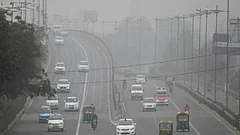




Winter Chill Adds To Delhi's Pollution Concerns
The Air Quality Early Warning System has indicated that Delhi's air is likely to remain "poor" until November 27, before deteriorating into the "very poor" category on November 28. The cold is part of the pattern. Delhi recorded its coldest morning of the season on Wednesday, with the minimum temperature dropping to 10 degrees Celsius. The India Meteorological Department has forecast a minimum temperature of 9 degrees Celsius. Cooler air near the ground tends to trap pollutants, which is why readings often worsen as temperatures fall.
The Supreme Court has also indicated that it may consider allowing only BS-VI vehicles to operate in Delhi as part of measures to tackle air pollution. A Bench headed by Chief Justice of India Surya Kant, with Justices Joymalya Bagchi and V Mohana, made the observation while hearing a matter concerning air pollution in the capital.
For residents, the practical effect is simple. A reading of 192 at one monitor does not mean clean air across Delhi. The city's average has stayed above 200 for several days, and the forecast points the wrong way.








