Rebel TMC MPs can vote in the special session, NDTV reports
Speaker is yet to decide their disqualification petitions
Their status could affect the two-thirds arithmetic
Twenty MPs who walked out of the Trinamool Congress (TMC) are still waiting to learn whether they will be disqualified. When Parliament meets for a special session from Monday, however, they will be free to vote as they choose, NDTV reported, citing Lok Sabha Secretariat sources.
Their ballots matter. The government is preparing to make another attempt at pushing through its delimitation exercise and women's reservation legislation, which involves a Constitution amendment requiring a two-thirds majority. A group in political limbo could therefore have a bearing on one of its most significant legislative initiatives.
The Break And The Long Wait
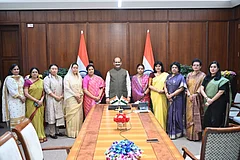
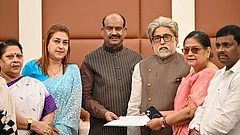
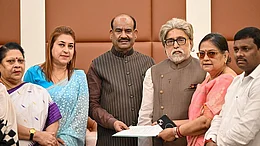
The 20 lawmakers, led by Kakoli Ghosh Dastidar, parted ways with the TMC in June after the party's defeat in West Bengal. They announced a merger with the little-known Nationalist Citizens Party of India (NCPI) and extended support to the ruling National Democratic Alliance (NDA). Lok Sabha Speaker Om Birla also accepted their request to be seated away from TMC members.
TMC General Secretary and Lok Sabha leader Abhishek Banerjee then filed separate petitions seeking the disqualification of all 20 under the anti-defection law. The Lok Sabha Secretariat issued notices on August 26. After five extensions, every one of the MPs submitted an individual written reply on November 24, defending the decision to leave. The Speaker will now examine those responses before taking a final call.


Nearly six months on, the matter remains open. TMC Rajya Sabha MP Sagarika Ghose has questioned the delay, alleging that Birla has not decided the petitions despite the Supreme Court's directions for an expeditious resolution. She also asked whether the MPs could vote on the delimitation Bill while the cases were pending, and whether those votes would survive a later disqualification. The clarification on voting followed her questions.
Why They Can Still Vote
The constitutional position, as settled by the Supreme Court, is that a pending petition does not by itself suspend a member's voting rights or other parliamentary privileges. Under parliamentary rules, a member continues to enjoy all such rights, including participation in House proceedings, until a decision on disqualification is taken. According to NDTV, the MPs cannot be barred unless they are formally disqualified.
A five-judge Constitution bench addressed the issue in May 2023 in Subhash Desai vs Principal Secretary, Governor of Maharashtra. It held that legislators facing disqualification retain the right to participate in House proceedings while their cases are undecided. The validity of those proceedings cannot depend on how the cases eventually end.
The court further held that disqualification operates prospectively and does not date back to when the member allegedly incurred it. So even if Birla disqualifies the 20 after the amendment is put to vote, their participation would not become invalid in retrospect. Timing is thus crucial. Unless an order comes before the House votes, they can exercise their rights, whatever the merits of the petitions.
The Merger Question
Behind the immediate issue of voting lies a larger one. Under the Tenth Schedule of the Constitution, the Speaker or Chairman of the House concerned decides disqualification petitions. Paragraph 6 makes that decision final, subject to judicial review by constitutional courts. The Election Commission of India has no role in it, and its jurisdiction over disputes about party names and symbols is a separate exercise.
Birla must decide whether the rebels are protected by paragraph 4, which exempts legislators from disqualification when their original political party merges with another, provided at least two-thirds of the legislature party agrees. With 20 of the TMC's 28 Lok Sabha MPs on their side, the rebels comfortably clear the numerical bar.
Numbers alone, though, do not establish a valid merger. The Subhash Desai ruling clarified that the merger must involve the original political party and cannot be proved merely by two-thirds of its legislators breaking away. The Speaker therefore has to examine whether the TMC itself merged with the NCPI, or whether the 20 simply formed a separate group and sought to align with another formation. The rebels maintain that their action is constitutionally protected. The TMC argues that the law does not permit a merger confined to the legislature party.
The replies of November 24 clear one procedural hurdle but leave this substantive dispute unresolved.
The party has also taken its demand for speed to the Supreme Court. When it last heard Banerjee's plea in September, a bench led by Chief Justice of India Surya Kant reiterated that the matter needed expeditious adjudication. It declined to set a specific deadline but invoked the three-month principle laid down in Keisham Meghachandra Singh and stressed an early resolution.
The Arithmetic In The House
For the government, the stakes are sharpened by what happened on April 17. Its Constitution amendment then secured 298 votes, short of the 352 needed for a two-thirds majority among the 528 members present and voting.
The revised legislation seeks to raise the Lok Sabha's strength from 550 to 850 seats, facilitating 33% reservation for women in Parliament and state assemblies before the 2029 general election. The NDA currently has around 320 members, which means it needs support from outside the alliance, along with favourable attendance, to get the measure through.
That is where the 20 come in. If they remain members, they keep their right to vote. Should they be disqualified before the vote, the effective membership of the House and the applicable two-thirds threshold would change, but the government's own voting strength would also fall.