



Devendra Nath Mahto has emerged as the central face of Jharkhand's recruitment protests through his hunger strike and student activism.
Protesters are demanding cancellation of disputed examinations, a CBI probe and wider reforms in the JPSC-JSSC recruitment system.
The August 10 Assembly march and police action have given the agitation a sharper political dimension, with opposition parties targeting the Hemant Soren government.
For more than 15 days, Ranchi's Jaipal Singh Munda Stadium has been the centre of a growing student agitation over alleged irregularities in Jharkhand's recruitment examinations.
At its centre is 33-year-old Devendra Nath Mahto, whose indefinite hunger strike and decision to join the march towards the state Assembly have given the movement a recognisable political face.
The protest, led by students and job aspirants, has focused on the Jharkhand Public Service Commission (JPSC) and Jharkhand Staff Selection Commission (JSSC), with demands ranging from cancellation of examinations to an independent probe into alleged irregularities.
What began as a recruitment dispute has increasingly acquired a political dimension, with opposition leaders accusing the Hemant Soren government of mishandling the agitation.

The Face Of The Agitation
Mahto is not a newcomer to student politics. A student leader from Ranchi, he has previously been involved in protests over recruitment examinations. In December 2024, he was detained after police used a lathi-charge to disperse candidates protesting alleged malpractices during the JSSC CGL document-verification process.


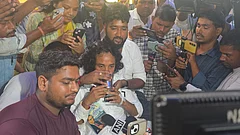
His political profile also predates the current agitation. In the 2024 Lok Sabha election, Mahto contested the Ranchi seat as an Independent candidate and later fought the Silli Assembly election on a Jharkhand Loktantrik Krantikari Morcha (JLKM) ticket. He finished third in Silli with about 24 per cent of the vote.
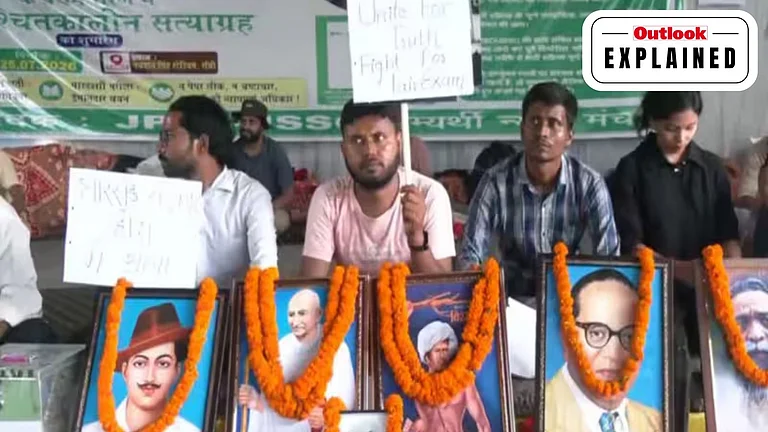
The present agitation began after questions were raised over the results of the 14th JPSC Preliminary Examination. Students subsequently widened their campaign to include other recruitment examinations and broader reforms in the functioning of JPSC and JSSC. Mahto began his indefinite fast on August 2 at the Jaipal Singh Munda Stadium.
As his health deteriorated, the fast became one of the defining images of the agitation. Mahto continued his protest despite reports of weakness and dehydration and joined the Assembly march on August 10. He travelled towards the Assembly in an ambulance before being admitted to Sadar Hospital in Ranchi after his condition worsened.

Protesters Demand
The protesters' demands extend beyond the cancellation of one examination. They have called for the cancellation of recruitment examinations they allege were compromised, an investigation by the Central Bureau of Investigation (CBI), and wider reforms to make the recruitment process more transparent.
Among the issues raised are the publication of category-wise cut-offs, OMR copies and response sheets, greater transparency in the appointment and functioning of examination agencies, and a regular recruitment calendar. Protesters have also sought action against those found responsible for irregularities.
The CBI demand has emerged as a particularly important point of disagreement. Students have argued that a central investigation would be more independent and credible, while the state government has pointed to the ongoing CID investigation and other measures.
Why The Govt Has Struggled To End The Agitation
The government has held several rounds of talks with student representatives, but the discussions have failed to produce a settlement acceptable to both sides. The state has maintained that it has addressed a substantial portion of the protesters' demands, while student representatives have disputed that assessment.
The disagreement is therefore not simply over whether the government has acted, but over whether it has addressed the issues that protesters consider central. The students continue to insist on a CBI investigation and broader action over recruitment examinations.
The controversy has also acquired a wider political context. BJP state president Aditya Sahu has accused the government of failing students and has demanded a CBI probe into the disputed examinations. The BJP had earlier raised the recruitment issue in Parliament as well.

The Assembly March
The August 10 'Vidhan Sabha Gherao' was a significant escalation because it took the agitation from the protest site to the seat of the state government.
The administration imposed prohibitory restrictions around the Assembly and erected barricades and barbed-wire fencing as students prepared to march. When protesters breached multiple barricades, police used water cannons, tear gas and lathicharge to disperse them, according to reports.
The police action has further sharpened the political contours of the dispute. Sahu accused the Hemant Soren government of using excessive force and alleged that hundreds of students were injured. Those claims are political allegations and should be distinguished from independently established figures.
The confrontation nevertheless ensured that the recruitment dispute was no longer confined to examination halls and protest grounds.

Mahto And The JLKM
Mahto's association with the JLKM gives the agitation an important political link. The party, led by Jairam Mahto, emerged from Jharkhand's student and youth mobilisation and made its electoral debut in the 2024 Assembly election. Jairam Mahto won Dumri, while Devendra Nath Mahto contested Silli for the party.
That background makes Mahto different from a purely non-political student representative. He has experience in electoral politics as well as student activism. Yet the current agitation has been presented by its organisers as a student movement rather than a party campaign.
That distinction is becoming harder to maintain as the protest grows and political parties respond to it. Mahto's hunger strike has made him the movement's most visible figure, while the Assembly march has brought the students' demands directly into confrontation with the state government.















