






With declining fertility rate, which has fallen below the replacement level of 2.1, the Andhra government is set to introduce the population management policy soon
The proposed law as a framework, aims to manage demographic changes and build population resilience
The framework also focuses on lifelong skilling through a Skill Passport System from Grade 6
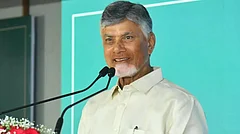
The population management policy being promoted by Andhra Pradesh Chief Minister N Chandrababu Naidu is expected to be finalised within three to four months after consultations with stakeholders across sectors, official sources said.
Alarmed over a declining fertility rate, which has fallen below the replacement level of 2.1, the Andhra government is poised to introduce the population management policy soon.
“We are not bringing a law. It is a discussion framework that will evolve into a policy in three to four months after consultations,” Principal Secretary, Health, Medical and Family Welfare Department, Saurabh Gaur told PTI.
The proposed policy, under discussion as a framework, aims to manage demographic changes and build population resilience while sustaining long-term economic growth in the state.
The policy may include financial incentives of Rs 30,000 for the third child and Rs 40,000 for the fourth child, as recently announced by Naidu.
The state has a demographic window only until 2040 to make corrections before the dependency ratio skews heavily towards the elderly population, he said.



Considering this reality, Gaur said the third guiding principle among the 10 Swarna (golden) Andhra@2047 vision principles focuses on a transformative approach to population management and human resource development.
Gaur outlined a comprehensive lifecycle approach to population management built around five strategic pillars.
These include creating a supportive fertility ecosystem and promoting preventive healthcare through the 'Sanchara Chikitsa' (mobile treatment) concept.
The median age in Andhra stands at about 32.5 years, higher than the national average of 28, indicating gradual population ageing.
He cautioned that the dependency ratio could rise from the current 11 to nearly 23 per cent over the next 15 years if trends continue.
The dependency ratio refers to the proportion of children and elderly people dependent on the working-age population for economic and social support.
The policy aims to preserve the demographic dividend, as Andhra remains among the fastest-growing states, contributing significantly to national economic growth.
It adopts a consultative, bottom-up approach, encouraging community participation rather than imposing prescriptive norms on family size or reproductive choices.
The framework also focuses on lifelong skilling through a Skill Passport System from Grade 6, boosting women’s workforce participation through safe mobility and mandatory crèches, and promoting active ageing through Elderly Clubs at the mandal level.
The first pillar, 'Maatruthva', focuses on reproductive healthcare, addressing issues such as higher hysterectomy rates, rising caesarean deliveries, and teenage pregnancies, Gaur said.
The second pillar, 'Shakti', seeks to boost female labour force participation, currently about 21.6 per cent, by creating supportive and flexible work environments, the principal secretary said.
He added that increasing women’s participation to nearly 60 per cent could raise the state’s GDP by up to 4 per cent.
Measures include workplace safety, flexible working hours, shared parenting responsibilities, and improved maternity policies to ensure continuity in women’s careers.
According to Gaur, the policy also proposes infrastructure such as working women’s hostels and better re-entry opportunities for women returning after maternity leave.
The third pillar, 'Shema', addresses the welfare of the elderly, focusing on preventive healthcare, geriatric services, and community-based support systems for the ageing population.
The state also aims to train around 10,000 caregivers annually to meet the rising demand for elderly care and childcare services.
The fourth pillar, ‘Sanjeevani’, emphasises digital health integration, while the fifth pillar, ‘Naipunayam’, focuses on skilling, workforce mapping, and aligning training with evolving economic needs to enhance productivity.
The ongoing skill census will help identify gaps and provide targeted training, improving employability and income opportunities for youth across sectors.
Gaur clarified that family size decisions will remain personal, with the government focusing on support systems and awareness rather than enforcement.
Community engagement through village-level platforms will play a key role in implementation, facilitating discussions on health, education, and demographic challenges.

The principal secretary acknowledged that reversing fertility decline is globally difficult but expressed confidence in improving maternal and infant health outcomes.
Since coming to power in 2024, Naidu has been actively campaigning for population management to increase the birth rate in the state.
On several occasions, he cited countries such as Japan and several European nations, where ageing populations are straining economies, workforce availability, and dependency ratios.
Naidu urged young people to move away from the concept of “double income, no kids” (DINK), warning that declining population trends pose serious concerns.
Away from the political debate, some families questioned the practicality of encouraging larger families amid rising living costs.
Harish Vyas, a member of a middle-class family, questioned the practicality of encouraging families to have three or more children at a time, given that household expenses continue to rise.
He argued that, with India already facing population pressures, the government should first address affordability concerns before encouraging higher birth rates.
Similarly, his spouse, Padma Vyas, said it does not appear practical for middle-class families to plan for more than one child under current economic conditions. She added that the government should prioritise food quality, curb adulteration, and strengthen public health systems.
She further remarked that even economically weaker families make calculated decisions today and may not be persuaded by financial incentives alone.
According to her, the larger challenge lies in sustaining childcare, nutrition, and education over the long term.
















