



US lawmakers from both parties are demanding investigations into Nvidia CEO Jensen Huang's reinstatement following Trump's intervention.
Congress is examining allegations that Nvidia AI chips reached Chinese companies linked to the country's military in possible violation of US export controls.
Senate and House lawmakers are seeking answers over Nvidia's relationship with Megaspeed, national security risks and the Trump administration's involvement.
The reinstatement of Nvidia CEO Jensen Huang has prompted bipartisan calls for congressional investigations in the US, with lawmakers questioning President Donald Trump's intervention in the company's decision and raising concerns over the alleged diversion of its chips to Chinese military-linked entities and possible violations of US export controls.
Trump said Nvidia's board had done “what we wanted them to do” by restoring Huang to his position, prompting lawmakers to question the government's involvement in the decision. Huang's acknowledged relationship with a Chinese businesswoman suspected by US officials of being a spy has added to concerns over the company's dealings and national security implications.
Nvidia's board said it had received input from senior US government officials before concluding that Huang's reinstatement posed no national security risk. It also said its investigation into whether Huang had been targeted by a foreign intelligence operation would continue.


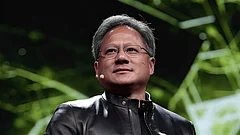
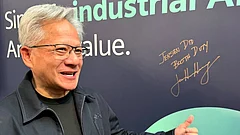

Sen. Tim Scott, the outgoing Republican chairman of the Senate Banking Committee, announced that Huang would testify publicly before the panel on December 3. Democratic Senator Elizabeth Warren, who is set to take over as committee chair, said the Trump administration must explain the role played by US officials in what she described as a “reckless” decision.
Robert Garcia, the incoming chairman of the House Oversight Committee, also questioned Trump's direct involvement in the company's internal decisions, saying it “raises serious national security and corruption questions”. AP reported that the congressional scrutiny comes amid concerns over Nvidia's dealings with China and potential violations of US export controls.
“We must investigate these actions,” Garcia, a Democrat from California, said.
Huang To Face Congressional Questioning As Lawmakers Seek Answers
Huang is scheduled to sit for a closed-door, transcribed interview with three House committees on December 1, while Nvidia General Counsel Tim Teter is expected to appear before the panels on December 2. Huang is also due to testify publicly before the Senate Banking Committee on December 3.
In a joint statement, Rep. John Moolenaar, chairman of the House Select Committee on China; Rep. Rick Crawford, chairman of the House Intelligence Committee; and Rep. Brian Mast, chairman of the House Foreign Affairs Committee, said the board's decision to reinstate Huang had not resolved the national security concerns surrounding the company.
“The NVIDIA board’s brief internal investigation and reinstatement of Jensen Huang do not erase the national security threats and questions that must be addressed,” the statement said.
“We remain committed to getting answers on the mass smuggling of NVIDIA products, their diversion for Chinese military purposes, and their key role in advancing our foremost adversary’s AI capabilities.”
Sen. Tom Cotton, the Republican chairman of the Senate Intelligence Committee, also said the controversy involving Nvidia and Megaspeed remained unresolved despite Huang's return.
“The controversy with Nvidia and Megaspeed is just the tip of the iceberg, and it’s not resolved because Jensen Huang has his job back,” Cotton said.
“Congress has much to investigate,” he added.


Earlier this month, Treasury Secretary Scott Bessent expressed frustration over the Commerce Department's delay in imposing restrictions on Nvidia chip exports to Megaspeed. Megaspeed is also linked to the controversy through Alice Huang, a former company executive who was involved with Jensen Huang.
The US Commerce Department added Megaspeed International Pte. Ltd. and six related entities to its Entity List on November 23, requiring licences for exports of items subject to US export controls, Reuters reported.
The issue has also drawn attention to Commerce Secretary Howard Lutnick, who has close ties with Nvidia. As Democrats prepare to take control of congressional committees in January, they are expected to expand investigations into the Trump administration, including questions concerning political influence and potential corruption.
Nvidia's Chip Sales To China Under Scrutiny
A central concern for lawmakers is whether Nvidia has supplied advanced AI chips to Chinese companies in breach of US export controls.
Earlier this year, members of Congress called on the US Commerce Department to suspend or reconsider Nvidia's export licences to China and conduct a comprehensive national security review.
In a statement earlier this month, Democratic Senator Elizabeth Warren and Republican Senator Jim Banks of Indiana said Nvidia had reportedly secured approvals to export hundreds of thousands of advanced AI chips to China, including to companies with links to the Chinese military. They also alleged that the company had attempted to influence discussions in Washington over restrictions on chip exports.
“Since then, NVIDIA has reportedly received approvals to export hundreds of thousands of advanced AI chips to China, including to companies tied to China’s military, all while attempting to influence the debate over chip controls in Washington, D.C.,” they wrote in a statement in November.
They also linked their national security concerns to Huang's acknowledged relationship with a Chinese businesswoman suspected of having connections to China's intelligence service.
“NVIDIA CEO Jensen Huang’s confirmation of a relationship with a suspected spy for China’s intelligence service makes these national security concerns even more urgent and raises important questions NVIDIA must answer,” the senators said.


Republicans Join Democrats In Demanding Investigation
Although Republican congressional leaders have largely refrained from commenting on Huang's reinstatement, several other members of the party have questioned the circumstances surrounding the decision and the administration's involvement.
Texas Senator John Cornyn, who lost the Republican primary after Trump endorsed his challenger, questioned Nvidia's assertion that it had been told there was no national security risk.
“No national security risk? Based on what?” Cornyn wrote on social media.
He also questioned whether the FBI had given Huang a defensive briefing to assess the national security risk.
“If not, why not?” he asked.
Republican Representative Don Bacon of Nebraska, who is retiring from Congress, said the US could not claim to be competing with China in artificial intelligence while allowing it access to advanced American technology.
“Congress needs to get to the bottom of who approved high end computer chips sales to China,” Bacon wrote.
Republican Representative Bill Huizenga of Michigan had also criticised Trump's call for Huang's reinstatement. Huizenga, who lost his re-election bid to a Democrat, questioned the handling of the suspected espionage links.
“Ummm… she was, and is, a spy. How about we get serious about making sure China doesn’t steal US company technology?” he posted.
Senator John Curtis of Utah similarly sought clarification about the information available to Nvidia's board and the involvement of US officials in its decision.
“Who in our government weighed in? What did they tell the board?” Curtis asked.
“And on what basis did the board conclude there was no risk?”
Democrats Link Nvidia Controversy To Wider Anti-Corruption Push
Democrats are preparing to use their control of congressional committees from January to investigate national security concerns, political influence and alleged corruption within the Trump administration.
Senator Chris Coons of Delaware, who is expected to become chairman of the Senate Foreign Relations Committee when Democrats take the majority, criticised Huang's reinstatement. “The guy who was having an affair with a Chinese spy while working relentlessly to help China get access to as many AI chips as possible? Really?” Coons wrote on social media.


Senator Ruben Gallego of Arizona said Congress should investigate “what stock positions took place before the announcement”.
Oregon Senator Ron Wyden, who is expected to chair the Senate Finance Committee and is also a member of the Senate Intelligence Committee, said Huang's reinstatement demonstrated that under Trump and his administration, “our national security is for sale”.
“In January, Democrats will hold this corrupt administration accountable,” Wyden said.








