Nitin Nabin was appointed president of the Bharatiya Janata Party (BJP) almost seven months ago. The party has finally armed him with a team. The new appointments in the national team suggest that the BJP leadership is leaning on the Rashtriya Swayamsevak Sangh (RSS) to win back Gen-Z voters. The choice of candidates also makes it clear that Nabin is looking towards his previous organisation, the Akhil Bharatiya Vidyarthi Parishad (ABVP), to win over first-time voters and the youth for the BJP. The first few months of Nabin’s tenure have thrown up tough challenges, especially the protests by students and the BJP’s loss of the Bankipur assembly seat in Bihar to Prashant Kishor. To counter the Opposition’s attempts to slice away a share of young voters from the BJP, the party has appointed at least 14 former members of the ABVP in the 24-member list of national general secretaries and national secretaries.
The 65-member national team has three former chief ministers and six former ministers who were either part of the Union cabinet or BJP state governments. However, the majority of the team members are first-generation politicians who are in the 40–55 age group.
“The new team is a mix of experience and youth, but the striking part is that most of the new appointees are first-generation politicians with no family background. The team is young like the new BJP president, but they have all either worked in the Union government, state government, or with the party at the grassroots level. So, they do not lack experience,” says Radha Mohan Das Aggarwal, who was a national general secretary in the outgoing team.
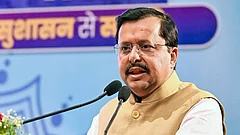


Among the more experienced leaders who are part of the national team are former chief ministers Vasundhara Raje Scindia, Tirath Singh Rawat and Biplab Kumar Deb, who have been appointed as national vice-presidents and general secretary, respectively. The list also includes some surprises: former cabinet minister Smriti Irani has been made national general secretary and Piyush Goyal, Union minister for commerce and industry, is back as the national treasurer.
Impact of Gen Z
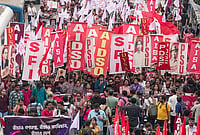
The new team has not remained untouched by the impact of the recent Gen-Z protests at Jantar Mantar. The protesters forced the hand of the Union government and made education minister Dharmendra Pradhan resign from his post. The response to the setback caused to the BJP by the sudden rise of students against it in the heart of the national capital is visible in the new list of appointees.
Out of the eight national general secretaries who enjoy the maximum authority in the national team, at least five are former ABVP members.
There is deep disappointment within the BJP because the party leadership has always taken pride in the fact that it is the most popular political party among the first-time voters, Gen Z and millennials, i.e. voters in the age group of 18–45 years.
“The new appointments clearly suggest that the BJP does not want to lose its voter base and also its hold over first-time voters and the youth,” says a senior BJP leader. “A majority of the national general secretaries and national secretaries have all been part of the ABVP. These appointments cannot be a coincidence and it only indicates that the BJP is preparing to counter the Opposition’s narrative and will focus on young voters with the help of its office bearers.”
Role of the ABVP and RSS
Out of the eight national general secretaries, who enjoy the maximum authority in the national team, at least five are former ABVP members. Out of the 16 national secretaries, at least nine are either former members of the ABVP or have worked at the grassroots level of the RSS.
Among the prominent national general secretaries who are former ABVP members is Sunil Bansal who has played a crucial role in the BJP’s victory in Uttar Pradesh. He was also instrumental in building the anti-corruption movement of the BJP against the Congress-led United Progressive Alliance before the 2014 polls. The appointment of Sanjay Bhatia and Harish Dwivedi as national general secretaries show the party’s focus on former ABVP members.
With the induction of former ABVP members in the national team, the coordination between the BJP, the ABVP and the RSS will only become smoother as the BJP prepares to win over young voters.
“The BJP often looks at the RSS and its frontal organisations,” says Sandeep Shastri, political analyst and vice-president, NITTE Education Trust. “The issue of the Gen-Z protest is of prime importance for the party and these appointments reflect the strategy. However, all these people have come to national politics and the BJP team after proving their worth at the grassroots level in these frontal organisations. We must not think that these young people lack experience.”
“The newly appointed BJP members have found a place in the national team because of their proven record on the ground. It is because of their work in the state governments and party units that they have now got an opportunity to be part of the national team,” says Narendra Singh, who has been part of the national team for six years. He remains a part of the national team and is co-incharge of the BJP’s election campaign.
The BJP’s renewed resolve to win over young voters was also visible in the decision to appoint Deepak Mhaskey as the new social media convener. The party has completely changed its social-media team. To make further inroads among young voters, the BJP leadership has also replaced Tejasvi Surya with Hemang Joshi as the head of the Bharatiya Janata Yuva Morcha.
The decision to revamp the social-media team and Yuva Morcha has the stamp of Prime Minister Narendra Modi, who has often told both party members and members of Parliament to increase their presence on Instagram and not just focus on platforms like Facebook, Twitter and WhatsApp.

The Next Steps
With the appointment of the new national team, the first step to overhaul the organisational network has been taken, and the preparation for the upcoming electoral challenges leading up to the 2029 Lok Sabha polls has also started. Since Nabin’s three-year-long tenure coincides with the next general elections, it is likely that this new team will lead the charge for PM Modi, who will seek a fourth term at the top office.
The next round of changes in the Union council of ministers or a cabinet reshuffle is the second step of the organisational overhaul that the BJP is likely to take in the coming days. Goyal’s appointment as the new treasurer has given rise to the speculation that a cabinet reshuffle is imminent.
The response to the setback caused to the BJP by the sudden rise of students against it in the heart of Delhi is visible in the new list of appointees.
“The new team reflects the aim of the party leadership, as most members have been handpicked by Home Minister Amit Shah,” says a senior BJP leader. “J.P. Nadda’s role will also be important because the party leadership has to now appoint members of the Parliamentary Board, which is the highest decision-making body, and the new central election committee that runs the BJP’s poll campaign. The guidance of both Shah and Nadda will be crucial for the new BJP president.”
As preparations for the upcoming polls gather steam, the final step for the party is to identify leaders to lead it in all the states and restructure the party units with younger leaders in various states.
Preparing for Elections
The new faces in the BJP also show the importance given by the party to the upcoming electoral challenges it will face. Even as the BJP will try to secure a win in Himachal Pradesh and to snatch away Karnataka from the Congress, the party leadership is facing the huge task of protecting its turf. The immediate challenge before this new team is to ensure that the BJP retains power in Uttarakhand, Uttar Pradesh, Rajasthan, Madhya Pradesh and Tripura. The BJP also wants to make inroads in Punjab, where the party has been a marginal player for too long.
“We are confident that the people of Punjab are looking for a change and they will choose the BJP because they have no faith in the Congress and the ruling Aam Aadmi Party government. This is the best time for the BJP to grow in Punjab,” says Narendra Singh, co-in charge of the BJP’s election campaign in the state.
The Women on the List
Eleven women have been given national responsibilities in the party. The party leadership has made consistent efforts to win over women voters and Irani’s presence on the list is indicative of this fact because she had campaigned extensively for the party in the Delhi and West Bengal elections.
Among the states that have been given prominence are Uttar Pradesh with eight leaders in the different departments of the BJP, Madhya Pradesh with six, Uttarakhand with four and Haryana with three. However, the surprise package is Delhi, which has eight leaders in the national team.
For Nabin, the first challenge is to ensure that out of the 12 assembly polls leading up to the 2029 Lok Sabha elections, the BJP retains at least eight states, including Uttar Pradesh, Rajasthan and Madhya Pradesh and also to win back Himachal Pradesh and Karnataka from the Congress.

MORE FROM THIS ISSUE


Gyan Verma is an associate Editor at Outlook