






Police booked Congress MP Rahul Gandhi under Bharatiya Nyaya Sanhita sections and the SC/ST Act following a complaint in Haldwani.
Complainant Amit Kumar of Shri Ram Sena Dharmarth Seva Nyas alleged Gandhi's August 29 remarks in Delhi hurt the Valmiki community's sentiments.
The controversy began after a purification yajna took place on August 11 at Haldwani's Ramlila Ground following Mallikarjun Kharge's August 8 rally.
A political row over a “purification” ritual at a Haldwani venue has taken an unexpected turn. Congress leader Rahul Gandhi had demanded an FIR under the Scheduled Castes and Scheduled Tribes (Prevention of Atrocities) Act against those who performed the ritual, calling it an act of “untouchability” directed at Congress president Mallikarjun Kharge.
Days later, an FIR was registered against Gandhi himself after a member of the Scheduled Caste community alleged that the Congress leader had wrongly portrayed the ritual as caste discrimination.
What Happened At Mallikarjun Kharge's Haldwani Rally Venue?
Congress president Mallikarjun Kharge addressed a party rally at Haldwani’s Ramlila Ground on August 8. On August 11, members of the Shri Ram Sena Dharmarth Seva Nyas conducted a cleaning drive followed by a “shuddhikaran havan” at the venue.
The incident became controversial after Uttarakhand Congress president Ganesh Godiyal alleged that the ritual was carried out because Kharge is a Dalit. Congress described it as evidence of an “anti-Dalit” mindset and called for a police investigation.



The organisers have denied this allegation.
Why Was A ‘Purification’ Ritual Held At The Venue?
The Shri Ram Sena Dharmarth Seva Nyas said the ritual had nothing to do with Kharge’s caste.
Trust president Girish Chandra Pandey claimed that garbage had been left at the venue after the Congress rally and that “provocative” religious slogans had also been raised. According to the organisers, the area was cleaned before a yajna was performed to restore the sanctity of the ground, where Ramlila and other religious events are held.
Some trust members who said they belong to the Dalit community also participated in the ritual, which they cited as evidence that it was not anti-Dalit.
Uttarakhand Chief Minister Pushkar Singh Dhami similarly rejected the caste angle and said those who conducted the havan were neither BJP office-bearers nor workers.
Why Did Rahul Gandhi Call It ‘Untouchability’?
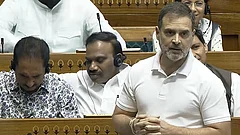
On August 29, Gandhi criticised the ritual at a press conference in New Delhi. He argued that calling for the “purification” of a place after a Dalit leader had addressed a rally amounted to treating Dalits as “unclean”.
Gandhi said such an act was another form of untouchability and alleged that caste discrimination continued despite being outlawed.
He demanded an immediate FIR under the SC/ST (Prevention of Atrocities) Act against those responsible and urged Prime Minister Narendra Modi to direct action.
Why Did Rahul Gandhi Demand An FIR Under The SC/ST Act?
Gandhi's argument was that the alleged “purification” was not merely a religious ritual but an act of caste discrimination.
Congress leaders, including Priyanka Gandhi Vadra, said the incident reflected a discriminatory mindset and could amount to an offence under the SC/ST Act.
The Congress's allegation, however, was based on the claim that the ritual was directed at Kharge because of his Dalit identity — a claim rejected by the organisers and the BJP.
Why Has An FIR Now Been Filed Against Rahul Gandhi?
On August 30, Haldwani police registered an FIR against Gandhi following a complaint by Amit Kumar, 26, a member of the Valmiki community and an office-bearer of the Shri Ram Sena Dharmarth Seva Nyas.
Kumar alleged that Gandhi gave a casteist interpretation to a religious ritual in which members of different communities, including Scheduled Castes, participated.
He claimed Gandhi’s remarks wrongly portrayed those involved as practising “untouchability” and being “anti-Dalit”, hurting the sentiments of the community.
What Does The FIR Against Rahul Gandhi Say?
The case has been registered under provisions of the SC/ST (Prevention of Atrocities) Act, 1989, along with Section 196 of the Bharatiya Nyaya Sanhita (BNS), concerning promotion of enmity between groups, and Section 299, concerning deliberate acts intended to outrage religious feelings.
Police have said an investigation is underway.
The complaint specifically alleges that Gandhi, without verifying the facts, described the cleaning and havan ritual as an act of untouchability and an atrocity against the SC community.
What Are The Competing BJP And Congress Versions?
The Congress says the ritual was a deliberate act of caste discrimination aimed at Kharge because he is a Dalit.
The organisers and BJP deny this. They say the venue was dirty after the rally and that the havan was conducted to restore its religious sanctity. The BJP has also denied any organisational connection with the Shri Ram Sena Dharmarth Seva Nyas.
Dhami accused Congress of giving the incident a casteist colour for political reasons.
Can A Religious Ritual Become A Caste Discrimination Case?
That depends on the purpose, circumstances and evidence surrounding the act.
A religious ritual by itself does not automatically amount to caste discrimination. For an SC/ST Act case to succeed, investigators and ultimately the courts would have to examine whether the conduct and statements meet the specific legal requirements of an offence under the Act.
That is also why the competing accounts matter. Congress alleges that the ritual was intended to “purify” the venue because a Dalit leader had been there. The organisers say it was about cleanliness and religious sanctity, not caste.
The FIR against Gandhi does not establish that his allegations were false, nor does the earlier controversy establish that the ritual was caste discrimination. Both matters are now subject to investigation and, potentially, judicial scrutiny.















