Nepal's death toll from last week's floods and mudslides has risen to 903, while more than 4,200 people remain missing.
Rescue teams are searching blocked hydropower tunnels, including Trishuli-3A, where hundreds of workers are feared trapped.
Scientists say an ice-rock avalanche in the Langtang-Lirung region triggered the disaster, rather than a conventional glacial lake outburst flood.
Nepal’s death toll from last week’s devastating floods and mudslides has risen to 903, while more than 4,200 people remain missing, as rescue teams work through the night to reach hundreds of people feared trapped inside blocked hydropower project tunnels.
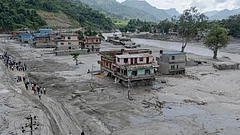
The disaster struck on Wednesday along the Nepal-Tibet border, sending a massive torrent of ice, rock, mud and debris through towns and villages in Nepal before crossing into China. The unprecedented deluge caused widespread destruction across the region and left thousands dead or unaccounted for.
China has also been severely affected, with 16 deaths and 546 people reported missing in Tibet, according to Chinese state media. Chinese President Xi Jinping has directed authorities to intensify search, rescue and relief operations and make every possible effort to locate those still missing.
Rescue Teams Search Blocked Hydropower Tunnels
Rescue teams, including Indian and Chinese experts, are searching around half a dozen hydropower tunnels in Nepal, including the Trishuli-3A project.
Nepal’s disaster authority said 933 people associated with hydropower projects are missing, as rescuers use earth-moving equipment and work alongside soldiers to clear tonnes of mud and rocks blocking access to the tunnels.
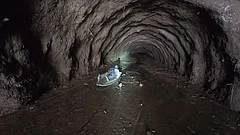
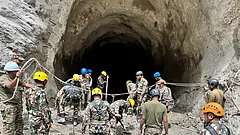
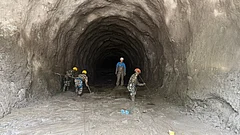
An Indian tunnel rescue team has been assisting the Nepali Army at hydropower sites in Chilime and Langtang. Operations continued overnight, with heavy machinery being used to remove debris.
Nepali Army spokesperson Raja Ram Basnet said the enormous deposits of mud and rock have made access to the tunnels particularly difficult.
Prime Minister Balendra Shah described the disaster as an “unprecedented and devastating natural disaster”. Nearly 21,000 security personnel have been deployed for rescue and relief operations.
Ice-Rock Avalanche Triggered Floods
A preliminary study by Nepali scientists has found that the disaster was triggered by a massive ice-rock avalanche at an altitude of around 5,200 metres in the Langtang-Lirung area of Rasuwa.
The debris entered the Lhende River before surging into the Bhotekoshi and Trishuli river systems, causing the devastating downstream flooding. The findings indicate that the disaster was not a conventional glacial lake outburst flood (GLOF), as initially suspected.
The Red Cross estimates that more than 90,000 people have been affected by the disaster. Rescue teams continue to search for missing people and recover and identify bodies as authorities assess the scale of the destruction.