Supreme Court dismissed plea seeking mandatory disclosure of ethanol percentage at petrol pumps nationwide.
Petitioner argued consumers had a right to know ethanol content and vehicle compatibility.
Court allowed petitioner to approach the concerned High Court while refusing directions against government.
The Supreme Court on Monday refused to entertain a plea seeking mandatory and uniform labelling on every dispensing nozzle at petrol pumps to disclose the exact percentage of ethanol in petrol.
A two-judge bench headed by Justice M M Sundresh and Justice Prasanna B Varale dismissed the plea filed by Narendra Kumar Goswami. It granted him liberty to approach the concerned High Court with his grievances. The court found no merit in the petition and refused to pass any order or direction.

Arguments & Objection
Goswami argued that consumers have the right to know the composition of the fuel they are purchasing. He also pointed to the absence of any ethanol-content disclosure on petrol receipts.
"See the receipt, there is no mention of ethanol. I have the right to know," Goswami submitted.
Attorney General R Venkatramani, who was present in the courtroom for the Union of India, objected to the plea. "He wants the Government of India to be answerable to him!" he said.
The bench did not find merit in the petition and refused to pass any order or direction in the case.




Relief Sought In Plea
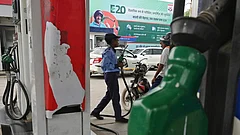
Goswami moved the apex court and sought directions to the respondents -the Centre and others - to forthwith issue instructions to all Oil Marketing Companies to display, prominently in the local language, the exact ethanol percentage at every petrol pump and on every dispensing nozzle. He also sought directions to ensure that every fuel bill or invoice immediately reflects the ethanol content of the petrol sold.
The plea also asked the court to direct the respondents to publish, within a short time, a provisional vehicle-compatibility advisory based on currently available data, so that consumers are placed on notice regarding the suitability of E20 for their specific vehicles.
It sought a direction that until a transparent transition framework and compatibility-disclosure mechanism is implemented, no consumer shall be prejudiced in terms of warranty, insurance or service entitlement solely on account of having used E20 fuel in the absence of a reasonably available alternative.
The petition further sought directions to all Oil Marketing Companies to publish on their official websites and mobile applications the ethanol percentage available at each retail outlet and to make such information publicly searchable pending final disposal of the present petition.