Karnataka’s new law allows up to 5% of protected park land to be used for public utility projects.
Bengaluru residents are protesting over what the provision could mean for Lalbagh and Cubbon Park.
Environmentalists have questioned the basis for allowing 5% of park land to be diverted for infrastructure.
Bengaluru residents gathered at Lalbagh on Sunday to protest a new Karnataka law that allows up to 5 per cent of protected park land to be used for public utilities, with citizens and environmental activists warning that the provision could put parts of the city’s remaining green spaces at risk.
The protest, held as part of the “Walk in Lalbagh. Walk for Lalbagh” campaign, came days after the Karnataka Assembly passed the Karnataka Government Parks (Preservation) (Amendment) Bill, 2026. At the centre of the anger is what the new provision could mean for Lalbagh and Cubbon Park, and whether protected public spaces should be opened up for infrastructure projects.
What is the 5 per cent rule?
The amended law allows the state to alienate park land through “sale, lease, gift, exchange, mortgage, or otherwise”, up to an absolute limit of 5 per cent of the total area, according to The Indian Express. The provision applies to public utility projects undertaken by government departments, statutory authorities, government companies or local authorities.
For Bengaluru, the numbers are significant. Lalbagh Botanical Garden covers 240 acres, while Cubbon Park spans 197 acres. The Indian Express reported that the 5 per cent provision could allow the use of 12 acres of Lalbagh and 15 acres of Cubbon Park for public infrastructure.



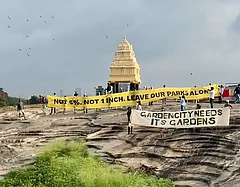
The concern goes beyond the acreage itself. Critics fear that allowing any portion of protected parks to be alienated could make it easier to use green spaces for infrastructure projects in the future. The Indian Express reported that environmentalists and citizens are particularly worried about the impact on Bengaluru’s limited open spaces.
The protest also comes amid opposition to the proposed tunnel project through Lalbagh. BJP MP Tejasvi Surya, who participated in the campaign, opposed the proposed tunnel project through Lalbagh.
“We are for development but not against the cost of iconic spaces of the city,” Surya said. He also argued that Lalbagh should not be divided for infrastructure.
Environmental concerns have further fuelled the opposition. A N Yellappa Reddy, former government secretary for ecology and environment, questioned why the 5 per cent figure had been chosen and whether it was based on an assessment by horticulturists, ecologists, planners or an independent expert body.
But for many Bengaluru residents, the issue is whether the new provision creates a route for protected park land to be used for projects that could alter the city’s remaining green spaces.
As The Indian Express reported, the protest at Lalbagh reflects a broader demand from citizens to protect Bengaluru’s parks from infrastructure and real estate pressures. For Bengaluru’s protesters, the dispute is therefore not only about the 5 per cent limit, but whether protected park land should be opened up for infrastructure projects.