Prime Minister Narendra Modi and Chinese President Xi Jinping arrived in Bishkek for the 26th SCO Summit from August 31 to September 1.
The summit marks 25 years of the SCO under the theme of sustainable peace, development and prosperity hosted by Kyrgyz President Sadyr Zhaparov.
Prime Minister Modi is scheduled to hold bilateral meetings with regional leaders on the sidelines, including Russian President Vladimir Putin.
Prime Minister Narendra Modi and Chinese President Xi Jinping have reached Bishkek for the 26th Shanghai Cooperation Organisation summit. The three leaders are likely to meet at the summit.
The two-day meeting runs from August 31 to September 1 as the bloc marks 25 years since its founding.
The summit in Kyrgyzstan will bring together regional leaders for talks on security, trade and diplomacy. Modi arrived on Sunday to attend the meeting and hold bilateral talks on its sidelines.
He was received at the airport by Kasymaliev Adylbek Aleshovich, chairman of the Cabinet of Ministers, and a traditional Kyrgyz dance performance was organised to welcome him, News18 reported.
The gathering matters beyond ceremony. Leaders are expected to discuss regional security, terrorism and transnational threats, along with trade, energy, transport connectivity and digital cooperation. The conflict in West Asia, the Ukraine war and other regional developments are also expected to figure in the discussions.

Modi's Bishkek Agenda
Modi is in Kyrgyzstan at the invitation of President Sadyr Zhaparov for the 26th SCO Summit. He is expected to meet several SCO leaders on the sidelines, including Zhaparov and Russian President Vladimir Putin, PTI reported.
In his departure statement on Saturday, Modi set out India’s pitch for the region. He said he looked forward to advancing India’s vision based on “security, connectivity and opportunity”. He also said India would work with SCO members towards a region free from “terrorism, separatism and extremism”.
The prime minister’s schedule also includes the opening ceremony of the 6th World Nomad Games. He said the visit would strengthen India’s strategic partnerships in Central Asia, deepen its civilisational connect with the region and advance the shared pursuit of peace, stability and prosperity.
Modi reached Bishkek after ending a two-day visit to Uzbekistan. At his hotel, he was greeted by chants of 'Vande Mataram'. He also watched a yoga performance to the patriotic song 'Maa Tujhe Salaam', followed by a cultural performance themed around Lord Shiva.
MEA spokesperson Randhir Jaiswal informed on X after Modi’s arrival that the SCO Summit brings together ten member states, 15 partner countries and two observer countries to advance dialogue and cooperation on regional and global issues.
Xi And Putin Plans
Xi also arrived in Kyrgyzstan on Sunday for the summit, Xinhua reported. His visit comes as Beijing prepares for a crowded diplomatic calendar in September.
After landing, Xi laid out what he wanted from the meeting. “I look forward to attending the SCO Bishkek Summit, working with all parties to revisit the 25-year development experience of the SCO, jointly discuss cooperation plans, create the future of the organisation,” Xi said after his arrival. He also said he wanted to work with other members to “promote the continuous new development of the organisation”.
Xi is expected to hold bilateral meetings with several SCO leaders during the visit. He is widely expected to attend the BRICS summit in New Delhi on September 12-13 and later travel to the US for a summit meeting with President Donald Trump.
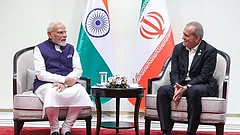
The Bishkek summit is also expected to draw several other influential leaders, including Putin, Iranian President Masoud Pezeshkian, Pakistani Prime Minister Shehbaz Sharif and Turkish President Recep Tayyip Erdogan. Putin is expected to hold separate talks with Pezeshkian and Xi, according to Kremlin spokesperson Yuri Ushakov.
SCO's Structure And History
The SCO now has 10 members and is marking 25 years since its founding in 2001. It was formally established by China, Russia, Kazakhstan, Kyrgyzstan, Tajikistan and Uzbekistan.
The bloc expanded in stages. India and Pakistan became full members in 2017, followed by Iran in 2023 and Belarus in 2024. The grouping also has 15 dialogue partners and two observer countries, Afghanistan and Mongolia.
Kyrgyzstan holds the rotating chair in 2026 and the main sessions are being held at the Ala-Archa State Residence outside Bishkek. Leaders’ events run from August 30 to September 1, while the Council of Heads of State plenary is scheduled for September 1.
This year’s theme is “25 Years of the SCO: Together Towards Sustainable Peace, Development and Prosperity.” The organisation traces its roots to the Shanghai Five, formed in 1996 to reduce military tensions and settle border issues among China, Russia and three former Soviet republics.
The bloc presents itself as a cooperation platform, not a military alliance. Its founding declaration says it is “not an alliance directed against other states”. With about 3.4 billion people represented across member countries, the SCO has grown into a major forum for security cooperation, economic engagement and regional diplomacy.
Summit Priorities And Outcomes
Security sits at the centre of the agenda. Leaders are expected to focus on counter-terrorism, regional stability and coordination on cross-border threats.
Economic issues will run in parallel. The summit agenda includes Eurasian transport and logistics corridors, trade and economic cooperation, energy security and digital transformation. Members are also expected to discuss an SCO Agreement on Trade Facilitation, wider market access and value-chain integration.
Financing will be another key area. A proposed SCO development bank and other funding mechanisms for connectivity projects are on the table. The Bishkek Declaration and other summit texts are expected to be finalised at the September 1 heads-of-state session.
For India, the meeting offers room to deepen ties with Central Asia in trade, energy and connectivity. Bilateral talks with Russia could also touch on defence, energy and payments cooperation.
The broader geopolitical backdrop is hard to miss. The conflict in West Asia, the Ukraine war and regional developments are expected to come up in leaders’ discussions. At the end of the summit, Kyrgyzstan will hand the rotating chair to Pakistan, which will lead the organisation through 2027 and host the next leaders’ summit that year.
Previous Summit Optics
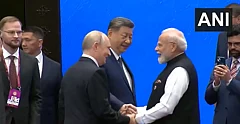
The last time Modi, Xi and Putin were seen together at an SCO summit was in Tianjin, China, in September 2025. Photographs from the event showed the three leaders in a warm interaction on the sidelines.
One image drew particular attention. Modi and Putin were also seen travelling together in Putin’s car. Those optics stood out because India-China ties were only beginning to thaw after years of tension along the Line of Actual Control.
That backdrop shaped the Modi-Xi engagement in Tianjin. The two leaders held talks after the 2020 border clashes and a long military standoff. Their meeting followed an October 2024 agreement that helped facilitate disengagement along parts of the disputed frontier and signalled an effort to place ties on a steadier footing.
The 2025 summit itself had a heavy agenda. It produced discussions on counter-terrorism, peace and security, SCO development and reform of global governance. Xi and Putin also pushed a broader vision of a more multipolar international order.