Anti-quota protests have surfaced across Maharashtra, Uttar Pradesh, Rajasthan and Andhra Pradesh.
Reservation Hatao Andolan has combined a massive online following with street mobilisation.
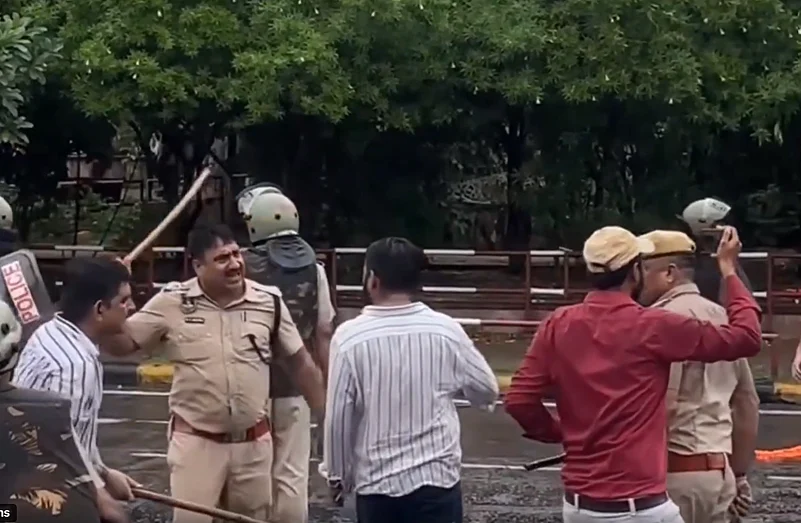
Jaipur’s Karni Sena rally turned tense after clashes with police over UGC norms.
A rapidly expanding online campaign against caste-based reservation is beginning to acquire an on-ground presence, with demonstrations reported in Maharashtra, Uttar Pradesh, Rajasthan and Andhra Pradesh.
The protests do not yet represent a single, coordinated national movement. Different organisations, online personalities and community groups are pursuing separate demands and strategies. However, their activities point towards a broader rise in opposition to caste-based quotas in education, government employment and other areas.
The mobilisation has gathered pace in the weeks following the CJP-led agitation over examination irregularities, which ended after Union Education Minister Dharmendra Pradhan resigned on July 25.
What Is The Reservation Hatao Andolan?
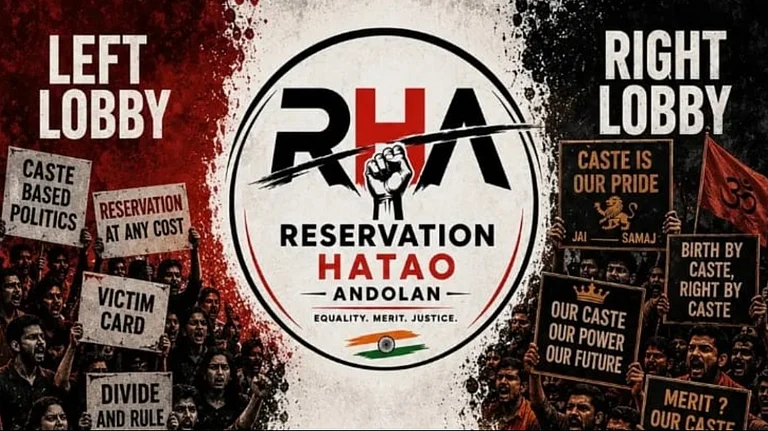
At the centre of the latest online campaign is the Reservation Hatao Andolan, or RHA, an Instagram-based platform calling for changes to India’s reservation system.
The account crossed 5.5 million followers by July 28, days after it began attracting widespread attention. It describes itself as a citizen-led platform without any affiliation to a political party.
The platform has called for caste-based reservation to be replaced by assistance linked more closely to economic and educational disadvantage. Its proposals include common selection standards, support based on financial need, stricter eligibility criteria and periodic reviews of affirmative-action policies.

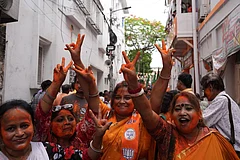

The RHA has concentrated largely on creating an online narrative rather than immediately building a centralised street movement. Its campaign has been amplified by commentators and online personalities who have expressed different positions on reservations.
Some voices seek the complete removal of caste-based quotas. Others favour income-based affirmative action or tighter eligibility rules intended to prevent relatively affluent families from repeatedly receiving reservation benefits.
The movement, therefore, does not yet have a universally accepted policy position beyond its opposition to the existing caste-based framework.
Nagpur Marks The Campaign’s On-Ground Debut
The Reservation Hatao Movement, as it was described in local reports, organised its first public demonstration in Nagpur on July 30.
The march was planned from Zero Mile Square to Samvidhan Square. Organisers described it as the beginning of a wider campaign to take their demands beyond social media. They also drew parallels with the CJP, which developed from an online protest campaign into a nationwide student agitation.
Protests Reported In Lucknow And Visakhapatnam
Days after the Nagpur rally, members of Savarna Morcha and Swarn Samaj reportedly gathered at Shahid Smarak and in the Hazratganj area of Lucknow.
According to Amar Ujala, the demonstrators demanded the withdrawal of the UGC’s equity regulations and an end to caste-based reservation. Protesters also alleged that people belonging to the general category had “gained nothing from democracy so far”.
A separate demonstration was reported in Visakhapatnam on August 3, where NEET aspirants associated with the Jana Jagarana Samiti held a silent protest in support of the anti-reservation campaign.
According to The Hindu, the participants wore black ribbons across their mouths and carried placards seeking the replacement of caste-based quotas with economic criteria.
Their demands included limiting reservation benefits to one generation, introducing common minimum qualifying marks, conducting periodic reviews, incorporating sunset clauses and ending promises of new quotas during election campaigns.
The Visakhapatnam protest illustrated how the movement’s demands are moving beyond a simple call to abolish reservations. Some groups are instead proposing a redesigned affirmative-action system based on income, common standards and time-bound reviews.
The Karni Sena Protest In Jaipur Turned Tense
The most confrontational demonstration so far took place in Jaipur, where the Shri Rajput Karni Sena led a protest against the UGC’s Promotion of Equity in Higher Education Institutions Regulations, 2026.
The regulations, notified in January, sought to strengthen mechanisms against discrimination in colleges and universities. The Supreme Court subsequently stayed their implementation, calling them prima facie vague, potentially divisive, and capable of misuse. SC directed that the earlier 2012 framework remain in force until further orders.
The Karni Sena said its supporters had completed a 24-day, 800-km journey before reaching Jaipur. The group’s demands included the withdrawal of the UGC regulations, a review of other caste-based laws, EWS reservation in panchayat and municipal elections, and simpler eligibility rules for the EWS quota.
The march began from Ravan Gate on Kalwar Road and was initially expected to culminate near the district collectorate. Tensions increased after protesters breached barricades and began moving towards the BJP office.
Police used water cannons and what officials described as “mild force” to stop the crowd. Other reports said a lathi charge was carried out after protesters attempted to advance beyond the permitted route.
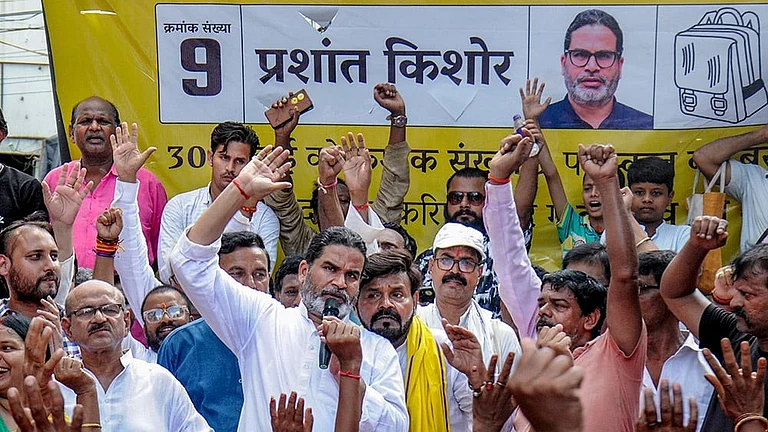
Deputy Commissioner of Police Prashant Kishore told The Times of India that the protesters had attempted to enter the collector’s office premises.
“To maintain law and order, the police used mild force and water cannons,” he said.
Karni Sena chief Mahipal Singh Makrana disputed the police account and alleged that activists, including women, had been beaten.
“This is our govt; yet, it is using water cannons on us,” Makrana said, adding that “all we want is justice for our children”.
Makrana also alleged that one protester died following the police action. The claim was presented as an allegation by the Karni Sena in the information available and was not independently established.
Karni Sena Warns BJP Of Electoral Consequences
Following the confrontation, Makrana administered an oath to supporters asking them not to vote for the BJP in the coming urban local body and panchayat elections.
According to The Indian Express, he warned that the organisation would campaign against the ruling party if its demands were not addressed.
The Karni Sena has also issued a seven-day ultimatum and threatened to organise a Jaipur gherao and a Rajasthan bandh.
Former Rajasthan Chief Minister Ashok Gehlot accused the BJP government of adopting a “dictatorial attitude” towards the demonstrators. However, he did not directly endorse or reject the protesters’ position on caste-based reservation.
The episode shows how an agitation that began around education regulations could develop into an electoral challenge for the ruling party, particularly if community organisations begin directing their supporters to vote against it.
Why The Anti-Quota Campaign Remains Fragmented
Despite the growing number of demonstrations, there is no single leadership or organisational command connecting the different campaigns.
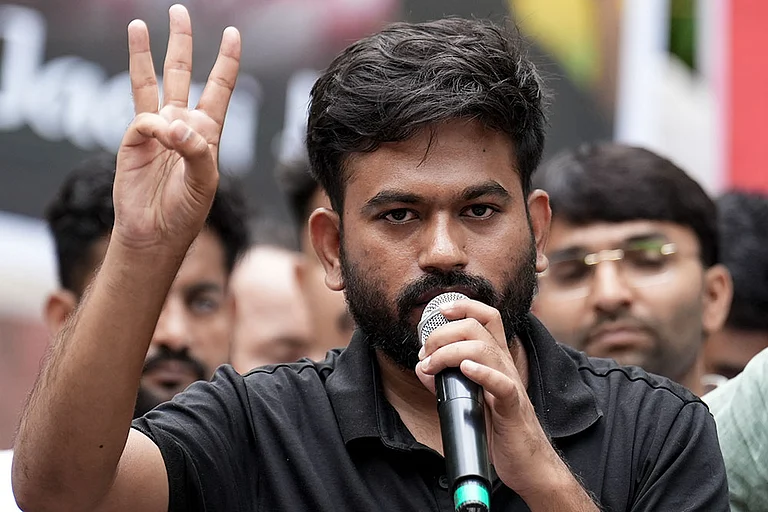
The RHA is primarily focused on digital mobilisation and policy proposals. The Karni Sena is leading a community-driven agitation centred on the UGC regulations and EWS demands. Harsh Dubey, who emerged during the CJP protests as a prominent anti-reservation voice, is attempting to build a separate mobilisation.
Dubey had earlier argued that questions about reservation, seat allocation and the concerns of general-category students were being overlooked during the agitation over the NEET controversy.
The different groups are also not demanding exactly the same outcome. While some seek the complete abolition of caste-based quotas, others favour economic criteria, tighter eligibility requirements, common cut-offs or a generational limit on benefits.
This makes the current mobilisation better understood as a collection of anti-quota campaigns rather than a unified national movement.
Why The Timing Is Politically Significant
The agitation is emerging ahead of a packed election calendar. Assembly elections are due in 2027 in Uttar Pradesh, Punjab, Uttarakhand, Goa, Manipur, Himachal Pradesh and Gujarat.
The political implications could be particularly significant in Uttar Pradesh, where caste-based coalitions remain central to electoral campaigning.
In the 2024 Lok Sabha election, the Samajwadi Party won 37 of the state’s 80 seats, while the Congress secured six. The BJP won 33 seats. The SP-Congress alliance’s performance was linked partly to Akhilesh Yadav’s outreach to the PDA coalition and the Opposition’s emphasis on representation and caste-based entitlements.
A louder anti-reservation campaign could complicate this political landscape. Parties would have to balance demands from groups seeking changes to quotas against the concerns of communities that regard reservation as a constitutional safeguard against historical exclusion.
How The Government Has Responded
Most major political parties have so far avoided directly engaging with the broader demand to remove caste-based reservation.
Union Minister of State for Social Justice Ramdas Athawale, however, publicly opposed the campaign. Posting an image of the RHA page with a cross over it, he alleged that anti-social elements were attempting to provoke young people.
Athawale asserted that “no one can take away our reservation rights” and said “Babasaheb Ambedkar’s constitutional guarantee was completely secure”.
His statement indicated that any attempt to abolish or substantially dilute caste-based quotas would face organised resistance from groups that view reservation as a hard-won constitutional protection.