



Kiren Rijiju blamed Congress for disruptions, saying the Lok Sabha recorded 19% productivity and the Rajya Sabha 39%.
About 12 Bills passed, but there was limited debate in the Lok Sabha, with only the Public Examination (Prevention of Unfair Means) Amendment Bill, 2026, discussed in the Lower House.
Congress hits back at government, with Rahul Gandhi and KC Venugopal accusing the government of avoiding scrutiny and questioning Amit Shah's limited presence in the Lok Sabha.
Parliament's Monsoon Session ended with the government and Opposition trading sharp accusations over the functioning of the Houses, with Parliamentary Affairs Minister Kiren Rijiju calling it a productive session in terms of legislative business but expressing disappointment over the lack of debate.
The session took place against the backdrop of protests by the Cockroach Janata Party (CJP), which reached Parliament on July 20, the first day of the session. The protests put the government on the back foot, prompting it to agree to demands from the CJP and the Opposition. This led to the resignation of Union Education Minister Dharmendra Pradhan.
The Opposition, meanwhile, increased pressure on the government, forcing it to send the contentious Foreign Contribution (Regulation) Amendment Bill (FCRA) to a Joint Parliamentary Committee on the penultimate day of this session.
Due to the Opposition’s aggressive moves during this session, the government also did not introduce the much-anticipated Delimitation Bill and the Women’s Reservation Bill, which sources said it had wanted to bring during the session.
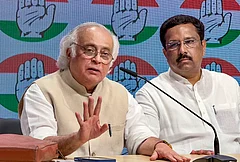


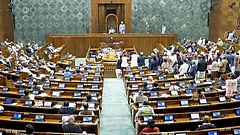
The Opposition's unity came as a surprise to the BJP, forcing it to deploy its big leaders, including Rijiju, to reach out to the Leader of the Opposition Rahul Gandhi. However, these attempts proved futile, as all the major legislative business proposed by the government was stalled by the Opposition.
Even as several attempts were made earlier this week, the Opposition again rejected the offer. Congress leader and Leader of the Opposition in the Lok Sabha, Rahul Gandhi, said the Opposition was not interested in listening to what he described as [Union Home Minister Amit] Shah's "imagination and lecture" in Parliament.
19 Sittings, 12 Bills And Little Debate
The session, which saw 19 sittings, was marked by repeated disruptions, with Opposition protests initially centred on the NEET paper leak and alleged irregularities involving donations to the Ram temple in Ayodhya. Rijiju said the Lok Sabha recorded only 19 per cent productivity, while the Rajya Sabha functioned at 39%, arguing that the session fell short when it came to substantive discussion.
“From my experience in Parliament, this was the first time I saw the Opposition against discussions,” said Rijiju. “This is not good for a parliamentary democracy. They did not allow discussions to take place.” Of the 12 Bills passed during the session, only one Bill was discussed in Lok Sabha (Public Examination (Prevention of Unfair Means) Amendment Bill, 2026); all the Bills were discussed in Rajya Sabha.
One of the major demands of the Opposition had been a discussion on police action against students protesting over the NEET issue, which was agreed upon only on the penultimate day, leading to the washout of the entire session. The Centre, however, maintained the session was successful in terms of legislative output but fell short in terms of parliamentary debate.
Several Bills, including those on increasing the sanctioned strength of Supreme Court judges excluding the CJI to 37 from 33, MSME Bill, Registration of Births and Deaths Bill, Tribunals Reforms Bill, the controversial Mines and Minerals (Development and Regulation) Amendment Bill, 2026, and Prevention of Insults to National Honour (Amendment) Bill, 2026, were passed.
Government Vs Opposition In Parliament
Countering the government's criticism, Congress general secretary KC Venugopal accused the ruling side of avoiding accountability and said the government itself had failed to provide answers on issues raised by the Opposition. The senior Congress leader claimed that the Prime Minister's absence from the House and the government's handling of parliamentary proceedings demonstrated a reluctance to face questions from the Opposition.
He questioned Home Minister Amit Shah's appearance in the Lok Sabha on the final day of the session, when he participated in the singing of Vande Mataram before the House was adjourned sine die. He also questioned why the Home Minister had attended the Lok Sabha only on the final day of the session, when there was no legislative business remaining.
The government blamed the Opposition for disruptions and the Opposition accused the government of avoiding scrutiny and debate. Meanwhile, the session's numbers tell their own story: 12 Bills passed, but only one debated in the Lok Sabha, against productivity of just 19% and 39% across the two Houses. Beyond the government-Opposition blame game lies a harder question— whether legislative output is being mistaken for a functioning Parliament, when debate itself was largely absent.















