Readers need an abundance of translated writing if Indian literature is to acquire a durable readership.
Founded by Kannada writer Vivek Shanbhag and edited by Deepa Ganseh, Hyphen is more than a literary magazine. It comprises a print and digital journal, a publishing programme devoted to translations from Indian languages into English, and a digital platform around translation, literary conversations, fellowships, mentorships and books.
The first issue of Hyphen does not feel assembled merely to display linguistic diversity. The featured writers arrive first as writers, not as representatives of their languages.
Founded by well-known Kannada writer Vivek Shanbhag under the Bahuvachana Trust, Hyphen is more than a literary magazine. It is a three-part enterprise comprising a print and digital journal, a publishing programme devoted to translations from Indian languages into English, and a digital platform around translation, literary conversations, fellowships, mentorships and books. Hyphen’s editor is writer, translator and journalist Deepa Ganesh.
India has often lacked the institutional patience to allow its languages to encounter one another. A reader in Bengaluru can easily encounter a Russian novelist or Latin-American poet in English, while a contemporary writer in an Indian language may remain unknown. A Kannada reader may know little of what is being written in Maithili; a Bengali reader may have no access to a remarkable voice in Malayalam; a Hindi reader may remain unfamiliar with an important novelist in Assamese or Manipuri. There is no shortage of good Indian language writing. The problem is the absence of bridges.
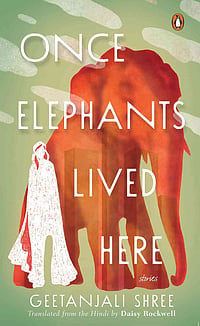
The need for such a bridge has acquired new urgency today. The international success of Geetanjali Shree’s Tomb of Sand, translated from Hindi by Daisy Rockwell, and Banu Mushtaq’s Heart Lamp, translated from Kannada by Deepa Bhasthi, has demonstrated what can happen when an Indian-language works cross borders. But awards illuminate individual books without doing anything to change the ecosystem that produces and circulates literature. Shanbhag’s argument is more demanding: readers need an abundance of translated writing, not occasional successes, if Indian literature is to acquire a durable readership.




Shanbhag’s own history makes the project persuasive. His Kannada novella Ghachar Ghochar, translated into English by Srinath Perur, travelled far beyond its original readership. During his years editing the Kannada literary magazine Desha Kaala, he encountered writers from Tamil, Hindi, Bengali and Marathi. Important writers could take years to become available to English readers.
For a long time, translation into English in India has carried an uncomfortable hierarchy. The original is treated as the serious literary work, while the translation is regarded as a derivative object, useful mainly because it makes the original accessible. Hyphen proposes another way of thinking. Indian writing in translation should be read simply as literature much as readers encounter Russian or Latin-American literature in English translation.

When English Becomes a Meeting Ground
Hyphen’s inaugural issue puts this proposition into practice. It brings together 17 writers and 11 translators across seven languages, with Marathi as the language in focus. It moves between fiction, no-fiction, scholarship, interviews and visual narratives, placing these forms and traditions in conversation.
The Marathi section is particularly revealing. Pradnya Daya Pawar’s A Diamond is Forever, translated by Jerry Pinto, Sandesh Bhandare’s Wari: The Bhakti Walk, translated by Ashutosh Potdar and Raveev Naik’s fine essay Marathi Literature in Motion offer different perspectives on a literary tradition in movement. G.A. Kulkarni’s Chandrawal, translated by Ranjit Hoskote, adds an important work of Marathi fiction.
Banu Mushtaq’s God’s Accident, translated from Kannada by Deepa Ganesh, Perumal Murugan’s Venom, translated from Tamil by Ishwarya V., and Benyamin’s The Postman, translated from Malayalam by J. Devika, bring in contemporary fiction across linguistic boundaries. Harish Trivedi’s scholarly essay The Making of Modern Hindi adds historical perspective, while Parvati Tirkey’s interview with Sundar Sarukkai expands the conversation around language, knowledge and literary cultures. Tirkey’s grounding in the Kurukh literary tradition adds another important dimension to the issue.
Hyphen’s print issue also includes the Kashmiri story The Will. Other works, including Ali Mohammad Lone’s Adam, Eve and Satan, translated by Azhar Wani and Manoranjan Byapari’s Scarred Forever, translated by Arunava Sinha, appear on the website. This distinction is important. The website is conceived as a complement to the print journal, extending rather than simply reproducing its literary conversation. Together, the two platforms create a considerably larger field of Indian writing.
Shanbhag’s ‘Publisher’s Note’ sets out an understanding of Indian literature that resists a hierarchy of languages. The hyphen itself is an apt metaphor: it connects without making what it connects identical. Deepa Ganesh’s editorial work gives this vision a convincing literary shape. The issue does not feel assembled merely to display linguistic diversity. The featured writers arrive first as writers, not as representatives of their languages.
This is why Marathi as the first language in focus is more than a “language of the month” gesture. By placing Marathi at the centre while allowing other Indian literary traditions to enter the conversation, Hyphen offers a model for thinking about India’s literary plurality.

Ganesh has argued that English must be “de-centred, without being rejected”. That distinction goes to the heart of translation in India. English can be a bridge between Indian languages and between India and the wider world. But when translated literature is forced into a standardised English idiom, translation risks becoming linguistic assimilation rather than literary encounter.
Designer Somesh Kumar has given Hyphen a distinctive visual identity, balancing a contemporary design sensibility with the seriousness of a literary publication. The illustrations are carefully integrated with the texts. The inclusion of colour photographs is equally effective, particularly in pieces such as Sandesh Bhandare’s Wari: The Bhakti Walk, where the visual material becomes part of the narrative itself. The result is a journal that one reads not only for its literary contents but also experiences as a carefully made object.
The most significant achievement of the inaugural issue is that it does not treat diversity as a catalogue. The works retain their individual literary identities while entering a larger conversation. Translation here is an act of interpretation, listening and literary recreation. In that sense, Hyphen is attempting something larger than a literary journal: it is creating a meeting ground for India’s literatures.
From Translation to a Literary Ecosystem
Hyphen’s three-part structure recognises that translation cannot survive on translation alone. A journal can create curiosity, a publishing house can sustain books, and fellowships can develop translators. The absence of any one part can weaken the others.
This is why the Bahuvachana Trust matters. It follows a non-profit model supported by philanthropy rather than treating translation as a commercial category. Writers and translators are paid for their contributions, an important principle in a literary economy where cultural labour is often undervalued.
Hyphen’s success should therefore be measured not by how many Indian-language writers it translates, but by whether it changes the habits of Indian readers. Will a Hindi reader begin looking for Kannada fiction? Will a Kannada reader become curious about Maithili poetry? Will an English-language reader encounter an Assamese novelist without waiting for an international prize? For English-language India, these writers may be new. But in their own literary cultures, they may be established, debated and read for decades. Translation should therefore not be an act of bestowing legitimacy. It should be an act of extending the conversation.
If Hyphen can hold on to that principle, it may become more consequential than another literary magazine. It could become a meeting place for India’s literatures, where Kannada encounters Maithili, Marathi speaks to Malayalam, Hindi meets Manipuri, and all enter the wider world without surrendering their histories.
Hyphen: Connecting Literatures, Rs 799 for a single issue
Annual subscription: Rs 1,299 for two issues
Website: the-hyphen.in
(Ashutosh Kumar Thakur is a Bengaluru-based literary critic, translator, bilingual writer and curator)