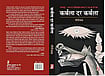
Translation is an act of re-situation, placing works within fresh constellations of meaning and readership.
The recent English translations of five Hindi works—Rajendra Yadav’s Echoes of My Past, Mannu Bhandari’s This Too is a Story, Alka Saraogi’s Register Me as Kulbhushan, Mamta Kalia’s Rat Race and Tripurari Sharan’s Our Madhopur Home—have inadvertently assembled a constellation of Hindi modernism’s unresolved questions.
Read together, these books suggest that the concerns animating the Nayi Kahani movement—intimacy, urban life, middle-class aspiration and individual freedom—were never entirely settled.
Translation scholars have long argued that texts do not just move from one language into another; they enter new literary and historical worlds. Walter Benjamin understood this movement as giving a work an “afterlife” while André Lefevere said that translation functions as a form of rewriting, reshaping literary traditions and altering the ways texts are read. Translation, in this sense, is not simply an act of transfer but an act of re-situation, placing works within fresh constellations of meaning and readership.
The recent English translations of five Hindi works—Rajendra Yadav’s Echoes of My Past, Mannu Bhandari’s This Too Is a Story, Alka Saraogi’s Register Me as Kulbhushan, Mamta Kalia’s Rat Race and Tripurari Sharan’s Our Madhopur Home, have inadvertently assembled a constellation of Hindi modernism’s unresolved questions. Published in English between late 2025 and early 2026, these books span generations, genres and literary sensibilities. Read together, they suggest that the concerns animating the Nayi Kahani movement—intimacy, urban life, middle-class aspiration and individual freedom, were never entirely settled. Instead, they continue to surface through questions of gender, migration, memory and identity.
The original Hindi texts of these books appeared across different decades and emerged from distinct historical moments. Yet, their simultaneous arrival in English creates an unexpected conversation. Language here begins to function as a form of literary criticism, bringing texts into relation with one another and inviting a fresh reading of the histories they inhabit.



Journals and the Making of Literary Publics
It is also significant that works by Yadav, Bhandari and Kalia found a prominent space in Tadbhav, the influential literary journal edited by Akhilesh from Lucknow. Tadbhav has long functioned as one of the most important sites of contemporary Hindi literary culture. It offered established writers a space to experiment with longer forms and more intimate modes of writing. It also cultivated a discerning readership willing to engage with questions of selfhood, social change and literary form.
Hindi literary history has often been narrated through authors and movements. The role of journals in shaping literary publics has received comparatively less attention. Publications such as Pahal, edited by Gyanranjan; Hans, revived by Yadav in 1986; and Tadbhav, edited by Akhilesh, created the intellectual infrastructure through which modern Hindi literature evolved. They were not merely platforms for publication. They were arenas of debate, disagreement and experimentation which shaped reputations, fostered new literary forms and expanded the boundaries of critical discourse. Through these journals, questions of gender, caste, ideology and aesthetics were contested in real time, allowing Hindi literature to remain a dynamic and self-reflexive public sphere.
To encounter these works now in English is therefore to witness the migration not only of individual texts but also of an entire literary ecosystem nurtured within the dense and often independent public sphere of north-Indian literature. Such movement carries with it traces of editorial cultures, literary networks and regional conversations that shaped these works in their original contexts.

Two Memoirs and One Broken Marriage
The pairing of Yadav and Bhandari provides the emotional and intellectual centre of the grouping of these five books. From 1959-94, they were Hindi literature’s most visible literary couple. Both occupied central positions within the Nayi Kahani movement of the 1950s and 1960s, which shifted Hindi fiction away from nationalist idealism and towards the emotional and psychological realities of urban middle-class life.
Yadav’s Mud Mud Ke Dekhta Hoon (translated by Poonam Saxena as Echoes of My Past) and Bhandari’s Ek Kahani Yeh Bhi (translated by Saxena as This Too Is a Story) offer two versions of a shared life. Their publication in English within months of one another transforms them into companion texts. Readers encounter them not as isolated memoirs but as competing acts of remembrance.
Yadav’s memoir is fragmented, self-conscious and frequently self-mythologising. He writes about reviving Hans, his numerous relationships, his failures as a husband and father and the long periods of silence that marked his later years. The narrative often appears deliberately abrasive, resisting attempts at moral clarity or redemption. Yadav presents himself as someone committed above all to literature, even when that commitment leaves emotional damage in its wake.
Bhandari’s memoir offers a striking contrast. This Too Is a Story is marked by clarity, restraint and emotional precision. She writes not from the perspective of a literary legend but from within the realities of everyday life, detailing how marriage to another celebrated writer constrained her own writing life. She describes writing amid professional responsibilities, domestic obligations and childcare.
Read together, these memoirs expose the gendered assumptions underlying Hindi literary modernism. The Nayi Kahani movement sought to democratise Hindi fiction by foregrounding middle-class experience. Yet, these texts reveal how unevenly the freedoms associated with literary production were distributed. The freedom to write itself emerges as a site of negotiation within the household.
Saxena’s translations preserve the distinct textures of these voices. Yadav’s prose retains its digressive quality while Bhandari’s maintains its measured directness. The translations do not attempt to reconcile these narratives. Instead, they allow readers to inhabit the discomfort of irreconcilable perspectives.

Migration and the Politics of Recognition
If Yadav and Bhandari revisit the intimate politics of literary modernism, Saraogi’s Register Me as Kulbhushan (translated into English by John Vater), shifts attention towards the bureaucratic violence of displacement. The novel follows Kulbhushan Jain, who is also known by other names acquired through the contingencies of migration and survival. Having arrived in India from Bangladesh before 1971, Kulbhushan inhabits multiple identities without fully possessing any of them. Saraogi’s Kolkata is rendered with extraordinary specificity, but this intimacy with the city offers no guarantee of recognition.
The novel is less concerned with the Partition as historical spectacle than with its administrative afterlife. Kulbhushan is repeatedly asked to prove who he is through documents, certificates and official procedures. Recognition here is not secured through memory or emotional attachment. It requires institutional validation. Vater’s translation carefully preserves Saraogi’s movement between bureaucratic language and colloquial speech. Saraogi expands the concerns of Hindi modernism beyond the domestic sphere and asks who remains excluded from these narratives altogether.

The City and the Rat Race
Kalia’s Rat Race (translated into English by Jerry Pinto) brings this trajectory into the era of economic liberalisation. Originally published around the turn of the millennium, the novella captures a society increasingly shaped by market values and professional competition. Pinto’s translation retains the energy and rhythm of Kalia’s prose. Its clipped sentences and conversational pace mirror the exhaustion and fragmentation of contemporary urban life.
Kalia has long been one of Hindi literature’s sharpest observers of urban life and gender relations. Her characters navigate offices, housing complexes and family obligations while attempting to sustain a sense of individual purpose. Unlike the protagonists of early Nayi Kahani fiction, they are not trying to define a newly independent nation. They are trying to negotiate its market compulsions.
Homes, Distances and Social Memory
Sharan’s Our Madhopur Home (translated into English by Arunava Sinha) offers another route into this broader conversation about social change. Originally published in Hindi as Madhopur Ka Ghar, the novel is a multigenerational family saga set in rural Bihar and narrated through the perspective of Laura, the family’s dog. Spanning three generations and nearly a century, it follows the family as children grow up, leave home and move in different directions while the social world around them also undergoes profound change.
Sharan does not present history through dramatic events. Instead, it appears through departures, absences and the slow accumulation of change. Home emerges as a fragile and shifting idea. Sinha’s translation carries into English the novel’s intimate cadence and layered movement between personal experience and social history.

Translation, Memory and the Unfinished Archive
Taken together, these books suggest that memory functions less as inheritance than as testimony. Yadav and Bhandari return to the literary past to dispute settled narratives. Saraogi’s Kulbhushan struggles for recognition within systems that repeatedly reduce him to paperwork and uncertainty. Kalia’s characters search for meaning within lives measured by ambition and acceleration. In Sharan’s novel, the home itself becomes a repository of experience, carrying traces of departures and silences.
Benjamin observed that translation allows a work to continue to live beyond the historical moment of its first appearance. What emerges from this gathering of texts is perhaps one such afterlife. Yadav’s restlessness stands beside Bhandari’s restraint. Saraogi’s bureaucratic precision unsettles Kalia’s portrait of urban aspiration. Sharan introduces another register where experience settles into houses, landscapes and family histories.
These books resonate deeply today because they ask readers to remain with competing memories, unstable identities and histories that resist finality. The afterlife of Nayi Kahani lies not in preserving a literary movement as a finished inheritance, but in returning to the questions it left unresolved. Those questions continue to shape how India remembers itself, and how it tells its stories.
(Ashutosh Kumar Thakur is a literary critic, translator and curator based in Bangalore. He writes on literature, culture and the shared histories of South Asia.)