Ahead of Yash's Toxic, here's a brief lineup of few notable roles by Indian actors that forayed outside the familiar.
Vidya Balan has been at the forefront of reshaping the imagination Hindi film heroine.
In Animal, Ranbir Kapoor embraced an uncharacteristic degree of gratuitous violence and aggressive masculinity.
KGF star Yash's collaboration with Geetu Mohandas in Toxic is an uniquely exciting proposition. Here's one of the country's biggest stars teaming with a revered independent female filmmaker, best known for Moothon (2019). It's a giant step forth for Mohandas as she moves from intimate narratives to a vast scale with full-blown action and spectacular setpieces. A gangster actioner may be the common link between KGF and Toxic. But the latter promises a psychological plunge into the violence and moral rot of navigating a skewed world.
Toxic may not seem like a steep shift from what Yash has done earlier, but he joins a band of actors who have taken risky bets.
1. Vidya Balan: The Dirty Picture (2011)


With this and a slew of other films coming in quick succession, Balan completely rewrote the possibilities of the Hindi film heroine. Milan Luthria's film, inspired by the life and times of Silk Smitha, may have a bunch of screenplay issues, but Balan seized the opportunity to play with her image, shatter all the preconceptions surrounding what she's capable of. She initially described the performance as her interpretation of Silk rather than an impersonation. Balan saw in the film a chance to present herself wholly anew, shedding every possible inhibition and embracing a psychologically nuanced understanding of performance. Putting on 12kgs for the role, Balan has said that it shifted her relationship with her body. Her choices are incredible. She went from the graceful, traditional heroine of Parineeta (2005) to the seductive, morally ambiguous woman of Ishqiya (2010) to the unapologetically sexual, outrageously flamboyant performer of The Dirty Picture (2011).
2. Saif Ali Khan: Omkara (2006)

This is arguably one of the defining radical image-departures for a mainstream actor in Hindi cinema. Khan, known for his sauveness and urban wit, disrupted his perception in Vishal Bhardwaj's Othello adaptation. Taking on a coarse north Indian dialect, he lets his character, Langda Tyagi, be petty and vile and manipulative instead of any grandstanding villainous projection. The diabolical orchestration works on a psychological level. Khan discarded any vestige of sophistication to emerge as a deeply insecure, resentful man who constantly plots the destruction of others. Khan hadn't previously occupied such an earthy, vicious world.
3. Allu Arjun: Pushpa (2021) and Pushpa 2 (2024)

The Telugu superstar abandoned his customary charm and elegance for the brash swagger of Pushpa. The role is volatile, crude, never a pretty sight, frequently miserable and vulnerable. Arjun had to strip away the familiar Telugu polish to fit into the socioeconomic strata of an underdog smuggler. In Sukumar's loud drama, Arjun holds onto a casual arrogance, demanding the entire world to fall at his feet. The charismatic performance fetched him a National Award for Best Actor. The first part emerged the highest-grossing Indian film of 2021.
4. Ranbir Kapoor: Animal (2023)

Kapoor's primary appeal is that of a soft, plaintive loverboy, a manchild bubbling with naivete. With Sandeep Reddy Vanga's provocative Animal, Kapoor cast off trappings of tender attractiveness and slipped into the filmmaker's brand of misogyny and violence. Gone was the charming romantic lead in films like Yeh Jawaani Hai Deewani and Ae Dil Hai Mushkil, replaced with a man harbouring toxic ideas of love and obsessed with controlling and dominating women. Kapoor's Ranvijay is all about aggression in a blood-drenched father-son saga. The effects of Kapoor's startling transformation are similar to when Shah Rukh Khan played the obsessive killer in Darr.
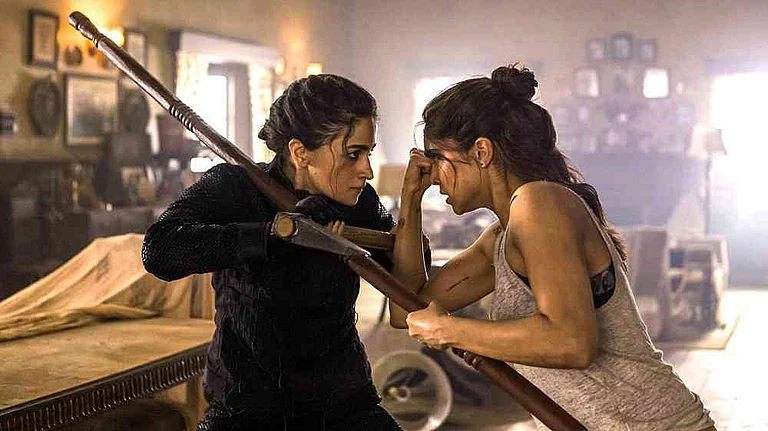
5. Huma Qureshi: Baby Do Die Do (2026)

In a carrer built on roles of assertive, uncompromising women, Qureshi had to make the brave pivot to essaying an assassin without the crutch of dialogues. She had to communicate fear and danger through silence alone. The visually striking noir thriller relies on sharply modulated physicality to make its most cutting impact. Starring as a deaf-mute contract killer, Qureshi's defiantly inscrutable stare fills in for reams of biting dialogue delivery she has always aced. Neither does Qureshi ever allow the character to be reduced to her disability.
She flips the notion of the female action star. Noticeably, the film released on the same day as another, more lavishly mounted film billing itself as built around a female action heroine, Alia Bhatt's Alpha.
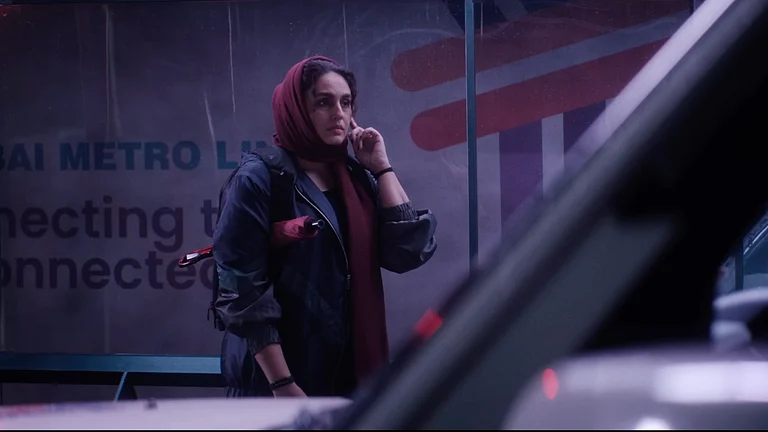
6. Rani Mukherjee: Black (2005)

At the very height of her commercially driven career, Mukherjee played Michelle McNally, a deaf-blind girl whose journey is centred on communication, education and self-discovery rather than romance or conventional glamour in Sanjay Bhansali's film. It was a decisive break from the regular idealised conception of the Hindi film heroine. There is the absence of grace and exquisite bearings of a Bollywood heroine, replaced by more heightened expressions of physicality. The role is all about a desire to connect and communicate, thrashing for any foothold to do so.