



A viral video showing an excavator working near Sheshnag Lake has prompted calls for an explanation and a halt to the activity.
The BRO says it is widening and stabilising existing tracks after the Amarnath Yatra, with environmental safeguards in place.
Environmentalists and political and religious figures have raised concerns about the lake’s glacial setting, water links and religious significance.
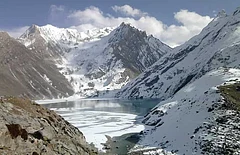
A video showing a heavy excavator allegedly cutting and levelling ground near Sheshnag Lake on the Amarnath Yatra route has triggered a political outcry to stop the work. Environmentalists, political leaders and religious figures have warned of risks to the fragile alpine landscape.
The Border Roads Organisation (BRO), which is carrying out work along the route, said the activity forms part of post-Yatra track widening and stabilisation. It said the work is limited to existing tracks and follows safety and environmental safeguards.
Sheshnag, at an altitude of about 11,780 feet in Anantnag district, is a stopover on the traditional pilgrimage route. Pilgrims travel around 12 to 13 km from Chandanwari to reach the lake, then continue another 18 to 20 km towards the cave shrine.

BRO Defends Work As Safety Measure
In its statement, the BRO said it was widening existing tracks and stabilising vulnerable stretches after the pilgrimage season. It said it was taking steps to dispose of excavated material safely, protect natural drainage and limit disturbance to the surrounding terrain.

The organisation said its work was intended to improve safety for pilgrims. It also clarified that the Supreme Court’s directions on arrangements for the Amarnath Yatra did not call for replacing the walking route with a metalled motor road.
Environmentalists Flag Glacial Risks
Dr Mohammad Sameer Shafi Siddiqui said the video was alarming, particularly as glaciers in the Kolahoi region and elsewhere in Kashmir continue to retreat, The New Indian Express reported.
“The video of this heavy machine tampering near the vicinity of Sheshnag that is surfacing on social media is very disturbing and alarming,” he said.
He questioned the use of heavy equipment near a high-altitude glacial lake and said Sheshnag is a major source of water for the Lidder River, which supports drinking water and agriculture downstream.
“It is simply abhorrent to see how and why all this is happening,” Siddiqui said.
Environmental activist and RTI campaigner Dr Raja Muzaffar Bhat also questioned how the machinery had reached the glacial zone. “This is a disaster - How such a heavy machine reach to our Glaciers of Kashmir,” he said.
Environmentalist Nikhil Saini said the purpose of the work mattered. “If this construction at Sheshnag, Pahalgam, is for defence purposes or some really critical emergency connectivity, then okay. But otherwise, this honestly looks so wrong,” he said. Saini added that the region’s fragile terrain should prompt questions about whether such construction is necessary.

Leaders Cite Religious And Ecological Importance
PDP spokesperson Mohit Bhan described the work as “A crime against Hinduism and faith in nature”. He said Hindu tradition associates Sheshnag with the pilgrimage to the Amarnath cave, where Lord Shiva is believed to have left the serpents before narrating the Amar Katha to Parvati.
“There is a profound contradiction in invoking Hindu faith while allowing the very landscape associated with that faith to be disturbed through unnecessary construction, road cutting and surface levelling,” Bhan said.
“What is being projected as development must not come at the cost of a fragile alpine ecosystem and a landscape deeply embedded in Hindu religious belief. Faith and ecology are not competing interests. Both demand protection,” he said.
Bhan added: “You cannot celebrate the sanctity of a pilgrimage while disregarding the sanctity of the landscape through which it passes. If we cannot respect Sacred Sheshnag, what exactly are we preserving in the name of the Amarnath Yatra?”
Hurriyat Conference leader and cleric Mirwaiz Umar Farooq called the visuals “very disturbing” and said they raised serious questions about construction in a vulnerable Himalayan region. Kashmir, he said, had always welcomed Amarnath pilgrims, and improving facilities had never been an issue “But not at the cost of our fragile ecosystem.”
Mirwaiz called for an immediate halt to the work and said those in charge owed people answers. Former MP and Shia leader Aga Ruhullah also criticised the activity, writing: “A party that wins votes in the name of faith is now taking JCBs to a holy lake.”
J&K Students Association national convenor Nasir Khuehami called the visuals “heartbreaking” and said: “How ruthlessly they are cutting into the very heart of our beautiful, fragile land”. He warned against what he described as the risks of unchecked intervention in an alpine ecosystem and asked the government to clarify who approved the work, whether environmental assessments and clearances were obtained, and who would be accountable for any damage.








