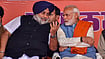
Taking a lesson from its recent Keralam win and not-so-recent Haryana debacle, the Congress has seemingly got its house in order in Punjab ahead of the Assembly election early next year. With the appointment of former hockey Olympian Pargat Singh as Punjab Congress president and Sachin Pilot as the state in-charge, a semblance of peace is prevailing for now. Seems like the Congress is heading into a winter of relative calm, after a summer of political storms.
The party has learnt two lessons from its recent electoral history. In Haryana, differences between Randeep Surjewala, Kumari Selja and Bhupinder and Deepender Singh Hooda contributed to the party’s defeat. In Keralam, where several leaders had equally strong chief ministerial ambitions, the Congress managed to contain its differences and return to power. As it prepares for the Punjab election, it hopes to repeat the Keralam formula rather than the Haryana mess.
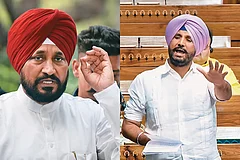
Pargat has been brought in to reach out to all factions and assuage tempers. He has largely avoided openly siding with any one group. Though he served as a minister in former Chief Minister Charanjit Singh Channi’s government and is seen to be more aligned with his camp than with the Amrinder Singh Raja Warring faction, he stayed out of their public confrontation. His reputation as a relatively uncontroversial politician and a Jatt Sikh leader from Jalandhar in the Doaba region made him a suitable choice.
The Congress has no shortage of players, but it needs someone who can persuade them to play for the team rather than for themselves. The party is hoping Pargat can do just that. It can’t be ruled out that he too may harbour chief ministerial ambitions, although he has been more circumspect about it so far.

The Congress strategy has been to rely on the formula of attempting to establish a truce without resolving the underlying contest. It is looking to achieve the same in Punjab.
Leadership Manoeuvres
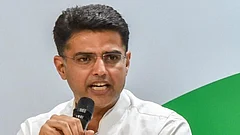
The appointment of Pilot has made navigating through tricky issues a bit easier. It helps that he is a quiet observer and an outsider who has entered the Punjab battlefield without leaning towards any faction. His proximity to Rahul Gandhi and Priyanka Gandhi Vadra ensures that senior leaders take him seriously.
His first task was a crucial one and he managed to win the challenge. After taking charge, he consulted Punjab leaders and found that even some considered close to Warring had reservations about his leadership. Pilot reportedly conveyed his assessment to Congress president Mallikarjun Kharge and Gandhi, after which the leadership decided to replace Warring, a Member of Parliament (MP) from Ludhiana.
Pilot wanted the transition to be handled without alienating Warring and asked the leadership to meet him before announcing the decision. Warring made his displeasure apparent, but has since agreed to keep the peace. “There are no issues and we all will work together to win Punjab. The question of chief ministership comes only after that,” Warring tells Outlook.
Warring is young, popular and charismatic, but many senior leaders were unwilling to take directions from him. He had retained the confidence of sections of the central leadership, particularly former Punjab in-charge Bhupesh Baghel, who openly backed him. This alienated other influential sections of the state unit and resistance to Warring continued to grow.
The Congress has no shortage of players, but it needs someone who can persuade them to play for the team rather than for themselves. The party is hoping Pargat can do just that.
The Congress’ move was a calculated one: remove Warring but don’t give space to another chief ministerial aspirant to take control. Warring, one senior leader points out, is still seen as a youth leader, which had become a source of friction within the state unit.
Channi, leader of the Opposition Partap Singh Bajwa and Gurdaspur MP Sukhjinder Singh Randhawa were among those challenging his leadership. Their regional bases also shaped the contest. Warring hails from Gidderbaha in Malwa, Bajwa from Majha and Channi with influence in both Malwa and Doaba, an important commercial belt. There are five million floating voters, a majority Hindu, in Doaba, so Pargat’s appointment gives the district greater prominence within the party. Much of the struggle for control of the Congress has involved leaders with bases in Malwa and Majha. The elevation of Pargat, who is a three-term Member of the Legislative Assembly (MLA), strengthens Doaba’s position without displacing the established regional power centres.
Along with managing the regional equations, a political party has several things to deal with: leadership, internal unity, alliances, resources and the perception and winnability of its candidates. The Congress faces challenges on all these fronts. However, it is now in a slightly better position than it was six months ago. “It took considerable time, but with Pilot being brought in and the appointment of Pargat Singh, the party found someone who is measured and has the ability to take everyone along,” says senior political journalist Rasheed Kidwai.
Of the many challenges, the Congress has managed to check one off its list. On the surface, there is a measure of unity within its own ranks, but deep inside, fissures remain.
Keeping the Peace
When K.C. Venugopal, the All India Congress Committee general secretary (organisation), and Pilot arrived in Chandigarh on October 25, Pargat Singh, Bajwa and Warring together received them at the airport. While Venugopal exuded confidence that his party would win the Assembly polls, the meeting with party members involved some tough love. Both Pilot and Venugopal made it clear that indiscipline and anti-party activities would not be tolerated in the run-up to the election. Keralam was held up as an example: leaders had maintained peace until the election was over, recognising that they could compete for the chief minister’s post only if the party won.
Punjab has historically been one of the Congress’ strongest states. Until AAP came to power in 2022, the Congress was the only party capable of winning an Assembly election on its own.
Venugopal brought Pargat, Warring, Channi, Bajwa, Randhawa and senior leader Vijay Inder Singla together. He also ensured that they attended a lunch hosted by Bajwa at his Chandigarh home. In a deliberate gesture, Venugopal held Channi’s hand during one of the meetings and emphasised his importance as campaign committee chairman. At the same time, he stressed that Warring, Bajwa and the other senior leaders had important responsibilities.
However, soon after Venugopal left for Delhi, friction emerged. On October 28, Kapurthala MLA Rana Gurjeet Singh took to his social-media handle on X and wrote that he rejected all speculation and rumours about changing parties. The incident shows that some party members are looking to disrupt the peace. It remains to be seen if it indeed will be a united house in the run-up to the elections. The equations may alter during the ticket- distribution stage. “Although the party has decided that the leadership issue would be settled after the elections, it will come up during the candidate-selection process,” says Kidwai.
Opponent on the Board
Punjab has historically been one of the Congress’ strongest states. Until the Aam Aadmi Party (AAP) came to power in 2022, the Congress was the only party capable of winning an Assembly election on its own, without an alliance. Despite the political legacy of 1984, Punjab has not disappointed the Congress.
The party’s biggest challenge is not necessarily the Bharatiya Janata Party (BJP) or the Shiromani Akali Dal, both familiar political opponents with whom it has a long history of rivalry. It is the AAP, which has taken a substantial share of the Congress’s traditional vote base, including sections of the Sikh electorate and the Sikh middle and upper classes.
Though it is a formidable challenge, Kidwai notes that AAP has not fulfilled many of its promises and there is considerable disgruntlement among the people. The Congress hopes to turn the spotlight on three Cs: crime, corruption and chitta (heroin), all of which made headlines in October.
The Congress still has an extensive grassroots network and leaders with influence across different communities and regions. It won 18 Assembly seats in 2022, even as the AAP swept to power with 92 of the 117 seats. But the 2024 Lok Sabha election suggested that the Congress had recovered some ground. It won seven of Punjab’s 13 parliamentary seats, while its vote share rose from 23.2 per cent in 2022 to 26.4 per cent in 2024.
The state could bank on Gandhi’s popularity. “According to surveys, there are only three states where Gandhi is more popular than Modi—Keralam, Tamil Nadu and Punjab. These are the dynamics that favour the Congress considerably. It has support across communities and a formidable set of leaders representing influential castes and sub-castes,” says Kidwai.
The strategy now is to ask the various aspirants, including Warring, Channi, Randhawa and other senior Hindu and Sikh leaders, to put their full weight behind the campaign. It is the Congress’s old formula: allow regional leaders to demonstrate their strength, then choose a leader from among them. “It is a complicated process, but for now, there is a shared sense of purpose,” says Kidwai.
A win in Punjab would strengthen Congress’ claim that it can challenge the BJP and other regional parties in states where it has an established organisation in the run-up to the 2029 Lok Sabha election. The party is also trying to revive its national fortunes after setbacks in several state elections this year and last.
For now, all eyes are on Punjab. The Congress has made its moves on the chessboard. Now it is up to its players to take the fight to the opponent. For many Congress leaders in Punjab, this could be their final stand—a defeat may leave them with no room to manoeuvre and no political ground from which to fight another day.
MORE FROM THIS ISSUE


Ashlin Mathew is Senior Associate Editor, Outlook