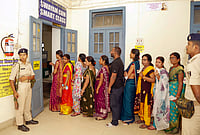
Haryana electricity employees’ strike disrupted power and water supplies across Gurugram neighbourhoods.
Nearly 1,800 manufacturing units faced disruption as factories turned to diesel generators.
Residents protested prolonged outages, with road blockades reported in Gurugram and Rewari.
Thousands of households faced power and water shortages, nearly 1,800 manufacturing units reported disruption and residents blocked roads as a strike by Haryana electricity employees hit Gurugram and several other districts on Thursday.
The three-day strike began at 10 pm on October 21 and was scheduled to continue until October 24. Employees are opposing the Haryana Electricity Regulatory Commission’s decision to grant private company Eleven Power a parallel distribution licence for Gurugram and Nuh, Times of India reported.
With faults going unattended, outages stretched beyond 16 hours in some neighbourhoods. Household inverters ran out of charge, water pumps stopped and factories turned to diesel generators to keep production moving.

Thousands Of Complaints As Outages Spread
Dakshin Haryana Bijli Vitran Nigam (DHBVN) received more than 3,000 complaints in the first 12 hours of the strike, an official said. Around 5,000 outage complaints reached its helplines on Thursday, while a separate account put complaints registered between midnight and 7 am at approximately 5,500.
Residents alleged that repeated calls to officials and helplines brought little relief. In Old Gurugram, they estimated that more than 50,000 households were affected.


Complaints came from areas including Ashok Vihar, Palam Vihar, Rajendra Park, Dayanand Colony, Bhimgarh Kheri and several residential sectors.

Power Cuts Leave Homes Without Water
In Sector 9A, around 6,000 families were affected after electricity supply failed at approximately 3.30 am on Thursday. The outage also stopped the local water-boosting station, residents’ welfare association general secretary Suraj Bhola said, as reported by Times of India.
“I have called the officials nearly 50 times, but nobody is responding. There is no electricity at our homes. Inverters have run out, and now there is no water either because the boosting station is affected. How are people supposed to manage their daily needs?” he said.
Bhola said supply had not returned even after more than 16 hours and water tankers were difficult to arrange.
Residents of Hari Nagar said more than 7,000 families faced outages beginning around 10 pm on Wednesday. RWA president Sumit Gujjar alleged that officials were not answering calls and the electricity office was locked.
“If employees have an issue with the govt, they should take it up with the govt instead of leaving residents without electricity and water,” he said.
At Lotus Homz, resident Anu Gulati said the prolonged outage had exhausted her inverter.
“Even inverter ran out of battery and I had to cook dinner using the light from my mobile phone,” she said.
Residents Protest, Factories Turn To Generators
Residents of Rajendra Park, Bhimgarh Kheri and areas near Gurugram railway station gathered near the railway station road bridge on Thursday evening, demanding restoration of supply. Police reached the spot, but protesters said they would remain until electricity returned.
Protests were also reported in Faridabad’s New Industrial Township-2. In Rewari, villagers blocked National Highway 352 near Palhawas before police and administration officials persuaded them to clear the road.
Power cuts affected parts of Sonipat, including Ganaur, Gohana and Kharkhoda, while disruptions were also reported in Ambala and Nuh.
Industrial units in Daulatabad, Kadipur and Sector 37 struggled to maintain operations. Manufacturers used diesel generators, but prolonged running was constrained by overheating, cooling requirements and pollution-control norms.

Why Employees Oppose The Private Licence
HERC granted Eleven Power a 25-year parallel distribution licence on October 19, allowing it to develop infrastructure and supply electricity alongside DHBVN in Gurugram and Nuh.
Employees argue that the arrangement amounts to indirect privatisation and could weaken the state utility and threaten jobs.
DHBVN has also raised financial concerns. In submissions to HERC, it said the two districts accounted for 35.23% of its electricity sales and 42.98% of its revenue in 2025-26. It warned of revenue losses if commercial and industrial consumers moved to the private distributor.
Eleven Power disputed that assessment, saying its plan assumed a limited shift of existing consumers and relied substantially on new connections. The projected losses have not materialised and remain part of the dispute before the regulator.
Haryana Government Plans Legal Challenge
The Haryana government has said it will challenge the licensing decision before the Appellate Tribunal for Electricity and seek a stay.
Chief Minister Nayab Singh Saini appealed to employees to reconsider the strike, while Energy Minister Anil Vij said the government would pursue the legal challenge.
Before the agitation, the administration had announced contingency arrangements prioritising hospitals, water installations, Metro services and other essential facilities. Residents continued to report prolonged outages and uncertainty over restoration through Thursday night.