Over twelve hours of torrential rain on Friday inundated Delhi-NCR, submerging major arterial roads under up to four feet of water and crippling daily life.
Two people died in a building collapse in Gurgaon, while the Safdarjung weather station recorded 204.1 mm of rainfall, representing 90% of August's normal precipitation.
Severe waterlogging affected critical facilities, including Safdarjung Hospital and Greater Kailash metro station, forcing residents to use makeshift rafts in Fatehpur Beri.
Torrential rain on Friday inundated the Delhi-NCR region, submerging roads under up to 4 feet of water and paralysing daily life. The unrelenting downpours over three consecutive days exposed severe civic vulnerabilities across the national capital.
The extreme weather resulted in fatalities and widespread property damage. Two people died in a building collapse in the Gurgaon suburb amid heavy downpours, according to the Hindustan Times.
Civic officials in Delhi fielded around 90 complaints of wall collapses, fallen trees, power outages and waterlogging. Stranded vehicles choked traffic as residents navigated flooded streets and marooned neighbourhoods.
Record Rainfall Statistics
The capital witnessed unprecedented precipitation levels. The Safdarjung weather station recorded 204.1 mm of rain for August till Friday night, representing 90% of the month's normal rainfall, the India Meteorological Department (IMD) stated.
Localised deluges were even more severe in other parts of the city. Pushp Vihar recorded the highest rainfall at 147.5 mm, the IMD stated. It was followed by Chhatarpur at 131 mm, Palam at 88.7 mm and Ayanagar at 87.4 mm. Neighbouring suburbs also faced severe downpours. Gurgaon recorded 172 mm of rain in 72 hours, while Noida recorded 39 mm in 24 hours ending Friday morning, the IMD stated.


The IMD monitored the ongoing weather patterns. "The widespread rainfall over Delhi since yesterday has been influenced by the active monsoon trough..." an IMD official said.
Commuter Chaos and Flooding
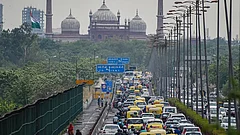
Major arterial roads including MB Road, NH-48, Ring Road and ITO witnessed severe traffic jams and waterlogging. Commuters remained trapped in their vehicles for hours as motorists abandoned flooded stretches.
Floodwaters breached critical public facilities and residential zones. Water entered Safdarjung Hospital, the Greater Kailash metro station entrance and residential areas like Sangam Vihar and Fatehpur Beri. In Fatehpur Beri, locals transported schoolchildren across flooded lanes on makeshift rafts.
"Even ambulances were stuck. What usually takes me an hour to get to work took me at least three today..." Rameshwari Devi, a Begumpur resident, said.
Residents faced property damage alongside mobility issues. "Our area has witnessed waterlogging for two days now, and the water seeped into my car and my house today..." Ashok Singh, a Sunlight Colony resident, said.
Infrastructure and Political Clash
The widespread inundation triggered anger among citizens over repeated civic failures and choked drains.
"The city gets flooded every year. This is due to poor sewage and drainage infrastructure," BK Dutt, a Burari resident, said as per the Hindustan Times.
Local welfare groups echoed this frustration regarding official inaction. "Despite everyone being aware that waterlogging is an annual problem, our complaints over multiple years have fallen on deaf ears..." Anantmala Potdar, Saket Resident Welfare Association president, said.
Government representatives offered a contrasting view of the situation. "The rain is the same, but the preparation has changed, and that’s why, today, monsoon in Delhi no longer means waterlogging..." Public Works Department Minister Parvesh Verma posted on X.