Nepal has rejected foreign search-and-rescue teams for the Bhotekoshi flood rescue operation.
The decision is linked to coordination and management problems during the 2015 Nepal earthquake response.
Nepal is accepting foreign aid while keeping flood rescue under its own security agencies.
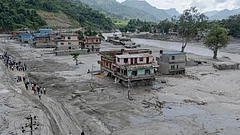
Nepal has declined offers from several countries to send search-and-rescue teams after the devastating Bhotekoshi floods, with the government saying its own security agencies have the capacity to conduct the operation. The decision comes as hundreds of people remain missing, including hundreds of foreign nationals.
Nepali officials have linked the decision to Nepal’s experience during the 2015 earthquake, when a large international response brought foreign search-and-rescue teams, military personnel and relief supplies into the country. Officials say the scale of that response created coordination and management difficulties. This time, Kathmandu is keeping operational search and rescue under Nepali security agencies while continuing to accept foreign financial and material assistance through official and international channels.
The distinction matters. Nepal is not refusing international assistance altogether. It is seeking to keep search and rescue under Nepali agencies while channelling financial and material assistance through official mechanisms.
What Nepal learnt from the 2015 earthquake
Nepal requested international assistance within hours of the 2015 earthquake. A peer-reviewed assessment of the response found that 34 countries physically responded, sending 76 urban search-and-rescue teams comprising 2,242 personnel and 135 dogs. Eighteen foreign military teams also took part in the immediate response.
The scale of that international mobilisation placed pressure on Nepal’s ability to receive and manage outside assistance. A peer-reviewed assessment found that Nepal was overwhelmed by the volume of personnel, equipment and donations arriving after the earthquake, with difficulties affecting planning, aid provision, delivery and distribution. Tribhuvan International Airport, the main gateway for international assistance, faced congestion as aircraft carrying foreign personnel and relief supplies arrived.


The lesson was not that foreign rescue teams could not contribute, but that integrating large numbers of international actors into a disaster response also placed demands on a national system already under severe strain.
That experience is part of the reasoning Nepal is applying to the current floods. The Kathmandu Post reported that a senior Foreign Ministry official said the government had considered the coordination and management problems caused by the influx of foreign search-and-rescue teams during the 2015 earthquake when deciding not to accept similar teams now. The decision was made on the recommendation of the Nepali Army and police.
A Nepali-led rescue, but foreign aid is still coming in
Nepal's current response is not organised through one literal command line covering every aspect of the disaster. Instead, the government has created a sector-based structure, with 12 teams assigned different responsibilities.
The Nepali Army is leading the search, rescue and relief operation. Other teams are responsible for medical assistance, emergency communications, transport and connectivity, damage assessment, missing-person information, relief supplies, airport coordination and international aid and donor coordination. The structure allows the government to keep the operational rescue effort with Nepali agencies while assigning separate officials to manage foreign assistance.
The government has also introduced a “one-door” mechanism for relief contributions. The system is intended to bring cash and material contributions under a central government mechanism rather than allowing separate relief channels to operate independently. The Kathmandu Post reported that the stated aims are to streamline the collection and distribution of relief, prevent irregularities and ensure that supplies reach affected areas according to need.
This is different from refusing foreign assistance. India, for example, delivered relief material after Nepal declined its offer to deploy a National Disaster Response Force team. South Korea pledged $1 million in humanitarian assistance through international organisations, while other countries have also offered financial or material support.
Nepal has separately established an Emergency Response Team within its Foreign Ministry to handle information, search-and-rescue-related assistance and consular matters involving foreign nationals affected by the floods. The ministry has asked diplomatic missions, international organisations and families of missing people to use official channels for information and assistance.
What Nepal gains — and gives up
Keeping search and rescue under Nepali agencies allows Kathmandu to retain control over the deployment of personnel and resources. It avoids having to integrate multiple foreign contingents into an operation that is already being divided among specialised government teams. The one-door mechanism for relief contributions also gives the government greater control over the movement and distribution of outside aid.
But there is a potential cost. Foreign search-and-rescue teams would also have added personnel and equipment to the operation, potentially increasing the capacity available for searches. By declining them, Nepal is choosing not to supplement its domestic rescue capacity with those additional contingents.
The scale of the operation makes that trade-off significant. As of its August 27 update, Nepal's Foreign Ministry said 359 bodies had been recovered and that 596 foreign nationals from 33 countries were still missing. The ministry noted that the figures were based on the latest information available at the time and remained subject to verification. A Kathmandu Post report, citing Nepal's disaster-management authority, put the broader number of people out of contact at 826, including 590 tourists, of whom 476 were foreign nationals and 114 were Nepali. The figures cover different categories and should not be treated as competing totals
.There is not yet enough evidence to establish whether keeping foreign rescue teams out has made the operation faster or more effective. What can be established is the policy choice: Nepal is keeping operational search and rescue with its own security agencies, while allowing international money, supplies and other assistance to enter through central government mechanisms.
The approach reflects a lesson Nepal's officials say they took from 2015 — that large-scale international assistance can create coordination and management challenges for the national response. The current floods are testing the other side of that calculation: whether Nepal's domestic agencies can provide enough manpower, equipment and access as the search for those still missing continues.