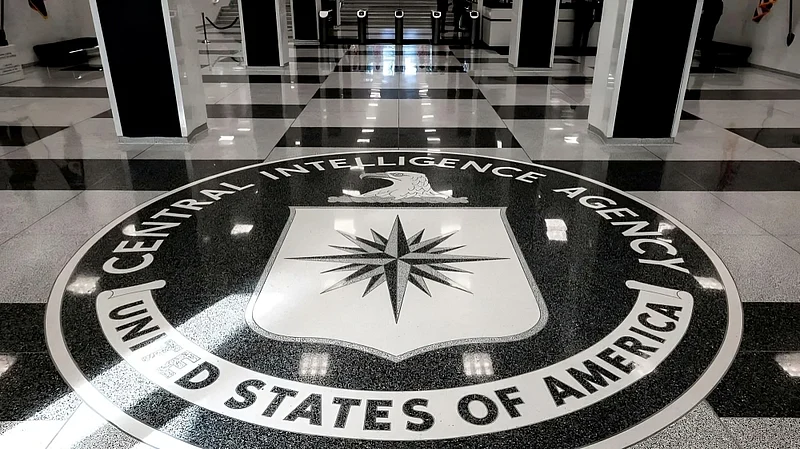
A cyberattack exposed unclassified information at the CIA, NGA and ODNI, while classified intelligence remained unaffected.
Investigators suspect hackers used Artex, an AI-powered hacking tool developed by a Chinese engineer, but have not identified those responsible.
The breach comes amid separate cyber incidents involving the FBI's crime database, the NSA and the US Department of Agriculture.
A cybersecurity breach has exposed some unclassified information held by at least three US intelligence agencies, including the Central Intelligence Agency (CIA), amid heightened concerns over the security of government networks following a series of recent cyber incidents and technology disruptions.
The breach targeted an open-source intelligence analysis system used by the agencies to examine publicly available information for intelligence insights. Although the extent of the compromised data remains unclear, classified information was not affected, according to US officials and people familiar with the matter, The New York Times reported.
Along with the CIA, the National Geospatial-Intelligence Agency (NGA) and the Office of the Director of National Intelligence (ODNI) were affected. One person familiar with the incident said the issue had been resolved, while an ODNI official said there had been no disruption to critical capabilities. The CIA declined to comment, while the NGA did not respond to a request for comment.
The intrusion is believed to have involved an artificial intelligence-powered hacking tool called Artex, according to people familiar with the investigation. The tool was developed by a Chinese engineer and released publicly in July this year. Although initially designed to help organisations strengthen their cyber defences, it has reportedly been adapted by malicious actors to conduct cyberattacks.




Cybersecurity researchers have linked Artex to scores of attacks on businesses worldwide, including in Japan and South Korea. However, investigators have yet to establish who was responsible for the breach of the US intelligence agencies' system.
According to The New York Times, some preliminary indications, including the use of Artex, have raised suspicions of possible Chinese involvement, according to two people familiar with the matter. China's intelligence services, along with an extensive network of contractors, have repeatedly been accused by Western officials of targeting US government agencies and businesses through cyberattacks. Beijing has routinely denied such allegations.
In this instance, it appears that a hacker gained unauthorised access to at least one government system, according to people familiar with the matter.
The affected system was used to analyse open-source intelligence, which can include commercially available datasets, social media content, satellite imagery and other material collected from online sources. While much of this information is publicly accessible, some datasets are purchased from commercial vendors and can reveal sensitive details, particularly when combined with information from other sources.
Intelligence agencies use such material alongside other intelligence inputs to develop assessments and inform their analytical conclusions. The breach has therefore raised questions about the security of systems handling information that, despite being unclassified, can still provide valuable intelligence.
According to The New York Times, the incident comes as several US federal agencies have reported security breaches and disruptions affecting their computer systems, prompting concern among serving and former intelligence officials. The officials and other people familiar with the intelligence agency breach spoke on condition of anonymity because the matter had not been publicly disclosed and involved sensitive security issues.


Recent Cyber Incidents Raise Concerns Across US Government
The latest breach comes amid a series of cybersecurity incidents and technical disruptions involving US government networks. Last week, the National Security Agency (NSA) experienced a days-long outage affecting its internal classified network, although officials and businesses said the disruption was not caused by a cyberattack.
US officials have also warned that artificial intelligence is increasingly capable of identifying software vulnerabilities, creating an urgent need for organisations to detect and fix security weaknesses.
Separately, US President Donald Trump appeared to confirm last week that the Federal Bureau of Investigation's (FBI) National Crime Information Center (NCIC) had recently been hacked. The nationwide database is used by local, state and federal law enforcement agencies to exchange information about criminal suspects, The New York Times reported.
Speaking to Fox News over the phone on Saturday, Trump acknowledged the incident when asked about the breach, which CNN had reported earlier.
“I will say that it’s not good — I don’t like that,” Mr. Trump said.
The FBI is investigating the incident, according to people familiar with the matter.
The US Department of Agriculture (USDA) also detected a cybersecurity incident last week that forced some of its internal applications to be taken offline, a department employee said. The development was first reported by Nextgov, a publication covering technology and developments within the federal government.
Intelligence Chief Seeks To Reassure Public
Amid growing public concerns over the recent cyber incidents and technical outages, Jay Clayton, the director of national intelligence, appeared on several television programmes on Sunday to address the disruptions.
The New York Times reported that Trump recently appointed Clayton as his acting cyber director. During his appearances, Clayton sought to ease concerns surrounding recent technology-related incidents, including the nationwide grounding of flights earlier this month. Officials have attributed the grounding to problems associated with router maintenance.


Asked about the reported breach of the FBI's crime database, Clayton said cybersecurity incidents were not unusual and did not warrant public alarm.
“Cyberprobing, cyberincidents, they have been part of the American economy, part of the American life for a long time,” Clayton said during an appearance on ABC's This Week.
“And what we’re hearing about the F.B.I., and what I’ve talked to them about is, they have an incident. They’re dealing with it in the ordinary course.”