Trump has ruled out attacking Iran before the November 3 US midterm elections, citing what he describes as productive discussions with Tehran
The US blockade remains in place, while reports say the Pentagon has been preparing options for renewed military operations. No decision to resume strikes has been confirmed
Disagreements over uranium enrichment, sanctions relief and navigation through the Strait of Hormuz remain major obstacles to a lasting settlement
US President Donald Trump has ruled out attacking Iran before the November 3 midterm elections, saying Washington is holding “productive discussions” with Tehran even as the naval blockade and economic pressure remain in force.
In a Truth Social post on Thursday, Trump said the United States would not attack Iran before the elections. He maintained that the blockade would continue and insisted that Iran would not be allowed to acquire a nuclear weapon. The statement came a day after reports that the Pentagon had been instructed to prepare options for resuming major combat operations.
The sequence leaves two facts to reconcile. Trump has publicly ruled out an attack before the vote, but the administration has not announced a lasting settlement or abandoned military options. The Pentagon’s reported preparations are evidence of contingency planning, not confirmation that a new campaign has been authorised for after the election.

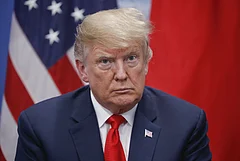


The uncertainty reflects the state of the conflict itself. An interim understanding announced in June collapsed within weeks, the Strait of Hormuz remains a flashpoint, and Washington and Tehran continue to disagree over uranium enrichment and the terms for ending the war. The question is whether the latest pause can resolve those disputes or merely keep them from escalating until the political and military calculations change.
Why Has Trump Drawn The Line?
Trump’s October statement establishes a specific deadline: no US attack on Iran before November 3. It does not say what Washington will do afterwards.
He cited productive discussions with Tehran but offered few details about their progress or the terms under consideration. His post also described Iran as being in a difficult economic and military position, while asserting that the blockade would remain in place. Those are the administration’s characterisations of the situation, not evidence that the two sides are close to an agreement.
The timing matters because Republicans are campaigning to retain control of Congress amid public dissatisfaction with the conflict and its economic consequences. But Trump has not explicitly said that electoral concerns determined his decision to pause attacks.
His statement leaves diplomacy open while maintaining pressure on Iran. It also gives Washington room to continue negotiations without committing to a permanent end to military action.

Is The Pentagon Preparing Strikes?
Earlier last week, Axios reported that the Pentagon had instructed US Central Command to complete preparations for resuming major combat operations in Iran. The report, based on US and Israeli officials, said the directive did not specify a launch date and that Trump had made no final decision. The options under consideration were reported to include strikes against Iranian energy infrastructure and nuclear targets.
The White House had asked the Pentagon to develop strike options that could be used before the midterms, with officials divided over whether renewed action would improve Trump’s political position.
Trump’s statement on Thursday superseded those reports on the publicly declared timetable: he has now ruled out an attack before November 3. It does not, however, establish that military planning has stopped or that strikes have been scheduled for later.
The distinction is important. Military commands routinely prepare options for political leaders to consider. Such planning can preserve the ability to act without committing the president to a decision. The available reporting indicates that the administration is maintaining that option; it does not establish that Trump has ordered the war to resume.
What Happened To The June Accord?
The current pause follows the collapse of an earlier attempt to halt the fighting.
In June, Washington and Tehran announced an interim memorandum intended to open a 60-day window for indirect negotiations. The White House presented it as a breakthrough that would prevent Iran from acquiring a nuclear weapon and restore free navigation through the Strait of Hormuz.
The understanding did not produce a durable settlement. By July, military strikes had resumed. The conflict escalated after attacks on commercial shipping in the Gulf, renewed US strikes on Iranian targets and Iranian retaliation against American military facilities in Bahrain and Kuwait. Washington also restored sanctions pressure, while the diplomatic timetable and mechanisms for reducing tensions lapsed.
The failure exposed the difference between a temporary understanding and an agreement that resolves the causes of a war. The June memorandum offered a window for negotiations, but the parties remained divided over Iran’s nuclear programme, sanctions and maritime security.
Trump’s latest reference to productive discussions suggests that a diplomatic channel remains possible. There is, however, no confirmed new framework in the supplied reporting that would prevent the same disputes from triggering another confrontation.

Why Is Hormuz Still A Flashpoint?
The Strait of Hormuz connects the Gulf to the Gulf of Oman and is one of the world’s principal routes for oil and liquefied natural gas shipments. Disruption there affects more than the countries directly involved in the war: it changes shipping risks, supply expectations and energy prices well beyond the region.
The International Maritime Organization’s confirmed-incident tracker recorded 104 incidents in the Middle East, including the Strait of Hormuz, and 24 seafarer fatalities as of October 12. The recent entries include multiple vessels damaged in and around the strait.
Trump says the US blockade of Iranian ports remains in full force. Washington presents its military position as giving it leverage over Tehran, but the continued damage to commercial shipping shows that the maritime confrontation has not been resolved.
The blockade and the attacks on vessels also create an economic problem for the United States. Even without a fresh bombing campaign, continued disruption can keep energy markets volatile and add pressure on consumers. Reopening the waterway safely is therefore both a diplomatic objective and a practical test of whether the conflict is moving towards an end.
What Remains Unresolved?
The nuclear dispute is the most consequential obstacle to a lasting agreement.
US Vice-President JD Vance said last week that Tehran would need to make a “meaningful” reduction in its uranium-enrichment capacity before Washington would agree to end the war. He argued that the United States wanted concrete steps rather than promises about future limits.
Iran, meanwhile, has not agreed to abandon enrichment or surrender its stockpile of enriched uranium. Iranian state media reported that Tehran would maintain its position, leaving a central disagreement unresolved even as the two sides exchange proposals.
The dispute is not limited to whether Iran will develop a nuclear weapon. It also concerns what enrichment activity it may retain, how any restrictions would be verified, what happens to its existing stockpile and what sanctions relief Washington would offer in return.
The June memorandum did not settle those questions. Nor has Trump’s October statement indicated that either side has changed its position sufficiently to bridge the gap. Without agreement on the nuclear issue, a pause in attacks can reduce immediate danger without resolving the principal strategic dispute.

How Much Is The War Costing?
The cost of the conflict provides a further reason for both sides to seek leverage, even as each continues to apply pressure.
The US Energy Information Administration reported that Brent crude futures rose from about US$72 a barrel at the start of July to more than $100 by July 23, following the resumption of military strikes. Prices fluctuated through the summer and reached $109 a barrel on September 15, while spot prices rose still higher. The agency said oil markets were weighing supply disruptions against the possibility of wider war.
Washington is also trying to restrict the revenue Tehran earns from oil exports. On Thursday, the US Treasury announced further sanctions targeting what it described as Iran’s remaining shadow-fleet network, which it said was used to transport Iranian petroleum to foreign markets. The measure formed part of the administration’s Operation Economic Outcast campaign.
The measures demonstrate that the diplomatic pause has not ended economic coercion. Washington is trying to restrict Iran’s access to revenue while using the threat of military action to obtain concessions. Tehran, in turn, has an incentive to seek relief from sanctions and the blockade, but has resisted US demands on enrichment.
The economic costs also reach American households through energy prices. Higher fuel costs can weaken the administration’s domestic position, although they do not by themselves determine whether Trump will authorise further strikes.
How Much Do The Midterms Matter?
The war has become a political liability for Trump as Republicans prepare to defend narrow congressional majorities.
An earlier Reuters/Ipsos poll found that about 60% of Americans disapproved of Trump’s handling of the conflict, while only 31% approved of the war. Rising fuel prices have added to voter concerns about the cost of living, an issue Trump had promised to address during his 2024 campaign.
The administration faces competing pressures. A prolonged conflict and higher energy costs risk hurting Republicans at the polls. But further military action could also be presented as an attempt to force Tehran into a settlement on terms Washington considers acceptable.
That creates a political context for Trump’s decision to rule out attacks before November 3. It does not establish his motive. The post cited productive discussions, and the available evidence does not prove whether electoral calculations, diplomatic developments or both shaped the announcement.

Can Congress Constrain A Return To War?
The midterm date does not create a separate legal deadline for the president to use force.
The War Powers Resolution establishes consultation and reporting requirements when US forces are introduced into hostilities and provides procedures for congressional oversight. Its application to a renewed campaign would depend on the circumstances, including the nature and duration of US military involvement. The election itself does not automatically prohibit or authorise an attack.
The vote could nevertheless change the political environment in which Congress responds to a renewed campaign. Control of the House and Senate affects the administration’s legislative position and the scrutiny it faces, though the election result alone would not determine whether military action takes place.
Is Another War Inevitable?
The available evidence does not establish that Trump has decided to restart the war after the midterms.
Three things are clear. He has ruled out an attack before November 3 and says discussions with Tehran are productive. The US blockade remains in place, and Washington continues to tighten sanctions. Separately, reports indicate that the Pentagon has been preparing options for renewed combat operations, but no public order to begin a new campaign has been confirmed.
The central question is whether the diplomatic channel can settle the disagreements that defeated the June memorandum: Iran’s enrichment programme and enriched uranium stockpile, sanctions relief and safe navigation through the Strait of Hormuz.
If those disputes remain unresolved, the military option will remain part of Washington’s calculations. But preparation is not a decision, and a deadline for pausing attacks is not a declaration that they will resume afterwards.
For now, Trump’s statement establishes a pause before the vote, not a timetable for the next war. Whether that pause becomes a route towards a settlement or gives way to renewed hostilities depends on what the negotiations produce, and whether either side is prepared to compromise on the issues that have kept the conflict going.