Elon Musk has questioned why Starlink cannot begin commercial services in India, suggesting that powerful business interests are obstructing its entry
Rahul Gandhi’s response has turned the dispute into a political argument over corporate influence, while the government maintains that all three licensed satellite operators face the same regulatory process
The row intersects with US demands for greater access to India’s satellite-services market, but there is no established evidence that Musk’s campaign is coordinated with Washington’s trade negotiations
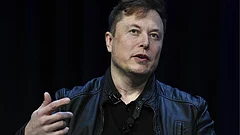
Elon Musk has turned Starlink’s delayed commercial launch in India into a public dispute over corporate influence, questioning whether Reliance Industries chairman Mukesh Ambani is the “real boss of India” after accusing unnamed business interests of blocking the satellite internet company’s entry into the market.
The exchange drew in Leader of Opposition Rahul Gandhi, who responded to Musk on X: “Welcome to India, Elon. Wait till you discover the other guy.” Musk thanked Gandhi and described the situation as troubling. The remarks brought an ongoing regulatory dispute into the political debate over the relationship between large businesses and the Narendra Modi government.
The Ministry of Communications rejected the allegation on Thursday, saying India’s satellite communications framework was fair and non-discriminatory. It said security assessments were under way for all three licensed operators and that they were at broadly the same regulatory stage.
The dispute has implications beyond Starlink’s application. Washington has independently pressed India to open its satellite services market to greater foreign participation, while New Delhi is negotiating a broader trade agreement with the United States. Yet there is no established evidence that Musk’s posts were coordinated with US trade policy, or that foreign investor outflows are connected to the Starlink dispute.


The political question for Modi is whether the government can defend its security requirements while addressing allegations of favouritism and maintaining its wider commercial relationship with Washington.
What Sparked The Row?
Musk’s intervention followed renewed questions about why Starlink has yet to begin commercial services in India despite holding Department of Telecommunications authorisations.
On October 8, Musk said Starlink had spent five years complying with Indian laws and government requirements but still lacked permission to launch. He then asked whether Ambani was “the real boss of India”. Gandhi’s response turned the exchange into a political jab at the relationship between major businesses and the government, although he did not name the person he meant by “the other guy”.
Musk’s allegation that business interests were obstructing Starlink has not been substantiated in the material available. The government’s response was categorical: it said all three operators were at broadly the same stage of the regulatory process.
The timing made the exchange consequential. Starlink’s application concerns a strategically sensitive communications service, while India and the US are negotiating issues including market access, digital trade and economic security. Musk’s posts have brought those separate matters into the same public debate, without establishing that they are part of a single dispute.

Why Is Starlink Still Waiting?
The distinction between a telecom authorisation and permission to begin commercial operations is central to the controversy.
Department of Telecommunications records list Starlink Satellite Communication Private Limited as holding three authorisations — ISP-A, Global Mobile Personal Communications by Satellite (GMPCS) and VSAT — from June 6, 2025. These permissions do not, by themselves, allow the company to switch on its commercial service.
Starlink still needs to complete the relevant security-clearance process and obtain spectrum assignment. The government says security assessments are under way for Starlink and the other two licensed operators, Bharti-backed Eutelsat OneWeb and Jio Satellite Communications. Once an operator completes the assessment, it can proceed to the next stage of seeking spectrum.
India’s requirements reflect the particular security challenges posed by satellite internet. Unlike conventional mobile services, satellite broadband can provide connectivity in remote areas beyond the reach of terrestrial networks. That makes control over network gateways, user identification, data routing and lawful interception important to the government.
Under India’s regulatory framework, satellite operators must establish authorised earth-station gateways in the country and meet security conditions governing the routing and monitoring of Indian user traffic. The rules also allow authorities to require restrictions on services in specified areas.
Starlink has said it has built more than 20 gateway sites in India and designed its operations around Indian security requirements. Its vice-president of business operations, Lauren Dreyer, said the company was ready to serve the country once the approvals were complete.
The disagreement is therefore not simply over whether Starlink has received a licence. The company has obtained several authorisations, but the remaining requirements have prevented its commercial launch. Musk argues that the delay is unjustified; the government says the security process applies equally to all three operators.
What Does Washington Want?
Musk’s commercial interests and Washington’s trade policy overlap in the broader debate about market access, but they should not be treated as the same thing.
The US Trade Representative’s 2026 National Trade Estimate Report explicitly calls on India to adopt an “open skies” satellite policy to give consumers greater choice and expand access for foreign satellite-service providers. The report identifies restrictions and procedural delays affecting foreign satellite capacity in India. It also discusses security requirements introduced in 2025 for satellite communications operators, including lawful interception, monitoring, data localisation and local infrastructure obligations.
This establishes that satellite services are part of Washington’s documented market-access agenda. It does not establish that the US government is directing Musk’s public campaign or that the USTR’s position was prompted by this particular dispute.
For Musk, the issue is more immediate: Starlink wants access to a large market where satellite connectivity could serve remote areas and compete with existing communications providers. For Washington, opening markets to American firms is part of a wider trade-policy objective. For New Delhi, allowing a foreign satellite network to operate requires reconciling competition and connectivity with security controls.
Those interests may intersect, but the policy decisions remain separate.
What Does Gandhi’s Reply Signal?
Gandhi’s response placed Musk’s complaint within the Opposition’s wider criticism of the relationship between large businesses and the Modi government.
By welcoming Musk and telling him to wait until he discovered “the other guy”, Gandhi used the dispute to raise the question of who exercises influence over Indian policymaking. His remark did not amount to a formal endorsement of Starlink’s application or an explicit statement on the company’s regulatory demands.
The exchange nevertheless gives the Opposition a new opening to question whether India’s business and regulatory environment treats domestic and foreign firms fairly. Musk’s reference to Ambani also makes competition in the satellite communications market part of a broader political argument about corporate power.
Gandhi has separately criticised the government’s approach to trade negotiations with Washington, arguing that India has conceded too much in pursuit of an agreement. The Congress has framed those negotiations as questions of economic sovereignty and protection for domestic industry.
But the positions should not be conflated. Criticising the government’s relationship with large corporations does not, on its own, establish that Gandhi supports every aspect of Musk’s commercial agenda. His intervention was political, not a negotiated position on satellite regulation.
How Does This Fit Into Trade Talks?
The Starlink row comes amid broader negotiations over market access between India and the US.
On February 7, the two countries announced a framework for an interim trade agreement, reaffirming their commitment to wider bilateral trade agreement negotiations. The framework covers additional market-access commitments and seeks to support more resilient supply chains.
Subsequent rounds of talks in April and June covered goods, non-tariff measures, technical barriers, customs and trade facilitation, investment promotion, economic-security alignment and digital trade.
The USTR’s position on satellite services fits within this larger context. Washington wants foreign providers to have greater access to Indian markets, while India retains domestic regulatory conditions covering security, infrastructure and data management.
This is a recurring tension in trade negotiations: one side may regard a regulatory requirement as necessary for national security, while the other sees it as a barrier to commercial access.
The Starlink dispute makes that tension more visible, but there is no evidence in the supplied sources that its outstanding approvals have become a formal bargaining item in the trade negotiations. Nor has the government said the security process will be changed in response to Musk’s complaint.
Are Market Pressures Adding To The Politics?
The row is unfolding against a difficult backdrop for Indian financial markets, although there is no evidence linking foreign investor selling to Starlink or Musk’s intervention.
Central Depository Services Ltd’s daily foreign portfolio investment data show that foreign investors were net sellers of Indian equities by about Rs31,282 crore across the five reporting sessions from October 1 to October 8. The figure is based on the depository’s reported daily equity flows and covers those sessions, not the entire month.
Foreign portfolio flows can affect share prices and market sentiment, but they do not by themselves show that India is facing a financing crisis or that investors are seeking to influence telecommunications policy. The same caution applies to movements in the rupee and share indices: they form part of the economic context, but they cannot establish a link to the regulatory dispute.
The market backdrop may make commercial confidence and perceptions of regulatory predictability more politically salient. But the available evidence does not support treating FPI outflows as pressure coordinated around Starlink, or as a response to Musk’s criticism.
What Is At Stake For Modi?
The immediate test for the government is to demonstrate that its regulatory process is both security-conscious and consistently applied.
The Communications Ministry has offered a clear defence: all three licensed satellite operators are undergoing security assessments and are at broadly the same stage. That is the government’s official position against Musk’s allegation of discriminatory treatment. The DoT’s records also show that Starlink has authorisations, even though it cannot yet begin commercial services.
For Modi, the political difficulty lies in the way the dispute has moved beyond a technical approval process. Musk’s public standing gives his allegations a global audience, while Gandhi’s intervention brings them into India’s debate about corporate influence. Washington’s independently documented demand for greater satellite market access gives the issue a wider trade-policy context.
The government must still balance the possibility of greater competition and connectivity with the security conditions it requires of satellite operators. Changing those conditions to accommodate a prominent foreign company would carry its own implications; defending them without explaining the remaining hurdles could leave the impression that the process is opaque.
What the row has established is a political pressure point, not a policy reversal. It has sharpened questions about how India regulates foreign technology companies and how it balances market access with security. What remains unproven is whether the dispute will change the government’s decisions, whether Gandhi’s post signals support for Starlink’s demands, or whether foreign investor flows have any connection to the issue.
The outcome will depend less on the exchange of posts than on whether the government can show that its rules are clear, its process is consistent and its security requirements can be reconciled with a competitive satellite communications market.