



FSSAI declared a Bisleri packaged drinking water sample unsafe after it exceeded prescribed bromate limits and a referral laboratory detected PAHs.
High-level exposure to bromate and certain PAHs has been linked to cancer and other health effects, including kidney damage and gastrointestinal problems.
Government data show that 333 of 1,300 packaged drinking water samples tested in 2023-24 failed to meet prescribed standards, raising wider concerns over quality control.
The Food Safety and Standards Authority of India (FSSAI) has sanctioned prosecution against Bisleri International Pvt Ltd after a sample of its packaged drinking water was declared unsafe in laboratory tests.
Bisleri International, maker of the country's best-known bottled water brand that accounts for 32% to 36% market share, is now being taken to court after failing its consumer safety test.
One of the nation's most trusted water vendors now finds itself in a safety row and stands to face a legal battle.
What were the findings of the FSSAI test?
The regulatory body conducted a test with a sample of Packaged Drinking Water (other than Mineral Water) which was collected from the premises of Bisleri International.
According to a social media post disclosing their findings, FSSAI stated that the sample, upon analysis, was found non-compliant with the prescribed bromate limits and declared unsafe under the FSS Act, 2006 and labelled it as "unsafe packaged drinking water".
The sample was additionally sent to a referral food laboratory for further testing upon appeal by Bisleri. The second testing also declared it "unsafe" due to the detection of polynuclear aromatic hydrocarbons (PAHs), the regulator added.
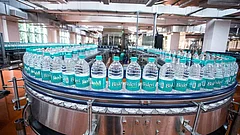



The findings clearly established that the water company stood in violation of the unsafe food laws. Consequently, the FSSAI has sanctioned the launch of prosecution under the FSS Act, 2006, against Bisleri International Pvt Ltd.
What are the effects of Bromate in water?
Bisleri was flagged by the FSSAI for the detection of polynuclear aromatic hydrocarbons (PAHs) and bromate. Both bromate and PAHs are classified as carcinogens, substances associated with the potential to cause cancer.
When naturally occurring bromide in source water combines with ozone, which is used to disinfect drinking water, bromate is created. The quantity of bromide ions, the pH of the source water, the amount of ozone, and the reaction time employed to disinfect the water all have an impact on the creation of bromate in disinfected drinking water.
The U.S. Environmental Protection Agency developed a level that it considers protective of non-cancer health effects from long-term exposure, including individuals who may be more susceptible, such as women of childbearing age and children.
High levels of bromate exposure can cause gastrointestinal problems such as nausea, vomiting, diarrhoea and abdominal pain. Severe exposure has also been linked to kidney damage, nervous system effects and hearing loss, as per the EPA.
Long-term exposure to high levels of bromate caused kidney damage and cancer in laboratory animals. However, whether it causes cancer in humans remains uncertain. The increased lifetime cancer risk from drinking this water every day poses a moderate risk level of about two in ten thousand. People with pre-existing kidney conditions may be at greater risk of health effects.
What are PAHs?
PAHs, on the other hand, are not usually found in water, but when they are, they are usually in small concentrations and are indicative of pollution. PAHs are a class of diverse organic compounds containing two or more fused aromatic rings of carbon and hydrogen atoms. They are ubiquitous pollutants formed from the combustion of fossil fuels and are always found as a mixture of individual compounds, according to research by the World Health Organisation (WHO).
The coating of the drinking water distribution pipes is typically the primary source of PAH contamination in drinking water rather than the raw water sources. In the past, water pipes were frequently coated with coal tar to provide strong corrosion resistance.
Significantly elevated PAH levels have been found in the water following the transit of drinking water through such pipes or following repairs. Although WHO has called for a cessation of this practice (WHO, 1996), many countries still have a large number of pipes lined with coal tar coating. If it is present at elevated concentrations in drinking water, this is indicative of the presence of particulate matter, such as from the deterioration of the coal tar coating.
Studies have indicated that several PAHs are linked to cancers of the skin, lung, bladder, liver, and stomach, as well as mutagenic and genotoxic effects. Exposure has been associated with immune system suppression, liver and kidney damage, jaundice, and cataracts.
Certain PAHs can even damage red blood cells (causing anaemia) and affect reproductive health and fetal or early development.
Industry Quality Concerns
The Bisleri case comes amid wider concerns. Government data presented in Parliament in February 2025 showed that 333 of 1,300 enforcement samples of packaged drinking water analysed in 2023-24 were non-conforming.
In 2022-23, 650 of 1,776 samples failed to conform to prescribed standards.
Rules have also changed. In October 2024, the government removed mandatory BIS certification for packaged drinking water and mineral water. That did not remove manufacturers’ quality-control obligations. FSSAI later introduced a testing scheme for packaged drinking water and mineral water from January 1, 2026, to strengthen compliance and monitoring.








