Musk accused unnamed “oligarchs” of blocking Starlink to protect a “monopolistic chokehold” on Indian consumers.
The government rejected the allegation, saying satellite providers face the same regulatory and security requirements.
Modi said mobile and digital technology must help bridge India’s digital divide while ensuring stronger network security.
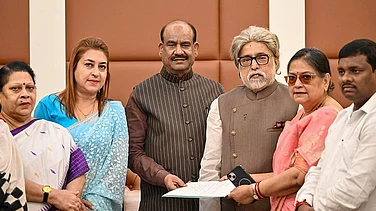
Prime Minister Narendra Modi on Thursday described mobile phones and digital connectivity as a major “citizen dividend” of technology, stressing that telecom access should help reduce costs, travel and waiting time. His remarks came a day after SpaceX CEO Elon Musk accused unnamed “oligarchs” of blocking Starlink’s entry into India and argued that the satellite broadband service could help bridge the country’s digital divide.
Speaking at the 10th edition of the India Mobile Congress in Delhi, Modi said mobile phones had evolved beyond being communication devices and had become tools for governance and wider access to technology.
“Mobile phones are no longer just a means of chatting. They have ensured less travel, less waiting, lower costs and greater convenience. This is the biggest citizen dividend of technology,” Modi said.
He said the government’s Digital India initiative had sought to democratise access to technology and prevent modern digital tools from becoming a privilege limited to those with greater resources.
“Over the past 10–12 years, the mobile phone has emerged not only as a means of modern communication, but also as an important tool for good governance. It has remained at the core of our Digital India vision,” Modi said.
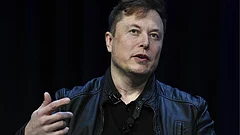


The remarks came amid a public dispute over Starlink’s delayed commercial launch in India. Musk had accused unnamed “oligarchs” of blocking the service to preserve a “monopolistic chokehold” over Indian consumers. He appeared to be referring to major Indian telecom players Mukesh Ambani and Sunil Bharti Mittal.
India’s Ministry of Communications rejected the allegation, saying its satellite communication framework was “fair and non-discriminatory”. The government said all three licensed satellite communication providers were at broadly the same regulatory stage and that compliance with security requirements was mandatory before spectrum could be assigned.
Musk also said Starlink’s satellite beams were currently switched off over India, rejecting claims that the service had been used by militants. His remarks followed reports that security forces had recovered Starlink terminals from insurgent groups near the Myanmar border in Manipur.
Meanwhile, SpaceX Vice President Lauren Dreyer has highlighted Starlink’s potential role in connecting underserved areas through local partnerships and infrastructure.
At the mobile congress, Modi also stressed that expanding connectivity must go hand in hand with security. “Today, when telecom and digital technology hold such importance, it is essential to make the security framework associated with it airtight and foolproof,” he said, citing phone and network security as priorities.
He also called for a global framework to tackle deepfakes and digital fraud, saying governments, technology companies, telecom operators and financial institutions needed to work together.
Modi highlighted the expansion of 5G in India, saying the network had reached every district, with more than 5.5 lakh 5G base stations operating across the country. He said mobile internet speeds had increased tenfold compared with 2022.
His remarks came as the government and Musk’s SpaceX remain at odds over the conditions for Starlink’s entry into India, with both sides framing connectivity as a tool for wider public access while differing over regulation and security requirements.