Iran has warned neighbouring countries that their airports could be unable to function if they cooperate with the US by stopping Iranian flights, according to Mohsen Rezaei, secretary of Iran’s Supreme National Security Council
The warning comes after Washington imposed sweeping new sanctions on Iran’s aviation sector, targeting 36 entities and seeking to cut off the foreign services and procurement networks used by Iranian airlines
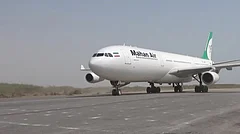
The fallout is already spreading across regional air travel, with Mahan Air flights suspended by Turkey and Oman after discussions with Washington, while wider Middle East aviation is already facing cancellations, rerouting and capacity losses amid the conflict
Iran has raised the stakes in its confrontation with Washington by warning neighbouring countries against stopping Iranian flights.
Mohsen Rezaei, secretary of Iran's Supreme National Security Council, said on Wednesday that if neighbouring countries cooperated with the US by stopping Iranian flights, Tehran would ensure their airports could no longer function. The warning came as Washington's latest sanctions were tightening pressure on Iranian airlines and the companies that support them.
The dispute began as a sanctions issue. It now touches the wider regional aviation network. The immediate question is whether Iranian airlines can continue operating through neighbouring countries. The larger one is whether airports and airspace outside Iran could themselves become exposed to the conflict.



Why Is Iran Threatening Airports?
The immediate trigger is Washington's effort to isolate Iran's aviation sector.
On September 8, the US Treasury announced sanctions against 36 targets supporting Iran's aviation industry, including foreign intermediaries, front companies and procurement networks. It also designated 27 Iranian airlines and suspended several aviation-related authorisations, including those covering certain overflights and the operation of non-US airlines using US-origin or US-controlled commercial aircraft into Iran.
Treasury said companies providing services to sanctioned Iranian airlines could also face consequences. The department's position is that Iran's commercial aviation network has been used to move weapons, personnel and other military equipment, particularly through carriers such as Mahan Air.
That has created a chain reaction. If airlines and airports in neighbouring countries stop handling Iranian carriers to avoid US penalties, Iran's international connectivity is reduced.
Tehran's warning was aimed at that point of pressure. Rezaei said Iran would ensure the airports of neighbouring countries could not function if they cooperated with Washington by stopping Iranian flights.
The statement does not establish that Iran has announced attacks on particular airports. It establishes a threat to disrupt their operations if they participate in the restrictions.

What Has Washington Done To Iran's Airlines?
The September sanctions go beyond individual carriers.
Treasury said the latest action targeted companies helping Iranian airlines obtain aircraft, aviation technology, cargo services and other support. It also sought to close procurement routes used to obtain US-origin aircraft and sensitive technology.
The department specifically linked Mahan Air to the Islamic Revolutionary Guard Corps-Qods Force and said the carrier had been used to transport weapons, personnel and military equipment. Treasury had already sanctioned networks linked to Mahan Air earlier in 2026.
Washington's wider Operation Economic Outcast is aimed at cutting what the US describes as the Iranian regime's remaining financial and economic lifelines. Aviation is one part of that campaign, alongside oil, financial networks and sanctions-evasion channels.
For foreign airlines and service providers, the issue is therefore not simply whether Iranian passengers can fly. Supporting a sanctioned Iranian carrier can itself create exposure to US restrictions.
Why Does Tehran See This As More Than Aviation?
Iran's response reflects the wider confrontation between Tehran and Washington.
Iranian officials have portrayed the US campaign as part of a broader conflict rather than a narrow dispute over commercial aviation. Rezaei has previously warned that renewed confrontation could extend across the Gulf and other regional waterways, while Iran's leadership has continued to reject what it describes as pressure from Washington.
Rezaei's airport warning came as the two sides remained far apart over how to end their wider conflict. Reuters reported that Iran and the US were still divided over a possible settlement even as diplomacy continued at the UN General Assembly.
Those are Iran's positions and do not independently establish Washington's intentions. But they explain why Tehran has treated restrictions on its airlines as another front in the wider confrontation.
The warning therefore carries implications beyond Iranian aviation. Neighbouring governments now have to balance their relations with Tehran against the risk of exposure to US sanctions.

Which Countries Are Caught In The Middle?
The most immediate pressure is on countries whose airports provide Iranian carriers with access to international routes.
Reuters reported on September 18 that Turkey and Oman had agreed to stop Mahan Air flights to their countries following discussions with Washington over compliance with US measures against Iran.
That gives Tehran's warning a direct regional context. Neighbouring states are not simply theoretical enforcement points. Some have already taken steps affecting Iranian airline access.
For those governments, continuing to receive sanctioned Iranian carriers can create exposure to Washington's restrictions. Stopping them, meanwhile, can further isolate Iran's international air network and potentially invite retaliation from Tehran.
That leaves airports and airlines in neighbouring states caught between two competing pressures: sanctions compliance and regional security.
The impact also extends beyond Iranian passengers. A decision affecting one carrier can disrupt aircraft rotations, connecting services and access to onward destinations.
Why Are Airports At Risk?
The main concern is the difference between sanctions pressure and physical aviation risk.
Civilian airports can be disrupted without being directly attacked. Airspace violations, missile or drone activity, military operations near flight paths, or government decisions to close air corridors can force airlines to cancel flights or reroute aircraft.
The International Civil Aviation Organization has already documented such risks. In April, the ICAO Council condemned Iranian violations of the territorial integrity and airspace of Bahrain, Jordan, Kuwait, Oman, Qatar, Saudi Arabia and the UAE. It also condemned the use of unmanned aircraft against civilian infrastructure and warned of an ongoing risk to civil aviation safety and disruption of regional air operations.
That makes the current airport warning significant even before considering a direct attack.
The Middle East's aviation network depends heavily on a small number of major hubs. When one part of the network is affected, aircraft, crews, passengers and cargo often have to be rerouted elsewhere.
The result can be a regional aviation problem rather than a local one.

This Has Happened Before
The concern is therefore not hypothetical.
ICAO's April assessment said Iranian military activity and unmanned aircraft operations had already disrupted civil aviation in several neighbouring states. The organisation specifically warned about the safety implications of unauthorised military activity in or around sovereign airspace.
The wider regional conflict has also already produced major airline disruptions. IATA expects Middle Eastern airlines to post a $4.3 billion net loss in 2026, compared with a $7.2 billion profit in 2025. It forecasts an 11.4% fall in passenger demand and a 4.4% decline in capacity, citing flight cancellations, operational disruptions, higher fuel costs and lost transfer traffic.
Those figures reflect the wider war and not the September airport warning alone. But they show how quickly aviation becomes an economic issue once conflict affects airspace and airport operations.
What Happens To Regional Air Travel?
For passengers and airlines, the first consequences are likely to be operational.
Airlines can cancel routes, reduce frequencies or reroute aircraft around affected airspace. Longer routes increase fuel consumption, while closures can disrupt aircraft rotations and strand crews and passengers in the wrong locations.
IATA says current Middle Eastern disruptions have already reduced effective capacity and shifted some cargo traffic towards alternative regions. The association also says the region's losses are being driven partly by cancellations, operational disruptions and the loss of transfer passengers.
That matters because Gulf aviation is built around hub connectivity. A passenger travelling between Europe and Asia, for example, can be affected by an airspace closure even when neither the origin nor destination is in the conflict zone.
The same applies to cargo. A disrupted hub can alter transit routes and reduce available capacity for goods moving between continents.

The Economic Cost Could Spread Beyond Aviation
The aviation impact does not stop at airports.
Tourism, hotels, business travel, cargo and airport services all depend on predictable regional connectivity. When flights are cancelled or connections become unreliable, those sectors face the same disruption.
According to IATA, Middle Eastern cargo markets have already been affected by reduced effective capacity and the diversion of transit cargo to other regions. It also expects the region's airlines to face weaker demand and higher operating costs through 2026.
The region's major aviation hubs are therefore exposed to a second-order risk. Even an airport that is not directly targeted can lose traffic if passengers and airlines begin avoiding the region's airspace or if connecting services become unreliable.
That is why the airport threat matters beyond the Iranian carriers at the centre of the dispute.
Could The Crisis Escalate Further?
Several outcomes are possible, but none should be treated as inevitable.
The first is a limited aviation confrontation in which neighbouring states increasingly restrict Iranian airlines to comply with US sanctions. That would further reduce Iran's international connectivity.
A second is wider airspace disruption as airlines react to heightened security risks. More cancellations, rerouting and capacity reductions could affect regional hubs even without physical damage to airport infrastructure.
The most serious scenario would involve attacks or other physical disruption affecting airports or airspace. ICAO's earlier warning demonstrates that military activity affecting civilian infrastructure can already interfere with civil aviation.
But Rezaei's statement itself does not establish that Iran has selected particular airports as targets or that attacks are imminent. It is a warning contingent on neighbouring countries stopping Iranian flights.

From Airline Sanctions To A Regional Risk
Washington's latest measures began as an effort to isolate Iran's aviation sector. The September 8 action targeted Iranian airlines, foreign intermediaries and procurement networks, while increasing the sanctions risk for companies supporting sanctioned carriers.
Iran has now widened the dispute by warning neighbouring countries against participating in those restrictions.
The immediate effect could be fewer Iranian flights, tighter regional aviation access and greater pressure on airlines and airports that connect Iran to the outside world.
The bigger risk is that aviation becomes another arena of the wider conflict. In a region where airports and airspace already sit close to military activity, even restrictions imposed for sanctions compliance can have consequences for civilian connectivity far beyond Iran.
What began as a dispute over Iranian airlines could therefore become another test of how much disruption the region's aviation network can absorb before the security crisis starts reshaping how the region moves.