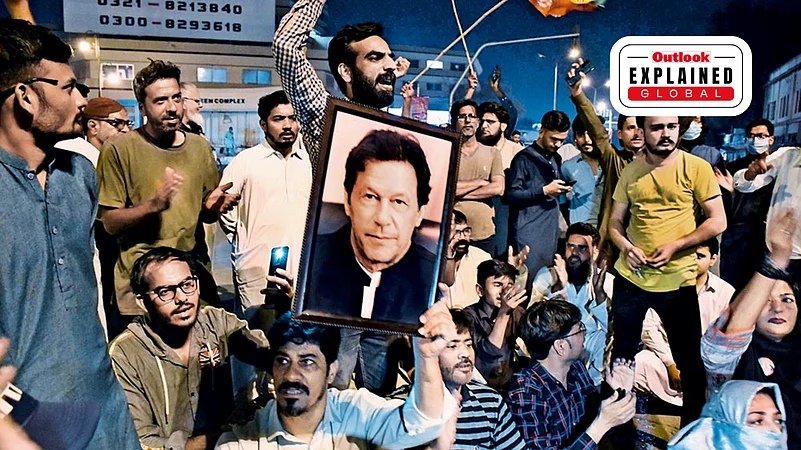
Imran Khan’s sisters Aleema Khan, Uzma Khan and Noreen Niazi have been detained for 30 days under Punjab’s Maintenance of Public Order law, with their detention orders now being challenged before the Lahore High Court
Pakistan has begun sealing major routes into Islamabad and deploying large numbers of police and paramilitary personnel ahead of PTI’s September 27 march demanding Khan’s release
The confrontation centres on Khan’s imprisonment, PTI’s demand for access to him and its right to protest, while the government says it will enforce public-order restrictions and prevent disruption in the capital
Pakistan's political tensions are sharpening ahead of a Pakistan Tehreek-e-Insaf (PTI) march planned for September 27. The party says the mobilisation is aimed at securing the release of former prime minister and PTI founder Imran Khan and asserting what it describes as constitutional and political rights. The government, meanwhile, has said protesters will not be allowed to march into Islamabad in violation of the law and an Islamabad High Court ruling.
The confrontation has already moved beyond political statements. Khan's sisters Aleema Khan, Uzma Khan and Noreen Niazi have been detained in Lahore for 30 days under the Punjab Maintenance of Public Order Ordinance. Authorities have also deployed containers and additional security around Islamabad, while major routes linking the capital to Khyber Pakhtunkhwa are being closed ahead of the march.
At the centre of the dispute are three overlapping questions: what PTI is demanding, why the government is using preventive detention and movement restrictions, and what the courts have actually said about both the right to protest and Khan's access to family and lawyers.

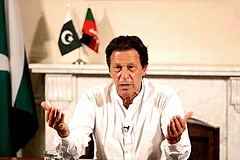

Why Is PTI Marching On Islamabad?
PTI announced the September 27 mobilisation as a countrywide protest and march towards Islamabad. Its demands centre on Khan's release, the handling of his legal cases and access to him while in prison.
In August, Khyber Pakhtunkhwa Information Minister Shafi Jan, speaking for the PTI position, said cases against Khan should be heard and decided according to law and justice. He also called for Khan to be transferred to a health facility where he could receive care in the presence of family members and personal physicians. PTI has continued to frame the mobilisation as a campaign for constitutional supremacy and political rights.
The party has also focused increasingly on access to Khan, particularly for family members and lawyers. That issue has acquired a legal dimension of its own after the Islamabad High Court dealt with complaints over Khan's confinement and access.
PTI's characterisation of the march as political and peaceful is its stated position. Whether the mobilisation can proceed on those terms is now also a question of public order and the legal restrictions imposed by the government.
Why Were Khan's Sisters Detained?
The immediate escalation came with the detention of Khan's sisters in Lahore.
Aleema Khan was detained after the Lahore deputy commissioner issued a 30-day order under the Punjab Maintenance of Public Order Ordinance, 1960. Dawn reported that the order cited police assessments that she was prejudicial to public safety and maintenance of public order and referred to her alleged involvement in earlier protests and mobilisation.
A day later, Uzma Khan and Noreen Niazi were also detained for 30 days under the same law. Their detention orders, reported by Dawn, cited public-order concerns and alleged mobilisation through public meetings and social media.
The three women have challenged the detention orders before the Lahore High Court. Their legal challenge argues, among other things, that the authorities did not follow the procedure required under the MPO Ordinance and that the orders lacked sufficient grounds. Those are the petitioners' arguments, not findings by the court.
The timing has made the detentions politically significant. Aleema was detained on September 20, followed by Uzma and Noreen the next day, just days before the September 27 mobilisation.
What Is The Legal Basis For The Detentions?
The Punjab Maintenance of Public Order Ordinance provides for preventive detention where authorities consider it necessary to prevent conduct prejudicial to public safety or the maintenance of public order.
That is different from a criminal conviction. The detention orders do not themselves establish that Aleema, Uzma or Noreen has been convicted of an offence. Instead, the authorities' stated case is that their activities posed a potential threat to public order.
The orders also refer to alleged involvement in the May 9, 2023 unrest and to renewed mobilisation. The detainees' side has challenged whether the legal requirements for preventive detention were met.
The distinction is important to the current dispute. The government is using a preventive public-order mechanism; the detainees are challenging whether that mechanism was lawfully applied to them.
The cases therefore remain legally contested. Until the Lahore High Court rules on the challenges, the allegations in the detention orders should not be treated as established findings against the three women.
What Did The Islamabad High Court Say?
The government's restrictions on the September 27 march are also shaped by an Islamabad High Court ruling on political protests.
The court recognised the constitutional right to peaceful assembly and political dissent while emphasising other citizens' rights to movement, liberty, dignity and access to businesses and public institutions. It said the right to protest remains subject to the Constitution and law.
The court also ruled that political parties and public office holders have no lawful right to block roads in the federal capital or obstruct the free movement of citizens. It directed provincial governments not to use government funds, vehicles, machinery or officials for political marches.
The ruling therefore does not amount to a blanket prohibition on PTI's political activity. It draws a line between peaceful political assembly and conduct that obstructs public movement or uses state machinery for a political procession.
That distinction has become central to the government's response to the September 27 march.
Why Are Islamabad's Entry Routes Being Sealed?
The restrictions have now moved from the courtroom to the roads.
Islamabad Traffic Police announced that the M-1 Peshawar Motorway, M-14, E-35 Hazara Motorway and sections of the N-5 would close from 11 pm on September 23 until further notice. The advisory also listed closures on the Rawalpindi-Kohat and Abbottabad-Hassanabdal routes.
The shutdowns are designed to control the main approaches to the capital before the march. The M-1 connects Islamabad with Peshawar and Khyber Pakhtunkhwa, while the N-5 through Attock is another major route into Punjab.
Security preparations had begun earlier. Dawn reported that more than 2,000 containers had been deployed at key points in Islamabad and Attock, while educational institutions in the capital were being closed to accommodate police personnel.
Reuters reported on September 23 that nearly 35,000 additional police and paramilitary personnel had been deployed in and around Islamabad and that major highways linking the capital with Khyber Pakhtunkhwa had been blocked. Hundreds of PTI activists had also been detained in recent days, according to the agency.
The scale of the preparations shows how the September 27 march is being treated by the authorities: not simply as another political gathering, but as a potential public-order and security challenge.
How Did Khan's Prison Access Become A Political Issue?
The dispute over access to Khan has been building independently of the march.
In a September 1 judgment, the Islamabad High Court directed Adiala jail authorities to ensure that neither Khan nor his wife Bushra Bibi was kept in solitary confinement. It ordered family meetings and telephone conversations with their sons, subject to prison rules, and asked the jail authorities to submit a compliance report.
The order followed petitions challenging the alleged isolation of Khan and Bushra Bibi. The court distinguished legitimate security arrangements from prolonged denial of meaningful human interaction. Jail authorities, meanwhile, have denied that Khan is being held in solitary confinement.
The dispute has continued. Dawn reported on September 22 that Khan's cousin Qasim Zaman was unable to meet him at Adiala despite the court having allowed twice-weekly meetings with family, lawyers and other associates. Khan's sisters had also regularly sought access to him, but all three were by then detained.
PTI has therefore tied the question of access directly to its wider political campaign. But the issue is not solely a party allegation. A Pakistani court has already issued directions covering Khan's contact with family and his conditions of confinement.
Why Has Political Pressure Intensified?
The September march is part of a wider cycle of confrontation between PTI and the government.
PTI has maintained that its campaign should continue unless it sees tangible progress on its demands, while also saying it remains open to negotiations. The government has responded with increasingly visible security measures as the march approaches.
Reuters reported that hundreds of PTI activists had been detained in recent days. The detention of Khan's sisters has added another personal dimension to the confrontation because they have been among the relatives seeking access to him.
For PTI, the detentions reinforce its argument that the government is restricting its political space. For the government, the detention orders are based on public-order concerns and allegations about mobilisation.
Those positions describe two different interpretations of the same sequence of events. The detention orders themselves do not establish that the sisters were detained simply because they are related to Khan; they formally rely on preventive public-order grounds. At the same time, their detention immediately before a major PTI mobilisation has made them part of the political dispute.
What Happens Before September 27?
The situation remains fluid.
As of September 23, Islamabad Traffic Police had announced that the M-1, M-14, E-35 and sections of the N-5 would close from 11 pm until further notice, while security preparations were continuing around the capital.
The detention orders against Aleema Khan, Uzma Khan and Noreen Niazi are also before the Lahore High Court. The outcome of those proceedings could affect the legal position of the three women before the planned march.
Meanwhile, PTI has maintained that the September 27 mobilisation will continue. The government has said it will enforce the Islamabad High Court's ruling and prevent protesters from blocking roads or disrupting the capital.
The confrontation is therefore moving on several tracks at once: a political mobilisation, preventive detentions, a court dispute over protest restrictions, and a separate legal dispute over Khan's access to family and lawyers.
A Protest, A Prisoner And A Locked Capital
The September 27 confrontation has developed around three connected issues.
For PTI, the march is centred on Imran Khan, his release, his legal cases and access to him. The party says it is exercising constitutional and political rights.
For the government, the issue is public order and preventing a march from obstructing roads or disrupting the federal capital. The Islamabad High Court has recognised peaceful political protest while also ruling that political parties cannot block roads or use government machinery for a political march.
For the courts, the dispute extends beyond the march. The Islamabad High Court has separately directed that Khan not be kept in solitary confinement and that family access be maintained under prison rules, while the legality of his sisters' preventive detention is being challenged before the Lahore High Court.
The immediate question before September 27 is how those competing rights and restrictions will be applied in practice. What began as PTI's demand for Khan's release has now become a wider confrontation over who can mobilise, where they can protest, how far the state can go to restrict them, and how the courts' orders concerning Pakistan's most prominent imprisoned opposition leader will be enforced.