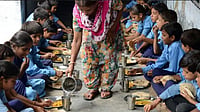
The Jamui harassment case has left women across Bihar reflecting on their own fears around safety, mobility and public spaces.
Several women told Outlook that such incidents can trigger greater family restrictions, social scrutiny and pressure on girls to change how they dress, travel or spend time outside home.
They said safety should come through better policing, safer public spaces and accountability, not by limiting women’s education, work, movement or independence.
"After watching that video, I uninstalled Instagram because I was not able to focus on anything. Again and again, I was thinking about it," said 23-year-old Manaswi Singh, a student from Rohtas who now lives in a hostel in Patna. Following the viral footage of two school students being harassed in Bihar, Singh said the incident brought back a reality many women quietly live with day to day, being told when to return home, what to wear and where they should not go.
On September 19, two Class 10 students in Bihar's Jamui district, a boy and a girl, were allegedly harassed by a group of men while returning from coaching. Videos circulating online show the teenagers being surrounded and blocked from leaving; the boy was allegedly assaulted, while the girl was subjected to inappropriate touching. A separate clip shows a man carrying her away as her friend tried to intervene.
Notably, Nandan Yadav, identified as the main accused, was shot in the leg during a police encounter and subsequently arrested. Another accused was also arrested, taking the total number of arrests to five, while police have identified seven people in connection with the case.


However, on social media, users — mostly men — questioned the girl's clothing, her presence outside the home and her decision to be with a male friend. Comments asked what she was wearing, why she was out and whether she had invited the harassment, even as others condemned the incident.
For the women who spoke to Outlook, that reaction was significant because it echoed a pattern they said they encounter in everyday life: when a girl is harassed, scrutiny often shifts to her choices, movements and behaviour rather than remaining focused on the person who harassed her.
"I was disheartened by seeing many people praising the accused for doing a good job and protecting religion. They were saying that the girl should not have stayed outside, questioning what she was wearing and suggesting that she had invited it. For me, it is not about women's safety alone. People with this mentality are roaming all around, and others are supporting them and normalising what happened,” Singh told Outlook.
Her unease is backed by numbers. NCRB's latest Crime in India 2024 report showed Bihar recorded 27,359 cases of crimes against women in 2024, up from 20,222 in 2022. That's a rise of roughly a third in just two years, and nearly 97% over the past decade. It also topped the NCRB's 2024 juvenile crime chart, with 5,037 cases, a detail that adds weight to reports that several of the accused in the Jamui incident were minors themselves.

When Incidents Bring More Restrictions
By 6 pm, Singh knows she is expected to be back at her hostel in Patna. Even a few minutes’ delay, she said, can invite questions about where she has been and why she was outside. What begins as concern for her safety can quickly become a judgment about her character. It is a routine she has grown accustomed to: be home before dark, watch what you wear and avoid situations that might attract unwanted attention.
“People have been saying this in day-to-day conversations for years: women are supposed to come home before 6 o’clock. We are told not to go out in certain clothes, otherwise something will happen to us. I mean, they will do it; that is their job. You should be alert about what you should not do,” Singh said.
The restrictions, she added, do not end at the hostel gate. Singh recalled instances in Patna when people have confronted or harassed her after seeing her with a male friend. Even ordinary interactions between a boy and a girl, she said, can become a matter of public scrutiny, with strangers invoking culture or religion to justify intervening.
“When a boy and a girl are simply coming back from coaching, suddenly it becomes a public matter. Under the guise of protecting our culture, people use such situations as an opportunity to fulfil their own desires. Look at that video; the way that man lifted that girl genuinely scares me. And it’s not just me; every girl who has a life beyond these four walls can understand,” Singh said.
For Singh, the consequences extend beyond being stopped or questioned in public. She has often chosen not to tell her parents about harassment, fearing that reporting it could lead to greater restrictions on her movement, or even affect her education. "If I had told them, I would have been restricted. My parents would have dropped my studies," she said.
For parents, incidents like the one in Jamui can also deepen the fears that already shape how their daughters move through the world. A report of harassment or violence can become another reason to question whether a girl should travel alone, return after dark, go somewhere with a male friend or spend time outside the home.
Annie Singh, a 20-year-old master's student from Bhagalpur, also said that the impact of such incidents is not limited to the place where they occur. “Even if one incident happens in one particular area, videos like this can have an impact far beyond that location because people see them repeatedly on social media. For girls themselves, it can create an additional mental calculation before doing something as ordinary as going somewhere with a friend,” she said.
She is wary, however, of what happens when that fear turns into another set of rules for girls. Instead of asking why public spaces remain unsafe, she said, the burden can gradually shift to women to change their behaviour.
“The most unfortunate part is when the responsibility gradually shifts onto girls, being told not to go out at a certain time, not to travel alone, not to meet someone, or to constantly change their behaviour. The focus should also be on making public spaces safer and making it clear that nobody has the right to harass or physically interfere with another person,” she said.
Annie, who has also lived in Delhi, stated the concern is not confined to Bihar. “Sometimes people feel entitled to question a girl's clothing, company, whereabouts or relationship. There is also a tendency in some situations for people to call this moral policing, as if being seen with a boy gives them some authority over the girl. For me, the bigger concern is the lack of a sense of personal freedom,” she said.
She does not describe herself as feeling unsafe every time she steps outside. Instead, she said, the distinction is between being able to go about everyday life and being able to do so without constantly calculating the risks.
Notably, Bihar minister Shravan Kumar said "sporadic incidents keep happening" and that the government was keeping a watch on such cases. He added that the world isn't entirely free of crime, but that those responsible would not be allowed to escape and would face strict action.
Umesh Kushwaha of the ruling Janata Dal (United) drew criticism as well, after calling such cases "isolated incidents" and contrasting the current government's record with that of the previous RJD administration.

Building A Life Beyond The Rules
For some of the women, the concern is not only about how freely they can move through public spaces, but about whether those restrictions eventually shape the lives they can build. Education, work and living independently can all require girls to travel, stay away from home or make decisions without their families around them.
For Singh [Manaswi], that is what makes the question of safety particularly personal. She worries that if girls are denied opportunities to study and move independently, they may also be denied the ability to recognise and challenge abuse when it happens.
“This is why parents are afraid to send their daughters outside. These kinds of incidents, if women are denied education, how will they understand this is wrong? How will they recognise this is abuse? How will they realise what is happening to them as a crime and should be reported?” she said.
For women trying to build independent lives, those restrictions can also take a quieter form, repeated warnings, questions about why they need to go out and expectations that they should choose safety over opportunity. Raj Nandani, a 28-year-old artist and cultural researcher from Patna, said girls who pursue higher education, jobs or a life beyond their homes often encounter that scrutiny.
“Ask any independent girl in Bihar who has pursued higher education, a job, or a life beyond her home what it has cost her or what it has cost her family. You will often hear a common thread: constant warnings, restrictions and taunts such as, ‘She is a girl; why does she need to go out?’ or ‘Why does she need to study so much?’” Nandani said.
For Rupali Rani, 28, who works remotely for a Noida-based company while living in Patna, the issue is also tied to the choices women make about where and how they want to live. Rani had chosen to stay close to her parents while hoping to build a comfortable and independent life of her own.
However, such incidents can make women question how much their families' fears continue to shape those choices. “The person who is doing something wrong should be afraid of the consequences, not the girl who is simply trying to live her life,” Rani said.
For women like Rani, the question is therefore larger than whether a girl can safely make one journey home. It is whether she can study, work, travel, meet friends and live independently without having to constantly negotiate those choices with the fear of what might happen, or how her family might respond.

When One Incident Risks Defining An Entire State
For some women, however, the concern extends beyond the immediate impact of the Jamui incident. They worry that a disturbing case, amplified repeatedly on social media, can also feed a broader narrative about Bihar and its people, reducing an entire state to the actions of a group of accused men.
Some of the women who spoke to Outlook said the incident should be taken seriously without being used to generalise about Bihar or the people who live there. For Biharis who leave the state for education or employment, they said, such portrayals can have consequences beyond the incident itself, shaping how people from the region are perceived elsewhere.
For women who have moved outside Bihar, the question can be even more complicated. A change of city or state may alter their surroundings, but it does not necessarily remove the calculations many women make about safety, mobility and how they are perceived in public spaces.
At the same time, the women did not suggest that concerns around women's safety were unique to Bihar. Annie, who has also lived in Delhi, said her own experience had involved a similar distinction between feeling safe and being completely carefree. She said she was generally comfortable during the day but remained more cautious in the evening or in isolated areas.
“I don't want to say that I feel unsafe every time I step outside because that wouldn't be the truth. But there is definitely a difference between feeling safe and feeling completely carefree,” she said.
That distinction, the women said, is important. The Jamui incident can be recognised as a serious instance of harassment and violence without turning it into a shorthand for an entire state or its people.
For Upasana, 30, who was born and brought up in Patna and now lives in Mumbai, the incident was also disturbing because of what can follow such cases: restrictions placed on women rather than greater scrutiny of those accused of harassment.
“Women don't feel safe in commuting to places, especially when they are alone and, more importantly, at night. This obstructs their day-to-day life in an intensity that is almost impossible to measure,” she said.
Yet Upasana said her own experience of Patna had not been defined by fear. She has travelled extensively within Bihar as well as across other states and said she had not personally encountered such incidents.
“Thankfully, I never felt unsafe in Patna, a city where I was born. I am a person who loves to travel. I have travelled extensively both locally and inter-state. I did not come across such nasty incidents. But this is just about me. A lot of girls might have different experiences,” she said.
What Women Want From The System
For the women interviewed by Outlook, the answer does not lie in asking girls to stay home, return earlier or change the way they dress or travel. They want the focus to shift towards creating conditions in which women and girls can use public spaces without constantly having to calculate the risks.
Annie said this should include safer public spaces and a clear understanding that nobody has the right to harass or physically interfere with another person. She also pointed to better policing, safer infrastructure, monitoring around coaching centres, colleges and schools, better lighting and transport, and a quick response when incidents are reported.
Muskan Sharma, a 22-year-old student from Patna, similarly said safety should not come through greater restrictions on girls. She pointed to lighting, monitoring, public transport, effective responses to complaints and greater awareness about boundaries, consent and dignity. “Safety should not mean restricting a girl's freedom. It should mean creating an environment where she can exercise that freedom without fear,” Sharma said.
For Nandani, the response also needs to extend beyond policing and the legal process. She said boys should be taught about respect, consent and equality, while also stressing the need for responsible media coverage, safe public spaces and protection of women's privacy and dignity.
Meanwhile, for the women who spoke to Outlook, the Jamui incident is not only about what happened that day, but what can follow: tighter restrictions, greater caution and renewed scrutiny of girls’ choices. They also fear that such incidents can feed stereotypes about Bihar and its people. What they want instead is for safety to mean better policing, safer public spaces and accountability, without making girls pay for that safety by giving up their freedom to study, work, travel and build independent lives.